
X-ray Powder Diffraction (XRD)
Discover the importance of XRD used for structural characterization of crystalline materials.


Introduction
X-ray powder diffraction (XRD) is a technique used for the structural characterization of crystalline materials. It identifies unknown materials and understands their crystal structures. X-rays generated by an X-ray tube are directed onto a sample using Bragg’s Law, where n, λ, d, and θ are the order of diffraction, and if these angles fulfill Bragg’s Law, a diffraction peak is observed.
X-ray Powder Diffraction (XRD) and its Importance
X-ray Powder Diffraction (XRD) determines the unit cell dimensions of a crystalline material, making it a valuable tool for phase identification. It involves the generation of X-rays in an X-ray tube, which is then filtered to create monochromatic radiation and collimated to concentrate. When Bragg’s Law is met, a crystalline sample’s diffraction angle and lattice spacing depend on the wavelength of the reflected electromagnetic radiation. X-rays are detected, analyzed, and tallied. The equipment used for powder diffraction and single crystal diffraction is distinct.
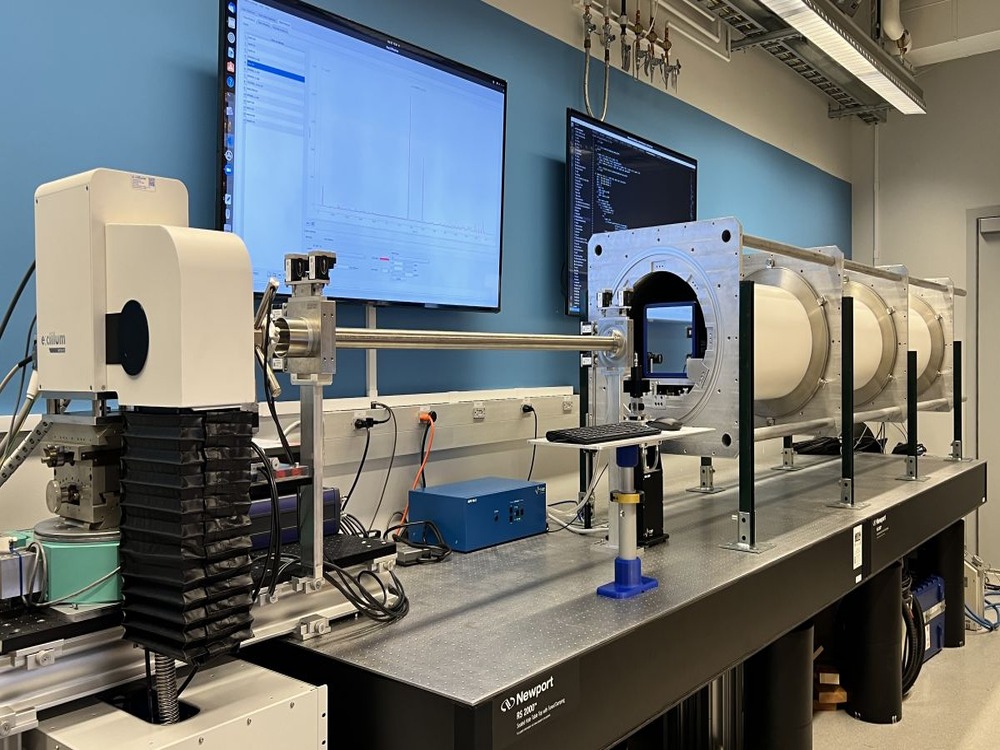
X-ray diffractometers consist of an X-ray tube, a sample holder, and a detector. The focused beam of X-rays illuminates the sample, and X-ray reflection intensity is measured by rotating the sample and detector. The detector then analyzes the X-ray signal and converts it to a count rate that can be read by a device like a printer or computer monitor.
X-ray powder diffraction (XRD) is a powerful and quick method for identifying unknown crystalline materials, such as minerals or inorganic compounds. Identifying previously identified solids is essential in geology, environmental science, materials science, engineering, and biology. XRD can be used to characterize crystallization materials, determine the purity of a sample, and determine the average mineral content. Specialized applications include Rietveld refinement to determine crystal structures, evaluating thin films’ quality and dislocation density using rocking curve measurements, superlattice thickness measurement in multilayer epitaxial structures, and analyzing polycrystalline samples’ texture.
However, XRD has limitations, such as requiring homogeneous, single-phase substances, a standardized inorganic compound reference file, and the determination of unit cells. Samples must be prepared with the unknown substance, grinding equipment, and a sample holder. The intensity of diffracted X-rays is continually recorded. Further, the peak locations at 2θ and X-ray counts display research findings. Record the Peak-to-peak intensity ratios as relative intensities.
The Bragg equation solves each peak’s d-separation, and automatic search and match methods compare the unknown material’s d-d-spacings against those of known materials. The International Centre for Diffraction Data’s Powder Diffraction File (PDF) includes d-spacing information for many inorganic compounds.
Applications of X-ray powder diffraction
The applications of X-ray powder diffraction are as follows.
| Application | Description |
| Crystallography | Determines the crystal structure of materials by analyzing diffraction patterns. |
| Phase Identification | Determine the phase in multi-phase material by comparison of diffusion peaks. |
| Material Characterization | Determines the quality, particle size, and morphology of samples that are in crystalline form. |
| Thin Film Analysis | Helps in studying thin film properties, including thickness, texture, and orientation. |
| Stress and Strain Analysis | It determines the internal stresses in materials due to deformation or processing. |
| Quality Control | Maintaining a consistent mix of materials in any production process is vital. |
Conclusion
X-ray Powder Diffraction (XRD) is a vital analytical technique for structural characterization of crystalline materials. It identifies unknown substances, determines crystal structures, and analyzes phase composition in geology, materials science, environmental science, and engineering. Despite its limitations, which require a homogeneous single-phase sample, XRD offers vital information about the material’s crystallinity, purity, and quality. The technological advancements have continuously improved XRD to provide better accuracy and broader applications. Thus, it has become indispensable for fundamental research and industrial quality control.
FAQs
XRD works on the principle of Bragg's Law, which relates the angles at which X-rays are diffracted by the crystalline material to the interatomic spacing in the crystal. The diffraction pattern helps identify the material and its crystal structure.
XRD requires accurately analyzing homogeneous single-phase samples and a standard reference file. Therefore, it may need to be more effective in determining the structures of complex, multi-phase materials.
XRD can be used to study both bulk materials and thin films. Special techniques for thin film studies include measuring rocking curves and superlattice thickness.
The XRD pattern provides information on the crystal structure, unit cell dimensions, phase composition, and the impurities or contaminants in the sample.
The intensity of peaks corresponding to different phases of XRD can be used to analyze phase composition quantitatively. This method usually measures the relative content of other components in the mixture.
 Metrology Testing Service

- Hole Basis System And Shaft Basis System
- Armor Losses in High-Voltage Cables: Testing, Measurement & Metrology
- Torque Calibration: Methods, Standards & Traceability Guide
- Real-Time X-Ray (RTX) Inspection Testing for Electronics & Components
- Electron Beam Induced Current (EBIC) Testing for Semiconductor Defects
- GC-MS/MS Tandem Mass Spectrometry Testing Services
- Pyrolysis GC-MS Testing for Polymer Identification & Characterization
- Rutherford Backscattering Spectrometry (RBS): Thin Film Composition & Depth Profiling
- View All


3 Easy Steps to Start Testing


Case Studies
In-depth examination of genuine material testing solutions
Case Study: Dopant & Ultra-Low Concentration Analysis via…

Case Study: Dopant & Ultra-Low Concentration Analysis via…
Introduction to STEM-EELS for Elemental Analysis Scanning Transmission Electron Microscopy (STEM) combined with Electron Energy Loss...
Read Case StudyCase Study: PVC Pipe Degradation Analysis Using FTIR…

Case Study: PVC Pipe Degradation Analysis Using FTIR…
PVC Pipe in Infrastructure — and Why Degradation Matters Polyvinyl chloride (PVC) pressure pipe is one...
Read Case StudyAFM Nano-Scale Roughness Measurement Guide for Silicon Wafers

AFM Nano-Scale Roughness Measurement Guide for Silicon Wafers
Nano-scale surface roughness is a critical parameter in fabricated thin-films that are used in optics, solar...
Read Case StudyTalk to Our Experts Today!
Submit your contact info and we’ll get back to you within 24 hours


