


services
Infinita Lab provides end-to-end testing and compliance services across metrology, materials, and finished products — connecting U.S. clients to a network of 2,000+ accredited labs and 10,000+ test methods through a single point of contact.


Top Testing Services
-
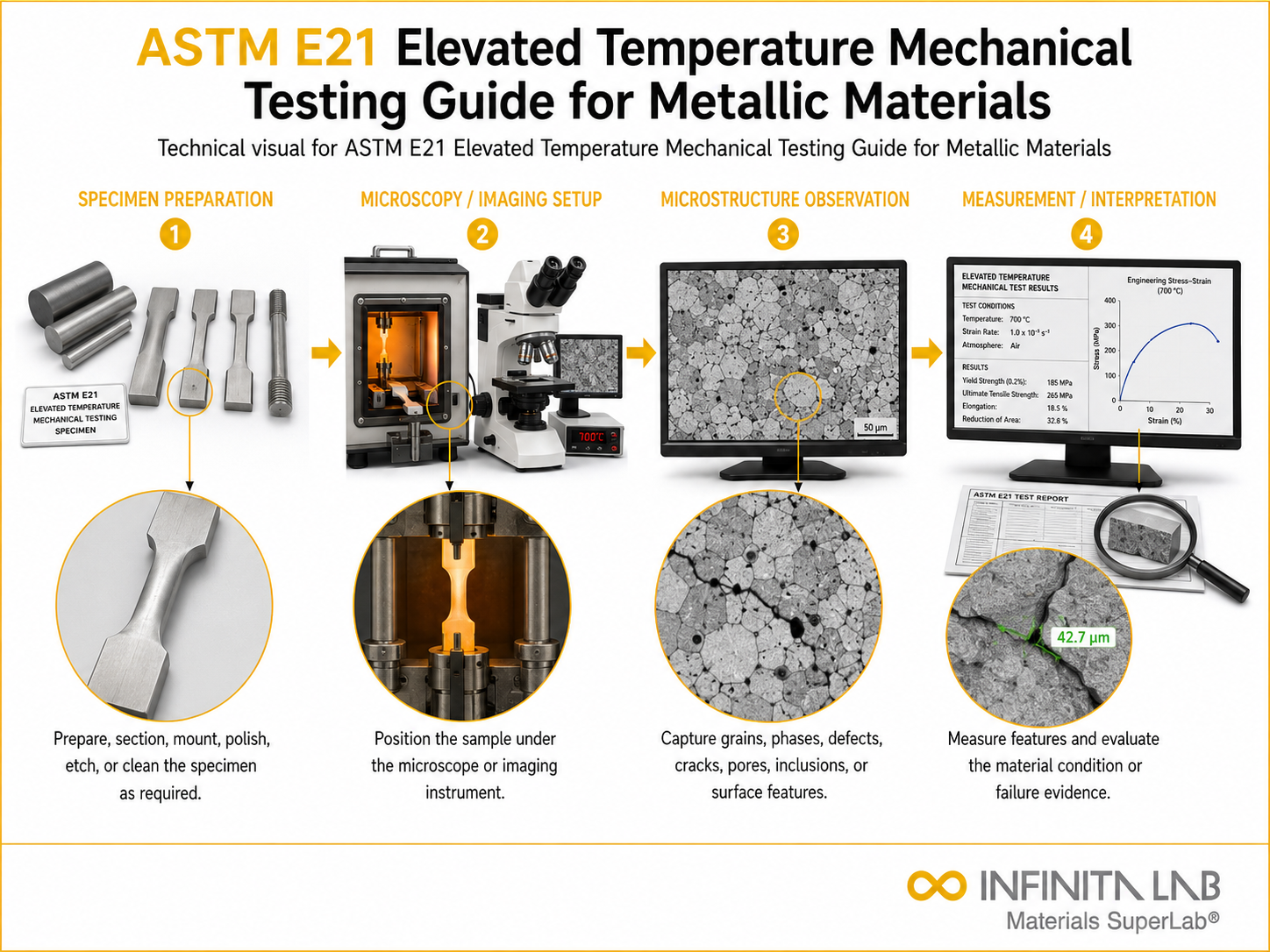
 ASTM E21: Elevated Temperature Mechanical Testing Services
-
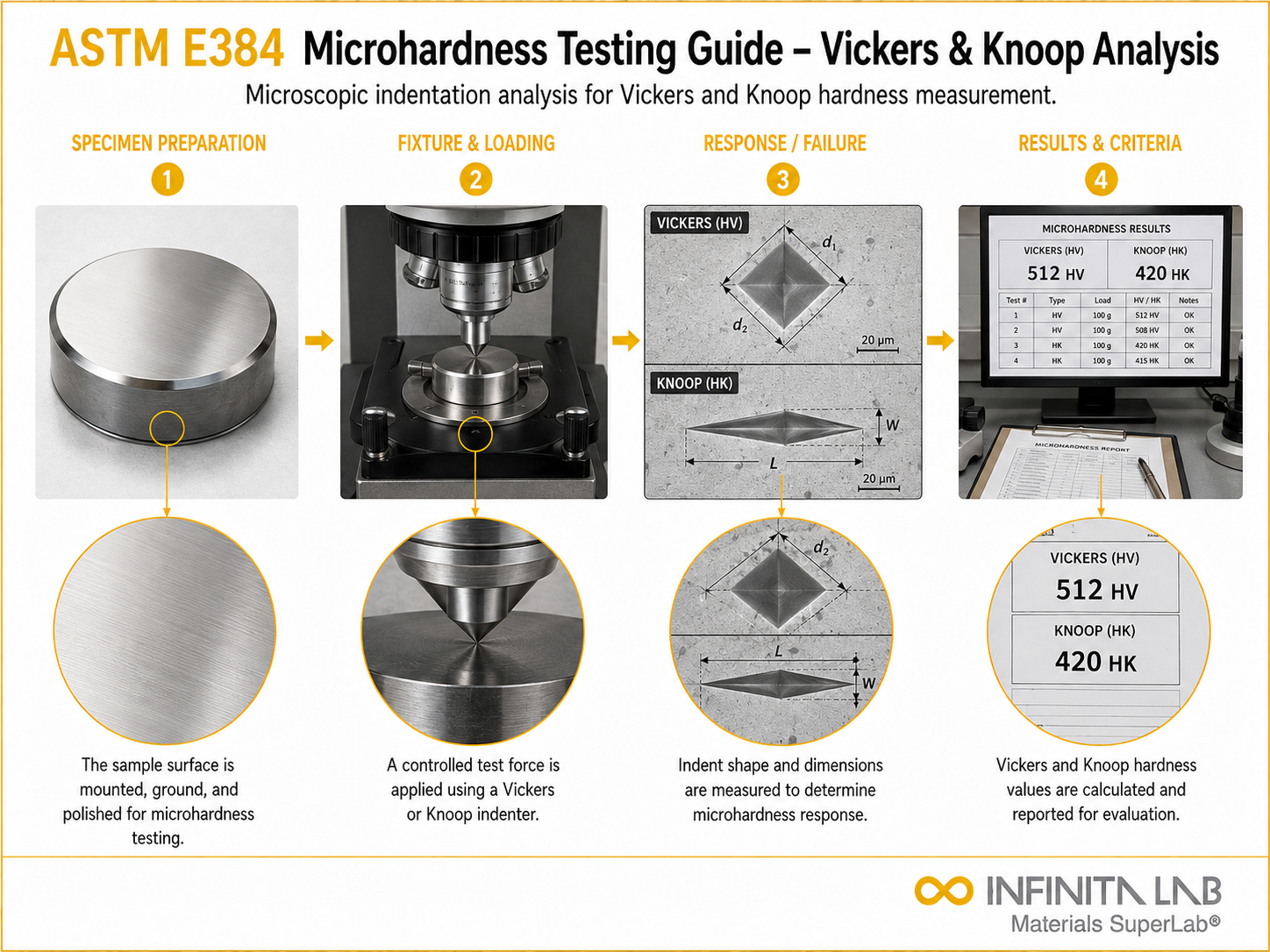
ASTM E384: Microhardness Guide Testing Services
-
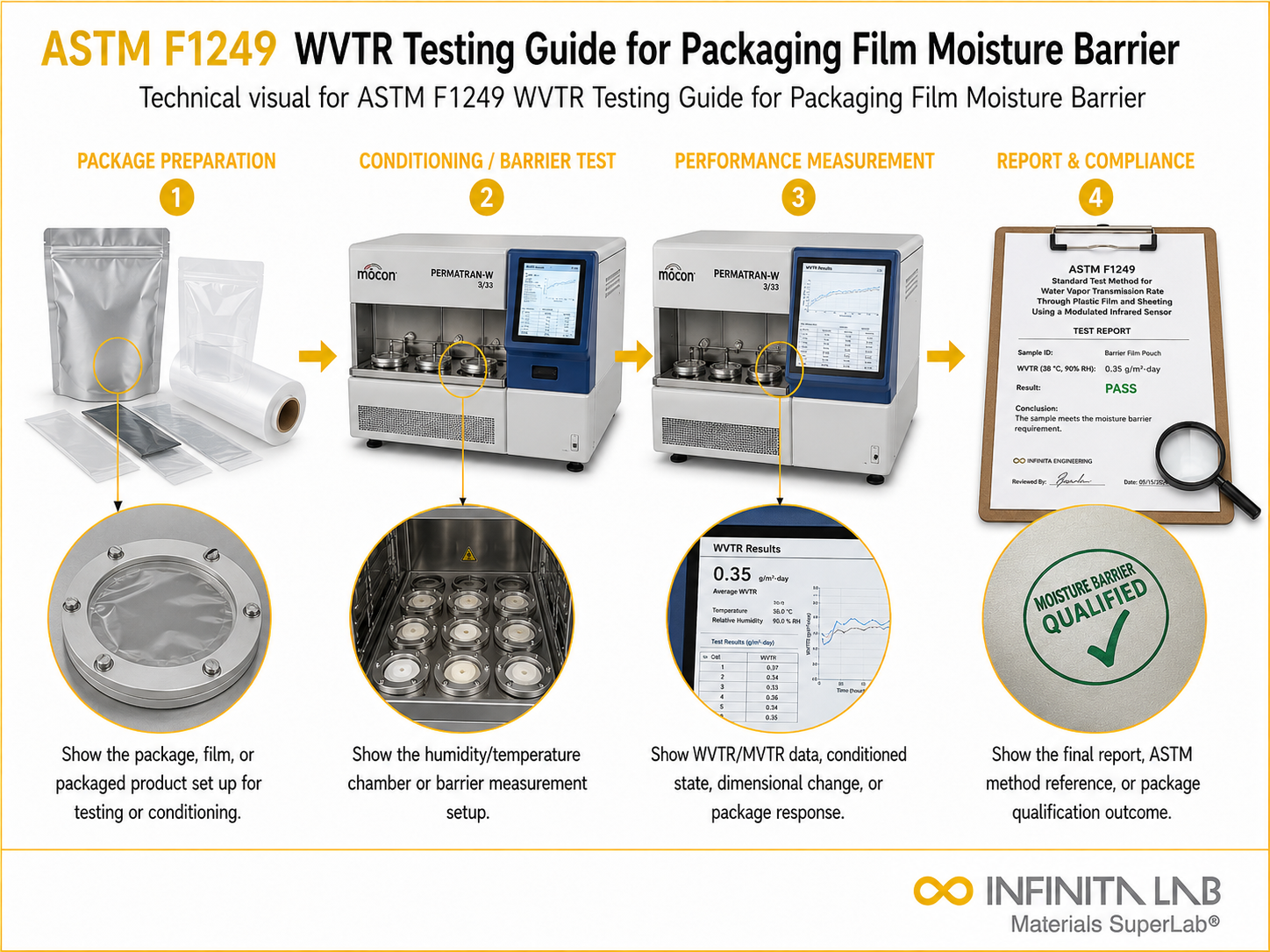
ASTM F1249: WVTR Packaging Film Moisture Barrier Guide Testing Services
-
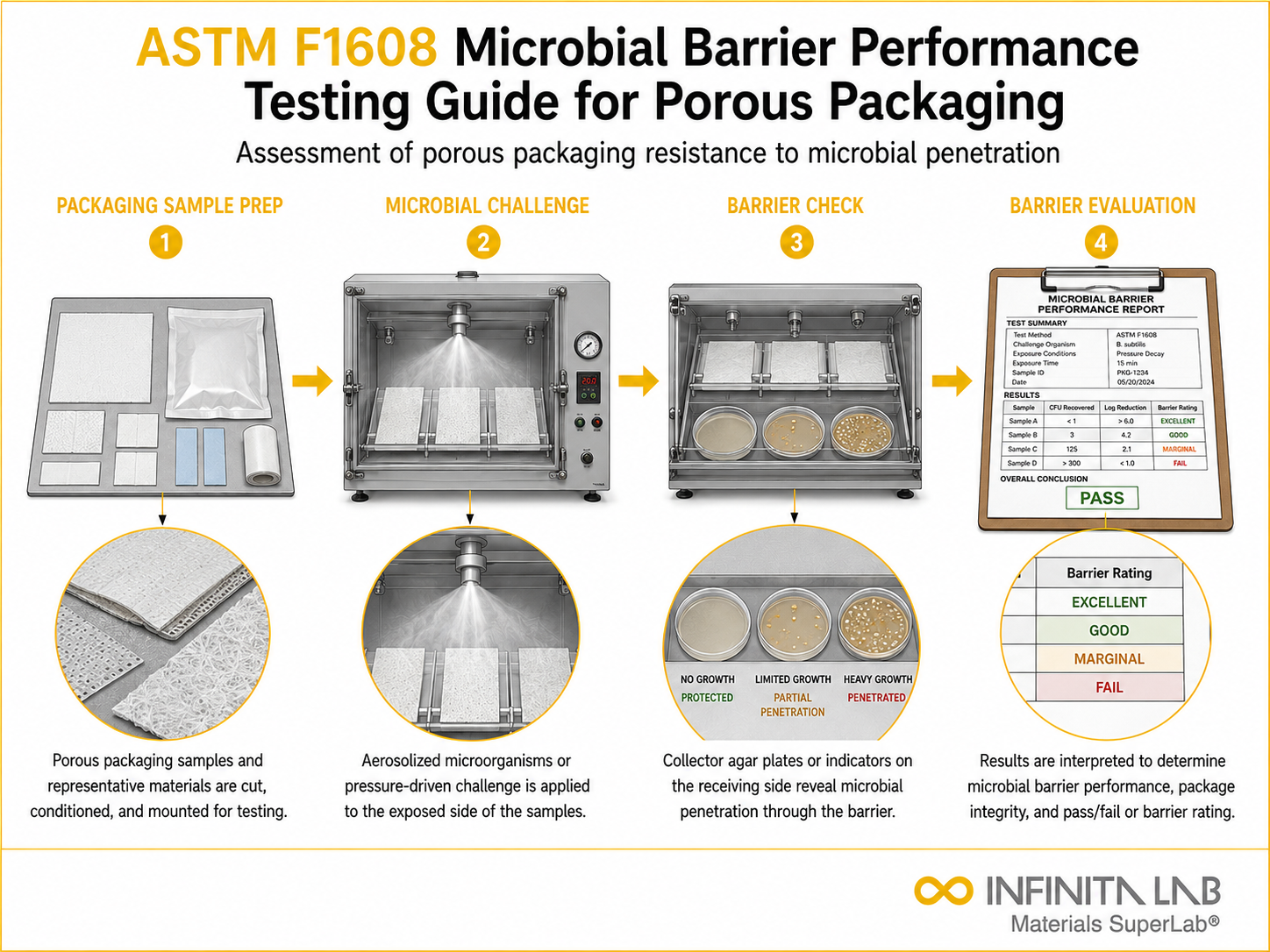
ASTM F1608: Microbial Barrier Packaging Guide Testing Services
-
ASTM G155: Xenon Arc Weathering Guide Testing Services
-
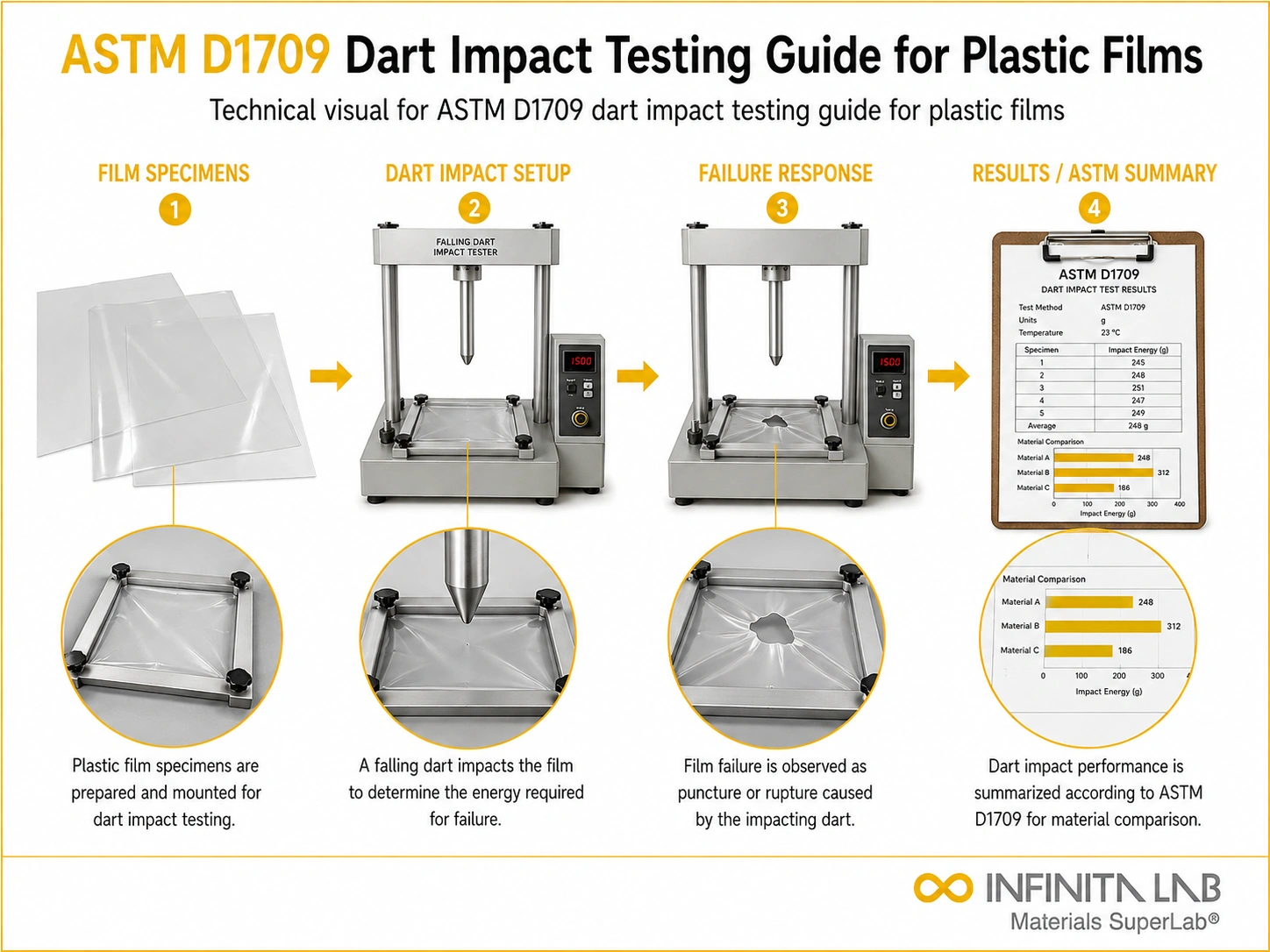
ASTM D1709: Plastic Film Dart Impact Testing Services



About Infinita Lab
Infinita Lab provides comprehensive testing services within the United States, encompassing ASTM, metrology, materials, and various product categories. Our organization serves as a centralized point of contact for raw material characterization, product qualification, failure analysis, and regulatory compliance, thereby alleviating the administrative burden on engineering and manufacturing teams.
Through our extensive network of over 2,000 accredited partner laboratories across the United States, clients gain access to an inventory exceeding 10,000 distinct test methodologies. Infinita Lab facilitates the entire process, including coordinating sample collection and delivering formally documented, fully traceable results, ensuring a streamlined experience without the need to manage multiple laboratory partnerships.
- Metrology Testing Services
Metrology testing plays a critical role across aerospace, consumer goods, electronics, and automotive industries, where precision and regulatory compliance aren’t optional. Our partner facilities use spectroscopy, microscopy, and a range of other analytical methods to characterize materials at scales from macro down to nano. These processes help identify flaws, confirm material composition, analyze microstructures, and push materials to their performance limits under stress.
Microscopy and Imaging
For high-resolution nanometer-scale imaging, we inspect material structures and surface characteristics — useful in advanced electronics, coatings, and semiconductors where microstructural flaws, voids, dislocations, and inclusions need to be caught early.
Surface analysis and packaging inspection cover topography, coating consistency, and container integrity using profilometry, 3D X-ray imaging, and scanning acoustic microscopy (SAM). These methods flag mechanical damage, delamination, voids, and irregularities in electronics, medical equipment, and consumer packaging.
Spectroscopy and Chemical Analysis
FTIR, Raman, XRF, and OES testing handle molecular and elemental analysis — verifying material purity, identifying contaminants, and confirming that polymers, coatings, and alloys meet industry standards and design specs.
Secondary Ion Mass Spectrometry (SIMS) delivers parts-per-billion-level trace-element detection through elemental and isotopic analysis. This is particularly important when evaluating aerospace alloys, advanced ceramics, and semiconductors.
GD-MS, ICP-MS, ICP-OES, and LIBS round out our trace-element detection and impurity quantification capabilities across critical materials and industries.
Materials Characterization
Our analytical suite — XRD, EXAFS, XPS, and XRR — provides a comprehensive picture of surface chemistry, crystallographic behavior, and microstructural characteristics. XRD identifies phase composition and crystal structure; EXAFS examines local atomic environments; XPS measures chemical states and surface elemental composition; and XRR assesses film density and thickness.
Thermal and mechanical testing evaluate how materials behave under varying pressures, temperatures, mechanical stresses, and fatigue cycles. You get key metrics like hardness, elasticity, tensile strength, and thermal stability — all of which matter for solid R&D and quality control work.
- Materials Testing Services
Material testing underpins quality assurance and product development across every manufacturing and engineering discipline. We cover chemical, mechanical, thermal, electrical, and environmental evaluation for metals, polymers, ceramics, composites, elastomers, thin films, semiconductors, and nanomaterials — from early material selection and design through production verification and failure investigation.
Chemical Analysis
Elemental composition verification, contaminant identification, and specification compliance checks using OES, XRF, and FTIR for metals, alloys, and polymers. Relevant standards include:
- ASTM E415 — Carbon & Low-Alloy Steel Chemical Analysis by Spark OES
- ASTM E1086 — Steel Chemical Analysis by Spark Optical Emission Spectrometry
- ASTM E1659-12 — Coating Mass and Chemical Analysis of Zinc-Nickel Alloy Electrolytically Coated on Steel Sheet
- ASTM E539 — Chemical Analysis Testing for Ferrosilicon
- ASTM E536 — Chemical Analysis Testing for Ferroalloys
- ASTM E572-13 — Analysis of Steel Alloys by Fluorescence Spectrometry
- ASTM D7637 — Glycerin Assay Testing by Titration
- ASTM E354 — Chemical Analysis Testing for Iron, Nickel & Cobalt Alloys
- ASTM E353 — Chemical Analysis Testing for Stainless & Heat-Resisting Steels
Mechanical Testing
We evaluate how materials respond to applied forces — tensile, compressive, flexural, hardness, fatigue, and impact testing performed in accordance with ASTM and ISO standards. This validates product design, manufacturing quality, and a part’s durability under real service conditions. Key standards include:
- ASTM E8/E8M — Tension Testing of Metallic Materials
- ASTM E23 — Notched Bar Impact Testing of Metallic Materials
- ASTM D638 — Tensile Testing for Plastics
- ASTM D790 — Flexural Properties of Plastics
- ASTM D785 — Rockwell Hardness of Plastics and Electrical Insulating Materials
- ASTM E384 — Microindentation Hardness of Materials
- ASTM E604 — Dynamic Tear Testing for Metallic Materials
- ASTM E606 — Strain-Controlled Fatigue Testing for Metallic Materials
- ASTM E647-13a — Measurement of Fatigue Crack Growth Rates
- ASTM E238 — Pin-Type Bearing Test of Metallic Materials
- ASTM E1681-03 — Threshold Stress Intensity Factor for Environment-Assisted Cracking of Metallic Materials
- ASTM D897 — Tensile Properties of Adhesive Bonds
- ASTM D903 — Peel or Stripping Strength of Adhesive Bonds
- ASTM D950 — Impact Strength of Adhesive Bonds
- ASTM D395B — Compression Set Testing
- ASTM D4541 — Pull-Off Strength Test
- ASTM D7030 — Short Beam Strength Testing for Polymer Composites
Thermal and Environmental Testing
TGA, DSC, and DMA for thermal stability and transition characterization. Corrosion, humidity, salt spray, and aging testing for materials that need to perform in extreme environments — common requirements in aerospace, automotive, and energy applications. Applicable standards include:
- ASTM C518 — Thermal Conductivity Testing by Heat Flow Meter
- ASTM E1980 — Solar Reflectance Index (SRI) Calculation for Opaque Surfaces
- ASTM E905 — Thermal Performance Testing for Tracking Solar Concentrators
- ASTM B117 — Salt Spray (Fog) Testing
- ASTM G48 — Crevice Corrosion Resistance of Stainless Steels
- ASTM G155 — Xenon Arc Weathering Test
- ASTM D4459 — Xenon Arc Accelerated Weathering Testing
- ASTM D4585 — Water Resistance Testing for Coatings by Controlled Condensation
- ASTM E203 — Moisture Testing by Volumetric Karl Fischer Titration
Electrical and Optical Testing
Electrical resistivity, dielectric strength, conductivity, and optical transmittance testing for coatings, thin films, and semiconductor materials. This supports manufacturers in optimizing components for both efficiency and long-term reliability. Relevant standards include:
- ASTM D257 — Surface & Volume Resistivity Testing for Electrical Insulating Materials
- ASTM D6097 — Water Tree Growth Resistance Testing for Solid Dielectric Materials
- ASTM E1725 — Fire Tests for Fire-Resistive Cable Systems in Cable Trays
- ASTM F76-08 — Semiconductor Resistivity and Hall Coefficient Testing
- ASTM E756 — Measuring Vibration-Damping Properties of Materials
- ASTM E1805 — Optical Filter Radiometry Testing for Solar Applications
Failure Analysis and Root Cause Investigation
SEM, EDS, fractography, and microhardness analysis help identify cracking, corrosion, delamination, and contamination. We provide clear, actionable findings so you can tighten process controls and prevent recurring problems. Standards used include:
- ASTM E340 — Macroetching Testing for Metals & Alloys
- ASTM E407 — Microetching Practice for Metals & Alloys
- ASTM A247 — Evaluating the Microstructure of Graphite in Iron Castings
- ASTM E837 — Hole-Drilling Residual Stress Testing
Product Reliability and Qualification Testing
Thermal cycling, vibration, impact, electrostatic discharge, and temperature-humidity stress testing to assess material durability and predict how they’ll hold up under real operating conditions.
- Product Testing Services
Product testing confirms that finished products actually meet design, performance, and safety requirements before going to market. Our services evaluate durability, reliability, and conformance under both realistic and extreme conditions — helping manufacturers build better products, reduce defects, meet compliance requirements, and deliver safe, high-performing products to customers worldwide.
Environmental and Reliability Testing
Temperature and humidity cycling exposes products to alternating hot/cold and humid environments to test material stability, seal integrity, and performance consistency. It’s a good way to detect failures such as delamination, warping, corrosion, or unexpected changes in material and electrical characteristics.
Thermal shock and vibration testing simulate sudden temperature extremes and the kinds of stresses products face during transportation, machine operation, and field use. Together, they assess resistance to mechanical fatigue, cracking, and component displacement.
Solar radiation testing uses accelerated sunlight and UV exposure to see how materials age, whether colors hold up, and how products perform under prolonged outdoor conditions.
Salt-fog testing replicates the harsh conditions of marine and industrial environments, assessing how well metals, coatings, and surface treatments withstand rust, corrosion, and surface degradation. Relevant standards include:
- ASTM B117 — Salt Spray Test
- ASTM G155 — Xenon Arc Weathering for outdoor durability
- ASTM D4459 — Xenon Arc Accelerated Weathering for indoor materials
- ASTM E662 — Smoke Density Testing for Solid Materials
- ASTM E648 — Critical Radiant Flux Testing for Floor Covering Systems
- ASTM E736 — Cohesion/Adhesion Strength Testing for Fireproofing Materials
Ingress Protection (IP) Testing
IP testing determines how well a product’s enclosure protects internal components from water and environmental exposure.
The spraying water test (IPX3) uses water sprayed at angles up to 60° from vertical, simulating light rain and incidental splashing — verifying that enclosures and seals can handle moderate exposure.
The splashing water test (IPX4) simulates all-around splashing from heavy rain, outdoor conditions, and cleaning, confirming protection during prolonged or direct water contact.
IP testing is most important for electrical, outdoor, consumer, and industrial products, where environmental protection directly affects service life, safety, and reliability.
Packaging Material Testing
Infinita Lab supports packaging integrity and performance testing across a wide range of formats. Standards used include:
- ASTM E96 — Water Vapor Transmission Rate (WVTR) Testing
- ASTM D7709 — Water Vapor Transmission Rate for Pharmaceutical Bottles
- ASTM F88 — Seal Strength Testing for Flexible Barrier Materials
- ASTM D3330 — Peel Adhesion Testing for Pressure-Sensitive Tapes
- ASTM D6862 — 90-Degree Peel Strength Testing for Adhesives
- ASTM D6653 — High-Altitude Vacuum Testing for Packaging Systems
- ASTM F3039 — Dye Penetration Leak Testing for Nonporous Packaging
- ASTM F1608 — Microbial Ranking Testing for Porous Packaging Materials
- ASTM D2842 — Water Absorption Testing for Rigid Cellular Plastics
- ASTM E1417 — Liquid Penetrant Testing (PT)
- ASTM D6834-02 — Product Leakage from a Package with a Mechanical Pump Dispenser
Paints and Coatings Testing
- ASTM D7234 — Pull-Off Adhesion Strength Testing for Concrete Coatings
- ASTM D7027 — Scratch & Mar Resistance Testing for Coatings & Surfaces
- ASTM D7836 — Yield Stress Testing for Paints, Inks & Liquid Materials
- ASTM D7835 — Solvent Resistance of Organic Coating using a Mechanical Rubbing Machine
- ASTM D1353 — Nonvolatile Matter Testing in Volatile Solvents
- ASTM D7093 — Percent Volume Nonvolatile Content Testing for Coatings
- ASTM D7133 — Adhesive Lap Shear Strength Testing at Elevated Temperature
- ASTM D6905 — Hot-Melt Adhesive Film Peel Testing
- ASTM E1710 — Retroreflectance Testing for Pavement Markings
Ceramics Testing
- ASTM C1069 — Specific Surface Area Testing for Alumina & Quartz
- ASTM C949 — Porosity Testing in Vitreous Whitewares by Dye Penetration
- ASTM C849 — Knoop Hardness Testing for Ceramic Whitewares
- ASTM C848 — Young’s Modulus, Shear Modulus & Poisson’s Ratio for Ceramic Whitewares
- ASTM C424 — Autoclave Crazing Resistance Testing for Fired Glazed Whitewares
- ASTM C738 — Lead & Cadmium Extraction Testing from Glazed Ceramic Surfaces
- ASTM C408 — Thermal Conductivity Testing for Whiteware Ceramics
- ASTM C372 — Thermal Expansion Testing for Porcelain Enamel & Glaze Frits by Dilatometer
- ASTM C370 — Moisture Expansion Testing for Fired Ceramic Whitewares
- ASTM C1326 — Ceramic Knoop Hardness Testing
- ASTM C1674 — Porous Ceramic Flexural Strength Testing
- ASTM C1834 — Slow Crack Growth Testing for Advanced Ceramics at Elevated Temperatures
- ASTM C201 — High-Temperature Thermal Conductivity Testing for Refractories
Iron and Steel Products Testing
- ASTM A572/A572M-21 — High-Strength Low-Alloy Columbium-Vanadium Structural Steel
- ASTM A709/A709M-21 — Structural Steel for Bridges
- ASTM A269/A269M-15a — Seamless and Welded Austenitic Stainless Steel Tubing
- ASTM A615/A615M-20 — Deformed and Plain Carbon-Steel Bars for Concrete Reinforcement
- ASTM A677 — Non-Oriented Electrical Steel Core Loss & Permeability Testing
- ASTM A967 — Passivation Treatment Testing for Stainless Steel
- ASTM A1108 — Seam Strength Testing for Deep Corrugated Structural Plates
- ASTM E314 — Manganese Determination Testing in Iron Ores
- ASTM E1771 — C, N, O & Si Testing in Steel by Combustion/Fusion Methods
Medical Devices Testing
- ASTM F3502 — Barrier Face Covering Performance Testing
Optical and Material Characterization
Refractive index (RI) testing measures how light passes through a material — critical for verifying the purity, density, and chemical nature of transparent and translucent products like lenses, coatings, polymers, and glass. It ensures predictable light transmission, reduces optical distortion, and validates optical performance in displays, lighting components, and imaging devices. Supporting standards include:
- ASTM D1003 — Haze & Luminous Transmittance Testing for Transparent Plastics
- ASTM D6531 — Relative Permittivity & Loss Index Testing for Organic Liquids
- ASTM C169 — Chemical Analysis Testing for Soda-Lime & Borosilicate Glass
- ASTM E545-14 — Image Quality in Neutron Radiographic Examination
Read Our Blogs and Research Papers
In-depth examination of genuine material testing solutionsCommon Uses of Microbiological Testing of Packaging: Safety & Compliance
Common Uses of Microbiological Testing of Packaging: Safety & Compliance
Packaging does far more than contain and protect products physically — it serves as the primary barrier between the packaged...
Read ArticleWhat Is a Heavy Metal Test? Methods, Detection Limits & Applications
What Is a Heavy Metal Test? Methods, Detection Limits & Applications
What Are Heavy Metals? Heavy metals are a group of metallic elements with relatively high atomic mass and density that...
Read ArticleEV Battery Testing Tips for Engineers: Must-Know Methods & Standards

EV Battery Testing Tips for Engineers: Must-Know Methods & Standards
Introduction: Why EV Battery Testing Is Critical The rapid global transition to electric vehicles (EVs) has placed battery performance, safety,...
Read Article
Get your Ceramic Material testing done from the largest network of accredited labs in the USA
We are a material testing lab with a vast network of accredited labs across the country. Our state-of-the-art equipment and experienced team provide accurate and timely testing services to meet the unique needs of our clients. Partner with us for reliable material testing solutions.
 Quick Turnaround and Hasslefree process
- Confidentiality Guarantee
- Free, No-obligation Consultation
- 100% Customer Satisfaction


