


Adhesives
Explore Infinita Lab’s Comprehensive Adhesives Testing Services: Ensuring Superior Bond Strength and Durability. With over 2000 tests, our collaborative network of U.S. labs guarantees precision, efficiency, and quality assurance in adhesive performance analysis for diverse industrial applications.Adhesives testing services play an important role in understanding and evaluating the long-term reliability, dependability, and durability of a variety of adhesive materials in various applications.






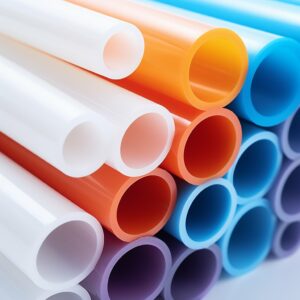


Introduction to Adhesives Testing Services
Our adhesive testing services use specialised analytical techniques to evaluate the mechanical strength, long-term durability, and operational performance of adhesives and bonded assemblies. These materials are instrumental across numerous industrial sectors, facilitating the lightweighting of components, the substitution of traditional mechanical fasteners, and the permanent bonding of heterogeneous materials. Systematic testing protocols ensure that adhesive systems maintain functional integrity under rigorous thermal, chemical, mechanical, and environmental stressors, thereby serving as a critical requirement for product safety, technological innovation, and sustained performance.
Infinita Lab works with domestic and U.S.-based laboratories to deliver precise, efficient, high-fidelity performance analysis for a wide range of industrial applications. The organisation’s technical proficiency encompasses structural adhesives, pressure-sensitive adhesives (PSAs), hot-melt systems, and advanced speciality bonding solutions tailored for the aerospace, automotive, electronics, packaging, and construction industries.
Our Adhesive Testing Services
Peel Strength Testing
Peel strength testing is one of the most fundamental characterisations of adhesive bond performance, measuring the force required to peel a bonded assembly apart progressively. Different peel geometries – 180°, 90°, and T-peel – are applicable depending on the adherend flexibility and joint configuration. Peel testing is critical for packaging laminates, pressure-sensitive tapes, automotive interior bonds, and electronics films.
Relevant ASTM Standards:
- ASTM D903 – 180° peel or stripping strength testing for adhesive bonds between a flexible adherend and a rigid substrate, measuring the average peel force per unit width (N/mm or lbf/in). Used for packaging laminates, PSA tapes, automotive interior bonding, and electronics protective films, with failure mode (adhesive, cohesive, or substrate) documented alongside the peel strength value.
- ASTM D1876 – T-peel resistance testing for adhesive bonding two flexible adherends, peeling them apart in opposite directions at approximately 90° each – applicable for flexible-to-flexible laminate bonds, flexible packaging, and tape-bonded assemblies where both adherends are flexible.
- ASTM D3167 – Floating roller peel resistance testing for adhesive bonds, evaluating an adhesive’s ability to withstand peeling forces for specimens bonded from a flexible to a rigid substrate using a floating roller fixture to maintain consistent peel geometry throughout testing.
- ASTM D3330 – Peel adhesion testing for pressure-sensitive tapes in 180° and 90° configurations on stainless steel substrates, measuring adhesive strength for masking, packaging, medical, and speciality tape specification and product development.
- ASTM D6862 – 90-degree peel strength testing for adhesives between a rigid and a flexible adherend, the most common method for determining 90° peel resistance – used for acceptance testing, quality control, and product development of structural and pressure-sensitive adhesives.
Lap Shear & Shear Strength Testing
Lap shear testing is the most widely used method for evaluating the structural bond strength of adhesives in shear, directly measuring the load-carrying capacity of an adhesive joint under in-plane tensile loading. These tests are essential for the selection and qualification of structural adhesives in automotive, aerospace, and industrial assembly applications.
Relevant ASTM Standards:
- ASTM D1002 – Apparent shear strength testing for single-lap-joint adhesively bonded metal specimens by tension loading (metal-to-metal), one of the most commonly used tests for structural adhesives in industrial and automotive manufacturing.
- ASTM D5868 – Lap shear adhesion testing for fibre-reinforced plastic (FRP) adherends, measuring the shear strength of adhesive bonds in composite-to-composite and composite-to-metal single-lap joints for aerospace, automotive, and construction structural adhesive qualification.
- ASTM D3165 – Shear strength testing of adhesives in tension-loaded single-lap-joint laminated assemblies, used to create design parameters for bonded composite and metal assemblies in structural applications.
- ASTM D3528 – Double-lap shear testing for strength properties of adhesive-bonded joints under tension loading, reducing peel force components, and better isolating shear failure for metal-to-metal and composite adhesive joint qualification.
Tensile Strength Testing
Tensile adhesive strength testing evaluates the force required to pull an adhesive bond apart perpendicular to the bonded surface, providing butt-joint tensile strength data for adhesive material selection, quality assurance, and joint design in demanding structural and speciality applications.
Relevant ASTM Standards:
- ASTM D897 – Tensile properties testing for adhesive bonds using butt-joint (block-shaped) specimens, assessing the tensile strength of adhesive bonds between two parallel, flat adherend faces – the standard method for characterising adhesive bond tensile strength for quality control and specification compliance.
- ASTM D2095 – Tensile strength testing for adhesives using bar-and-rod butt-joint specimens, providing tensile strength data for adhesives used in demanding structural and industrial applications requiring perpendicular pull-apart loading characterisation.
Cleavage & Fracture Strength Testing
Cleavage testing evaluates an adhesive bond’s resistance to opening forces applied at one edge of a bonded joint – a critical loading mode for bonded metal structures, electronic assemblies, and structural components where peel-like opening loads arise during service.
Relevant ASTM Standards:
- ASTM D1062 – Cleavage strength testing for metal-to-metal adhesive bonds, measuring resistance to cleavage opening forces for structural metal bonding applications in aerospace, automotive, and electronics assemblies requiring adhesive joint characterisation under wedge-opening loading.
- ASTM D3433 – Fracture strength in cleavage for adhesive joints in peel using double cantilever beam (DCB) specimens, providing mode-I fracture energy (GIc) data for structural adhesives – essential for damage-tolerant adhesive joint design in aerospace and industrial structures.
Fatigue Testing of Adhesive Bonds
Adhesive joints in automotive, aerospace, and industrial structures are subjected to cyclic loading throughout their service life. Fatigue testing of adhesive bonds generates S-N data and defines the endurance limit of the bonded joint under dynamic loading – critical for adhesive joint design in fatigue-critical applications.
Relevant ASTM Standards:
- ASTM D3166 – Fatigue testing for adhesive bonds in shear under cyclic tension loading, generating adhesive S-N fatigue data for structural adhesives in metal-to-metal and composite bonded joints for automotive, aerospace, and industrial fatigue design.
Durability & Environmental Resistance Testing
Adhesive bonds in service are subjected to temperature extremes, humidity, chemical exposure, and aging that can degrade bond strength over time. Durability testing evaluates the long-term retention of adhesive joint performance under accelerated environmental conditioning, validating that bonds will maintain adequate strength throughout their intended service life.
Relevant ASTM Standards:
- ASTM D2919 – Durability testing of adhesive lap-shear joints subjected to sustained tension loading and shear stress, used as an accelerated screening test to determine adhesive joint durability under combined mechanical loading and environmental exposure.
- ASTM D1002 – Lap shear strength testing conducted before and after environmental conditioning to evaluate adhesive bond retention following humidity exposure, temperature cycling, or chemical exposure.
Pressure-Sensitive Adhesive (PSA) Testing
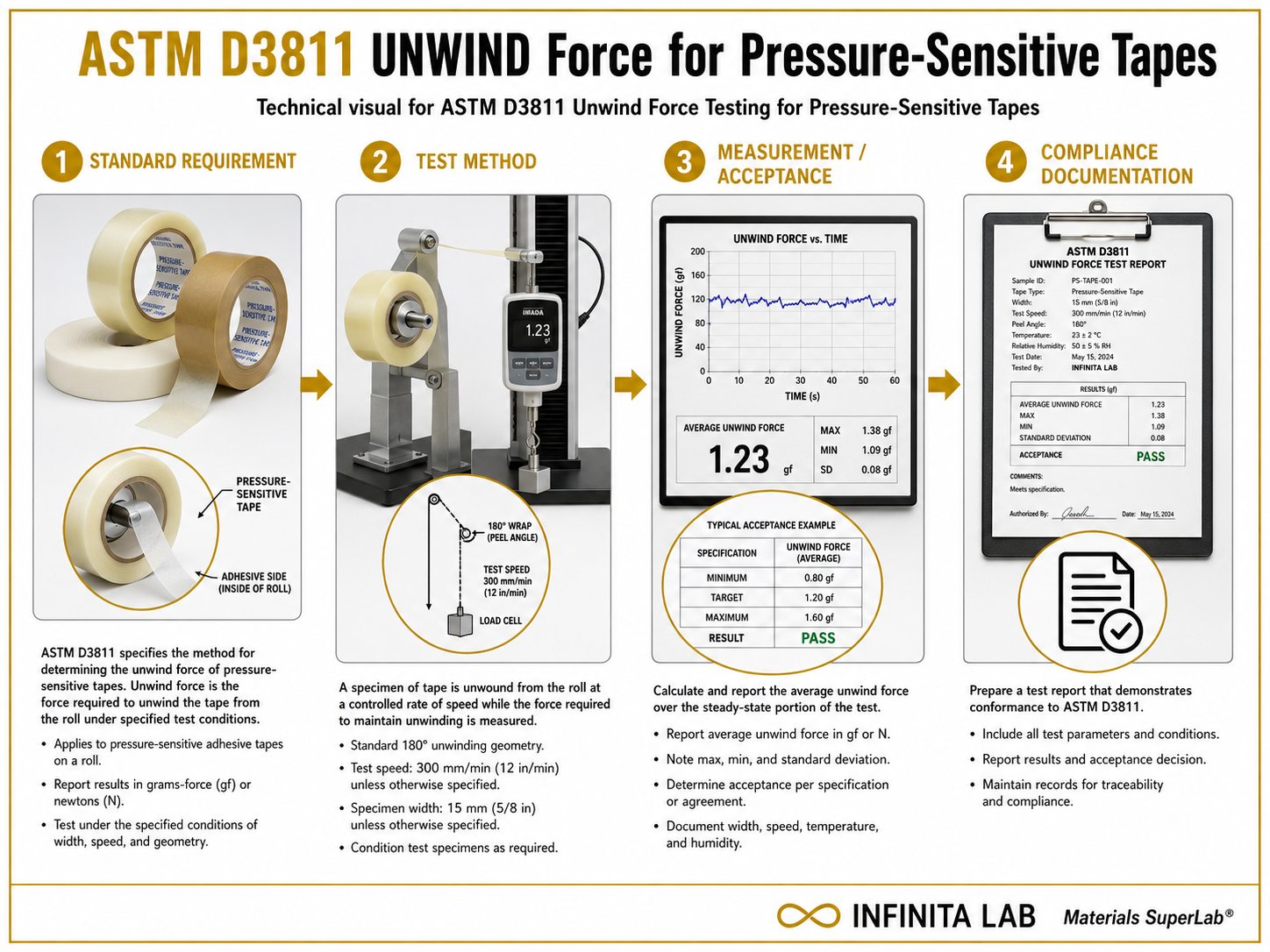
Pressure-sensitive adhesives are characterised by their tack, peel adhesion, and shear holding power when applied under pressure, without heat or solvent activation. PSA testing provides the performance data required for the development and quality control of tape, label, protective film, and medical PSA products.
Relevant ASTM Standards:
- ASTM D3330 – Peel adhesion testing for pressure-sensitive tapes at 180° and 90° peel angles on stainless steel substrates, the primary standard for PSA tape adhesion measurement across masking, packaging, medical, and speciality tape applications.
- ASTM D6862 – 90-degree peel resistance testing for pressure-sensitive adhesives, providing the lowest peel force value among peel geometries and widely used for acceptance testing and quality control of PSA products.
- ASTM D903 – 180° peel strength testing for PSA bonds, providing peel force per unit width data alongside failure mode for PSA label, tape, and protective film qualification.
Thermal Analysis of Adhesives
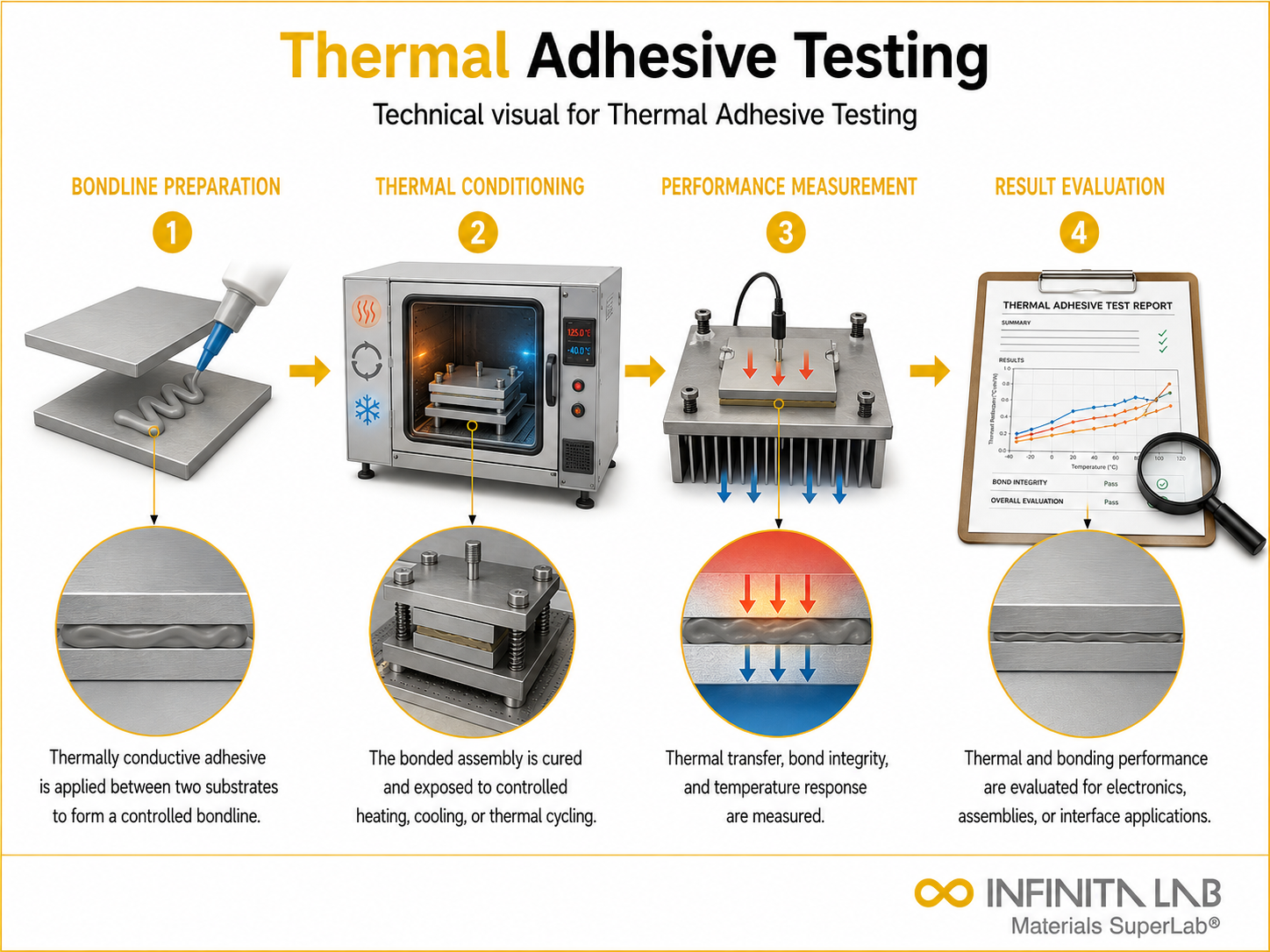
Thermal analysis characterises the curing behaviour, glass transition temperature, thermal stability, and decomposition profile of adhesive materials – providing data essential for adhesive cure process development, service temperature specification, and quality control of incoming adhesive materials.
Relevant ASTM Standards:
- ASTM D3418 – Differential Scanning Calorimetry (DSC) for adhesive materials, measuring glass transition temperature (Tg), cure state, heat of cure, and oxidative induction time (OIT) – supporting both adhesive formulation development and incoming raw material quality control.
- ASTM E1131 – Thermogravimetric Analysis (TGA) for adhesive materials, providing decomposition onset temperature, thermal stability, and volatile content data for adhesive compound identification and quality assurance.
- ASTM E1640 – Dynamic Mechanical Analysis (DMA) for adhesive films and cured adhesive specimens, measuring the storage modulus, loss modulus, and glass transition temperature, providing viscoelastic stiffness data across the service temperature range.
Outgassing Testing for Adhesives
Adhesives used in spacecraft, satellite assemblies, optical systems, and vacuum environments must meet strict outgassing requirements to prevent contamination of sensitive surfaces, optics, and electronic components.
Relevant ASTM Standards:
- ASTM E595 – Outgassing testing for total mass loss (TML) and collected volatile condensable materials (CVCM) from adhesive materials in a simulated space vacuum environment – mandatory for adhesives used in spacecraft structures, satellite assemblies, and optical systems where outgassing contamination is unacceptable.
Frequently Asked Questions
Infinita Lab distinguishes itself as the leading choice in adhesives testing due to its extensive range of over 2000 tests, ensuring thorough analysis and accurate results. Our collaboration with top-tier material testing labs across the U.S. allows us to provide specialized expertise and advanced technologies. This network ensures rapid turnaround times without compromising on quality, making Infinita Lab the go-to partner for industries requiring reliable adhesive testing.
One distinguishing factor is the company’s multidisciplinary team of experts, comprising materials scientists, engineers, and industry specialists. This diverse skill set enables a holistic approach to adhesives testing, considering not only the materials’ mechanical properties but also their performance under specific environmental conditions.
InfinitaLab streamlines the adhesive testing process through a client-centric approach, emphasizing efficiency and convenience. Our online portal allows clients to easily submit testing requests, track progress, and access results. We manage the logistics of testing by coordinating with our network of specialized labs, ensuring that each test is performed by the most suitable facility. This distributed yet cohesive operation minimizes turnaround times and simplifies the testing process for our clients. Furthermore, our dedicated customer support team is available to guide clients through every step, from selecting the appropriate tests to understanding the results. This streamlined experience, combined with our expansive testing capabilities, makes InfinitaLab a preferred partner for adhesive testing needs.
Quality is at the core of Infinita Lab’s operations. Our collaboration with diverse, certified testing labs across the U.S. ensures adherence to the highest industry standards. Regular audits and standardized procedures across all partner labs guarantee consistent and reliable testing outcomes. Our expert team stays updated with the latest industry trends and standards, ensuring top-notch quality in every test conducted.
Infinita Lab maintains stringent quality control processes throughout every stage of testing. From sample preparation to data analysis, the company adheres to industry best practices, ensuring the reliability and accuracy of results. The commitment to excellence extends to continuous research and development, allowing Infinita Lab to stay ahead of emerging industry trends and standards.
Infinita Lab excels in providing swift and efficient adhesive testing services. Our vast network of partner labs, equipped with advanced testing technology, enables us to process tests rapidly without compromising accuracy. This efficient workflow ensures that clients receive their test results faster than industry standards, aiding in quicker decision-making and product development.
nfinita Lab leverages state-of-the-art equipment and automation, minimizing unnecessary delays and accelerating the overall testing process. The company’s commitment to staying at the forefront of technological advancements allows for faster data acquisition and analysis, contributing to reduced turnaround times.
InfinitaLab offers a comprehensive range of adhesives testing services, catering to a variety of industries such as automotive, construction, and consumer goods. Our services encompass over 2000 tests, including but not limited to shear strength, peel strength, and tack measurements. We also specialize in environmental durability testing, assessing adhesive performance under varying conditions like temperature, humidity, and UV exposure. By leveraging our collaboration with diverse, specialized testing labs across the U.S., we ensure that each test is conducted with precision, using the latest technology and methodologies. This approach guarantees high-quality, reliable results, essential for ensuring the performance and safety of adhesive products in their respective applications.
Read Our Blogs and Research Papers
In-depth examination of genuine material testing solutionsASTM D882: Standard for Tensile Testing of Thin Plastic Sheeting
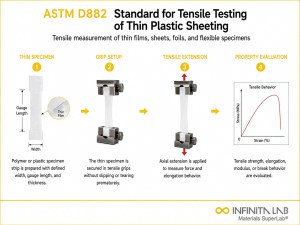
ASTM D882: Standard for Tensile Testing of Thin Plastic Sheeting
What Is ASTM D882? ASTM D882 is the Standard Test Method for Tensile Properties of Thin Plastic Sheeting, specifically designed...
Read ArticleAsh Content Testing Services
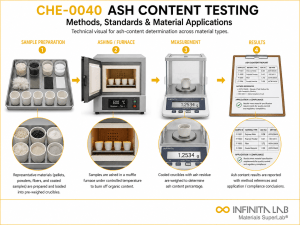
Ash Content Testing Services
ASH CONTENT The most effective techniques are based on the fact that minerals may be heated without being damaged and...
Read ArticleWide-Width Strip Tensile Testing of Geotextiles: ASTM D4595 Method Guide
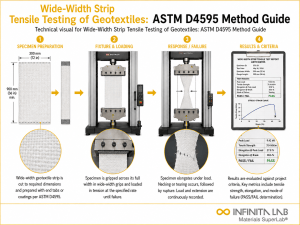
Wide-Width Strip Tensile Testing of Geotextiles: ASTM D4595 Method Guide
Geotextiles — permeable synthetic fabrics used in geotechnical, civil engineering, and environmental applications — are structural materials that must withstand...
Read Article
Get your Ceramic Material testing done from the largest network of accredited labs in the USA
We are a material testing lab with a vast network of accredited labs across the country. Our state-of-the-art equipment and experienced team provide accurate and timely testing services to meet the unique needs of our clients. Partner with us for reliable material testing solutions.
 Quick Turnaround and Hasslefree process
- Confidentiality Guarantee
- Free, No-obligation Consultation
- 100% Customer Satisfaction


