


Electrical
Infinita Lab offers a wide range of electrical testing services, focusing on performance, safety, and regulatory compliance. Our labs offer over 20000 specialized tests and we can handle custom requirements for your electrical testing needs ensuring your products meet the highest industry standards.


Top Testing Services


Electrical energy is ubiquitous, providing the essential power for automotive systems, medical instrumentation, industrial apparatus, consumer electronics, and aerospace technologies, as well as the critical infrastructure interconnecting these domains. Every conductive element, insulating medium, and component subjected to electrical or thermal stress must adhere to established performance specifications to ensure operational reliability and safety throughout its intended service life.
The verification of such requirements necessitates rigorous, data-driven analysis. Electrical testing is a systematic, standardised methodology for generating empirical data. This process encompasses measuring metallic conductivity, verifying dielectric integrity, quantifying resistivity, and characterising dielectric properties across diverse frequencies and temperatures. Furthermore, it includes evaluations of arc resistance and thermal endurance to validate component performance under realistic operating conditions.
When executed with precision during the developmental and manufacturing phases, electrical testing ensures that products function in accordance with design specifications and mitigates safety hazards before field deployment. Conversely, the omission or superficial application of these testing protocols can lead to premature mechanical or electrical failures, substantial financial liabilities through product recalls, and severe safety incidents that compromise personnel, infrastructure, and institutional reputation.
Our Electrical Testing Services
Conductivity and Resistivity Testing for Metallic Electrical Conductors
The fundamental electrical property of a metallic conductor – its conductivity or resistivity – determines how efficiently it transmits electrical current, how much power it dissipates as heat, and whether it meets the performance specification of its intended application. A conductor that is out of specification on resistivity will cause excessive voltage drop, overheat under load, or fail to meet the power transmission efficiency requirements of the system it serves. Verifying the conductivity and resistivity of metallic conductors is a basic requirement in incoming quality control across electrical manufacturing and infrastructure applications.
Relevant ASTM Standards:
ASTM B193 – Resistivity of Electrical Conductor Materials ASTM B193 tests metallic electrical conductor materials for conductivity and resistivity. The standard provides a method for precisely measuring the electrical resistivity of metallic conductors, including copper, aluminium, and their alloys – materials that form the backbone of power transmission cables, electrical windings, bus bars, connectors, and circuit traces. Results from ASTM B193 testing are used for incoming material qualification, specification compliance verification, and production quality control across the electrical, power, telecommunications, and electronics industries.
Surface and Volume Resistivity Testing for Insulating Materials
Not all electrical failures are catastrophic breakdowns. Many of the most consequential failures in electrical systems are caused by gradual or hidden current leakage through insulating materials that conduct slightly under voltage, across moisture-absorbed surfaces, or through bulk materials that fall short of the specified resistivity. Surface and volume resistivity testing provides quantitative, standardised data on how effectively an insulating material resists the flow of electrical current, giving engineers the information they need to select, qualify, and verify insulating materials for their specific application requirements.
Relevant ASTM Standards:
ASTM D257 – Surface and Volume Resistivity of Electrical Insulating Materials. ASTM D257 determines the surface and volume resistivities of insulating materials. Under DC voltage conditions, this test evaluates both bulk conductivity through the material and surface conductivity – two distinct failure pathways that must be controlled in electrical insulation design. Results are applied to the selection of materials for printed circuit board substrates, cable insulation, connector housings, transformer insulation, motor windings, and any electrical application where leakage current must be held to specification throughout the product’s service life.
Dielectric Strength Testing
Every electrical insulating material has a voltage threshold beyond which it fails: the insulation can no longer prevent current from flowing, and the material breaks down electrically. This threshold, the dielectric strength or breakdown voltage, is the most fundamental safety parameter of any electrical insulation system. A material that breaks down at a lower voltage than its specification claims – whether due to material variability, environmental degradation, or improper processing – represents a direct safety hazard that testing must catch before the insulation is placed in service.
Relevant ASTM Standards:
ASTM D149 – Dielectric Breakdown Voltage and Dielectric Strength of Solid Electrical Insulating Materials ASTM D149 measures the voltage at which solid electrical insulating materials fail under a rising or step-wise applied voltage. The test is conducted under controlled environmental conditions. It provides the critical high-voltage endurance data required to qualify insulating materials for power cables, capacitors, transformers, motor insulation systems, switchgear components, and any application where electrical breakdown would constitute a safety failure. ASTM D149 results are used directly in material selection, quality control, and regulatory compliance documentation for electrical products across automotive, industrial, aerospace, and consumer applications.
Dielectric Constant and Dissipation Factor Testing
For electrical components operating in alternating-current environments – from power distribution systems and motor drives to high-frequency communications and signal-processing equipment – the dielectric constant and dissipation factor of insulating materials are fundamental design parameters. The dielectric constant determines capacitance values and signal propagation characteristics; the dissipation factor quantifies energy loss within the dielectric under AC stress. Inaccurate characterisation of these properties at the material selection stage results in circuits and systems that do not meet specifications and components that overheat or fail prematurely under AC loading.
Relevant ASTM Standards:
ASTM D150 – Dielectric Constant and Dissipation Factor of Electrical Insulating Materials. ASTM D150 determines the dielectric constant and dissipation factor of solid insulating materials over a defined frequency range using an AC bridge measurement method. The test is essential for qualifying dielectric materials in capacitors, transformer insulation, cable dielectrics, printed circuit board substrates, and motor winding insulation – any application where AC electrical performance and energy loss characteristics must be tightly controlled and verified against specification.
ASTM D2149 – Dielectric Constant and Dissipation Factor of Solid Ceramic Dielectric Materials at Microwave Frequencies. ASTM D2149 characterises the dielectric constant and dissipation factor of solid ceramic dielectric materials across microwave frequencies, providing essential performance data for ceramic capacitors, microwave transmission components, radar substrates, and high-frequency electrical assemblies where ceramic dielectrics are used for their temperature stability and low-loss characteristics.
ASTM D2520 – Complex Permittivity of Solid Electrical Insulating Materials at Microwave Frequencies ASTM D2520 measures complex permittivity – both the real and imaginary components – of solid electrical insulating materials at microwave frequencies, providing detailed dielectric characterisation for materials specified in telecommunications hardware, antenna systems, satellite components, and high-frequency power electronics where precise permittivity values are a design requirement.
Arc Resistance Testing
When electrical arcing occurs across or along the surface of an insulating material – as happens during switching operations, fault conditions, or contamination-induced tracking events – the insulating material itself is exposed to intense heat, ionised plasma, and high-temperature carbon deposition. An insulating material that chars and becomes conductive upon exposure to an arc can sustain and propagate the arc, turning a momentary fault into a persistent and potentially catastrophic electrical failure. Arc resistance testing quantifies how long an insulating material can withstand exposure to surface electrical arcing before its surface becomes conductive – a critical parameter for switchgear components, connector housings, circuit breakers, and any insulating material exposed to potential arcing.
Relevant ASTM Standards:
ASTM D495 – High-Voltage, Low-Current, Dry Arc Resistance of Solid Electrical Insulating Materials. ASTM D495 determines the arc resistance of solid electrical insulating materials by applying a high-voltage, low-current arc to the specimen surface and measuring the time (in seconds) until the surface forms a conductive path. This test is widely used to qualify thermoplastic and thermoset insulating materials for electrical switchgear, relay housings, circuit breaker components, and outdoor electrical equipment, where resistance to arc-induced surface tracking is a safety requirement.
Thermal Endurance Testing for Electrical Insulation
Electrical insulation in motors, transformers, generators, power cables, and electrical equipment is continuously exposed to elevated operating temperatures throughout its service life. Over time, sustained thermal exposure degrades insulating materials – reducing their flexibility, increasing brittleness, and causing a gradual loss of dielectric and mechanical properties. Thermal endurance testing accelerates this degradation process in the laboratory under controlled conditions, enabling manufacturers to predict the lifetime of insulation at operating temperatures and classify insulation systems by thermal class.
Relevant ASTM Standards:
ASTM D5374 – Thermal Endurance of Electrical Insulating Materials. ASTM D5374 evaluates the thermal endurance of electrical insulating materials by subjecting specimens to specified elevated temperatures for defined periods, then assessing their retained structural integrity and electrical performance. This test is fundamental to the thermal classification of motor winding insulation, transformer insulation systems, cable dielectrics, and any electrical insulation application where the material must maintain its properties under prolonged high-temperature service conditions.
Liquid Contaminant Tracking and Inclined Plane Testing
Electrical insulating materials used in outdoor electrical equipment, coastal installations, industrial environments, and any location where liquid contamination is possible must resist the formation of conductive tracking paths on their surfaces. Liquid contaminants – including pollution, condensation, and industrial chemicals – can initiate surface leakage currents that gradually form carbonised tracking paths, eventually causing insulation breakdown and electrical failure. Tracking resistance testing under liquid contamination conditions is a practical qualification requirement for outdoor high-voltage insulators, cable terminations, switchgear components, and other electrical insulation exposed to environmental contamination.
Relevant ASTM Standards:
ASTM D2303 – Liquid Contaminant, Inclined-Plane Tracking, and Erosion of Insulating Materials. ASTM D2303 evaluates the resistance of electrical insulating materials to tracking and erosion under liquid contamination by subjecting specimens on an inclined plane to a controlled flow of electrolyte solution while a defined voltage is applied. The test measures the time to failure by surface tracking or erosion, providing critical comparative data for selecting insulating materials in outdoor and contaminated-environment electrical applications where tracking resistance is a safety-critical specification.
Water Tree Growth Resistance Testing for Cable Insulation
Underground and submarine power cables, wet-location wiring, and cable systems in high-humidity environments are subject to a slow but progressive degradation mechanism known as water treeing – the formation of tree-like microstructural damage paths within cable insulation under combined exposure to moisture and an electrical field. Over time, water tree growth reduces the dielectric strength of cable insulation, eventually leading to cable failure. Testing water tree resistance enables cable insulation materials to be qualified for long-term performance in wet environments before being committed to service.
Relevant ASTM Standards:
ASTM D6097 – Water Tree Growth Resistance of Solid Dielectric Materials. ASTM D6097 evaluates the resistance of solid dielectric cable insulation materials to water tree initiation and growth under accelerated conditions combining moisture exposure and applied electrical field stress. This test is essential for qualifying polyethylene, cross-linked polyethylene, and other polymeric insulation materials used in underground distribution cables, medium-voltage cables, and submarine cables, where long-term wet-service performance is a fundamental reliability requirement.
Rockwell Hardness Testing for Electrical Insulating Materials
The mechanical properties of electrical insulating materials – including hardness and resistance to surface deformation – directly affect their performance and durability in electrical applications. Connector housings that deform under assembly torque, circuit breaker enclosures that crack under service loading, and PCB substrates that scratch during handling are mechanical failures with direct electrical safety consequences. Hardness testing provides quantitative, reproducible data on a material’s resistance to indentation, enabling engineers to specify and verify the mechanical suitability of insulating materials for their application.
Relevant ASTM Standards:
ASTM D785 – Rockwell Hardness of Plastics and Electrical Insulating Materials ASTM D785 measures the Rockwell hardness of plastics and electrical insulating materials using standardised indenter configurations and load scales. This test is widely specified for the qualification of thermoplastic and thermoset insulating materials in connector housings, circuit breaker enclosures, switchgear panels, terminal blocks, and printed circuit board substrates – any application where surface hardness is a specified material property and a quality control requirement.
Eddy Current Electrical Conductivity Testing
Metallic components in electrical systems – conductor traces, bus bars, heat spreaders, electromagnetic shielding elements, and conductive gaskets – must meet precise conductivity specifications for circuit performance, thermal management, and electromagnetic compatibility. Eddy current testing provides a fast, non-destructive method for measuring the electrical conductivity of metallic materials, enabling incoming material verification and production quality monitoring without damaging components or disrupting assemblies.
Relevant ASTM Standards:
ASTM E1004 – Electromagnetic (Eddy Current) Measurements of Electrical Conductivity. ASTM E1004 employs electromagnetic eddy current techniques to measure electrical conductivity in metallic materials non-destructively. The test applies to conductive materials used in electrical manufacturing, including copper and aluminium alloys, conductive coatings, and metallic substrates, where conductivity verification is a specification requirement for circuit performance, power loss calculations, or electromagnetic shielding effectiveness.
VOC Content Testing for Electrical Insulating Varnishes
Electrical insulating varnishes applied to motor windings, transformer coils, and electrical assemblies are subject to increasingly stringent volatile organic compound (VOC) regulations driven by environmental and occupational health requirements. VOC content testing ensures that varnishes and impregnating resins used in electrical insulation systems comply with applicable regulatory limits and provides data on application behaviour, curing characteristics, and suitability for use in enclosed or occupied manufacturing and installation environments.
Relevant ASTM Standards:
ASTM D6053 – VOC Content of Electrical Insulating Varnishes ASTM D6053 determines the volatile organic compound content of electrical insulating varnishes under defined test conditions. This standard supports both regulatory compliance and formulation quality control for varnish manufacturers and electrical equipment producers in the motor, transformer, and industrial electrical sectors, where VOC limits are mandated by environmental and occupational safety regulations in manufacturing and maintenance operations.
Fire Resistance Testing for Electrical Cable Systems
Electrical cables installed in cable trays in buildings, industrial plants, data centres, and infrastructure facilities must demonstrate they will not propagate flame under fire conditions – to protect life-safety systems, maintain emergency power and communications circuits, and prevent the spread of fire along cable runs. Fire resistance testing for cable installations validates that cables and cable systems will maintain circuit function and resist flame propagation under defined fire exposure conditions, satisfying fire code requirements and life safety system specifications.
Relevant ASTM Standards:
ASTM E1725 – Fire Tests for Fire-Resistive Cable Systems in Cable Trays. ASTM E1725 evaluates the fire resistance of cable systems installed in cable trays by subjecting them to standardised fire conditions and measuring their ability to maintain circuit integrity and resist flame propagation. This test is a specification requirement for cables used in fire alarm systems, emergency lighting circuits, emergency power systems, and critical process control circuits where cable function must be preserved under fire conditions to protect occupants and enable emergency response.
Photovoltaic Cell Electrical Performance Testing
As solar energy systems become an increasingly significant segment of the electrical industry – from utility-scale power generation to distributed rooftop systems, portable power products, and vehicle-integrated solar panels – standardised, reproducible measurement of photovoltaic cell electrical performance under controlled, simulated sunlight conditions is a core requirement for product qualification and quality assurance. Consistent performance data under defined illumination conditions is fundamental to efficiency claims, warranty commitments, and regulatory compliance for solar energy products.
Relevant ASTM Standards:
ASTM E948 – Electrical Performance of Photovoltaic Cells Using Reference Cells Under Simulated Sunlight. ASTM E948 defines the procedure for measuring the electrical performance of photovoltaic cells under simulated solar illumination, calibrated against reference cells, to determine efficiency, open-circuit voltage, short-circuit current, fill factor, and maximum power output under controlled conditions. This test is the standard qualification method for PV cell performance characterisation in product development, manufacturer quality control, and third-party compliance testing for solar energy products.
Frequently Asked Questions
Infinita Lab stands out from other electrical testing service providers through our unique model of handling your testing requirements end-to-end, and due to our vast network of specialized material testing labs across the U.S.. This network not only ensures high-quality and efficient testing but also scalability for high-volume projects, offering over 2000 tests. Our commitment to staying abreast of the latest standards and regulations guarantees that our services remain compliant and up-to-date.
Furthermore, Infinita Lab prioritizes a streamlined testing experience, emphasizing customer service and expert guidance to facilitate rapid market entry for our clients. This approach makes us a trusted partner in advancing innovation and ensuring product safety and reliability.
Infinita Lab is the preferred choice for Fortune 500 companies in the electrical testing sector due to our unwavering commitment to excellence. With cutting-edge technology, a team of industry experts, and a track record of delivering precise and reliable results, we meet the stringent quality standards demanded by leading corporations. Our tailored testing solutions ensure that consumer electronics products undergo rigorous examination for quality, safety, and compliance. Infinita Lab’s dedication to innovation, efficiency, and client satisfaction solidifies our position as the lab of choice, offering Fortune 500 companies unparalleled testing services for their critical consumer electronics projects.
Infinita Lab maintains its edge in electrical testing services by rigorously keeping up-to-date with the latest standards and regulations. Our approach includes continuous education and training for our team and our network of partner labs. Additionally, we engage with standard-setting bodies and regulatory agencies to ensure early awareness of changes and updates. This proactive strategy enables Infinita Lab to adapt swiftly to evolving requirements, ensuring that our clients’ products meet current compliance criteria for safety, performance, and market entry.
Thanks to our extensive network of partner labs and a streamlined testing process, Infinita Lab is equipped to manage high-volume testing projects without compromising on quality or turnaround time. This scalability supports businesses in rapid product development and market entry.
Even though we have our network of labs across the state, covering an array of testing. However we also have 16 physical location in the U.S. which are Pheonix,AZ, Chandler, AZ, Costa Mesa, CA, Irvine, CA, Newark, CA, Pleasanton, CA, San Diego, CA, San Jose, CA, San Mateo, CA, Chicago, IL, Boston, MA, Durham, NC, New York, NY, Columbus, OH, Portland, OR, Houston, TX. This location involves the collection of samples from your doorstep and delivery reports.
Read Our Blogs and Research Papers
In-depth examination of genuine material testing solutionsEnclosure Material Testing: IP Rating, Impact Resistance & Environmental Testing

Enclosure Material Testing: IP Rating, Impact Resistance & Environmental Testing
What Are Enclosures in the Context of Material Testing? Enclosures — housings, cabinets, shells, and cases that protect electrical and...
Read ArticleMass Calibration Services: Standards, Traceability & ASTM E617 Methods

Mass Calibration Services: Standards, Traceability & ASTM E617 Methods
What Is Mass Calibration? Mass calibration is the process of determining the conventional mass value of a weight or balance...
Read ArticleContainer Closure Integrity Testing (CCIT): Mass Extraction & Leak Detection
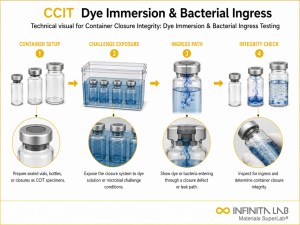
Container Closure Integrity Testing (CCIT): Mass Extraction & Leak Detection
As pharmaceutical and medical device manufacturers transition from probabilistic container-closure integrity (CCI) methods to deterministic, quantitative approaches, mass-extraction leak testing...
Read Article
Get your Ceramic Material testing done from the largest network of accredited labs in the USA
We are a material testing lab with a vast network of accredited labs across the country. Our state-of-the-art equipment and experienced team provide accurate and timely testing services to meet the unique needs of our clients. Partner with us for reliable material testing solutions.
 Quick Turnaround and Hasslefree process
- Confidentiality Guarantee
- Free, No-obligation Consultation
- 100% Customer Satisfaction


