


Energy
Infinita Lab provides comprehensive energy materials testing services for solar, thermal, renewable energy, and power generation applications. From solar reflectance, thermal emittance, and SRI testing to photovoltaic performance, thermal conductivity, and high-temperature mechanical testing, we ensure every material meets ASTM and ISO 17025 compliance standards. With access to 2,000+ accredited U.S. laboratories and 10,000+ test methods, Infinita Lab is your trusted single point of contact for all energy industry testing needs.


Top Testing Services
-
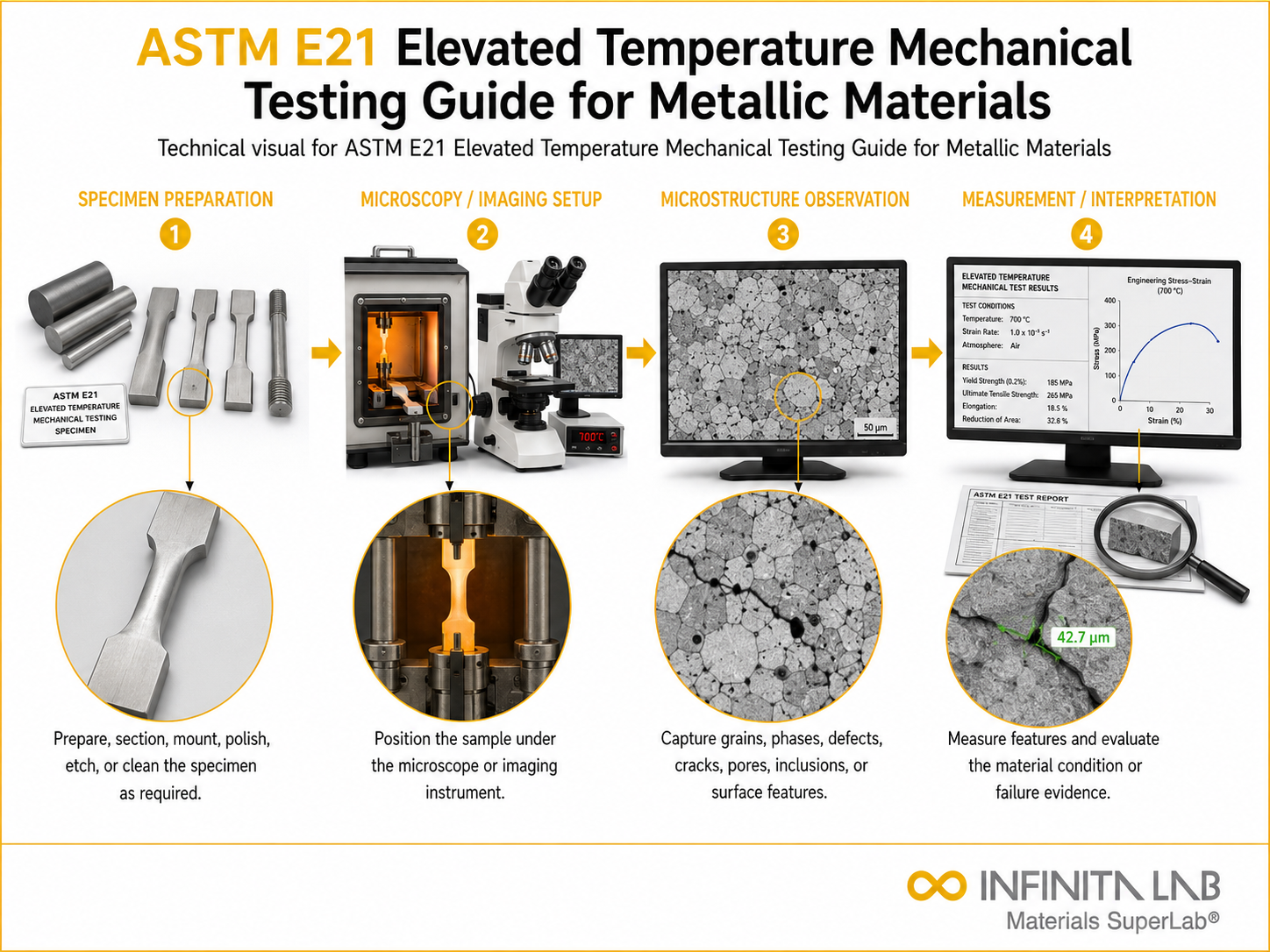
 ASTM E21: Elevated Temperature Mechanical Testing Services
-
ASTM E408: Total Normal Emittance Testing by Inspection Meter
-
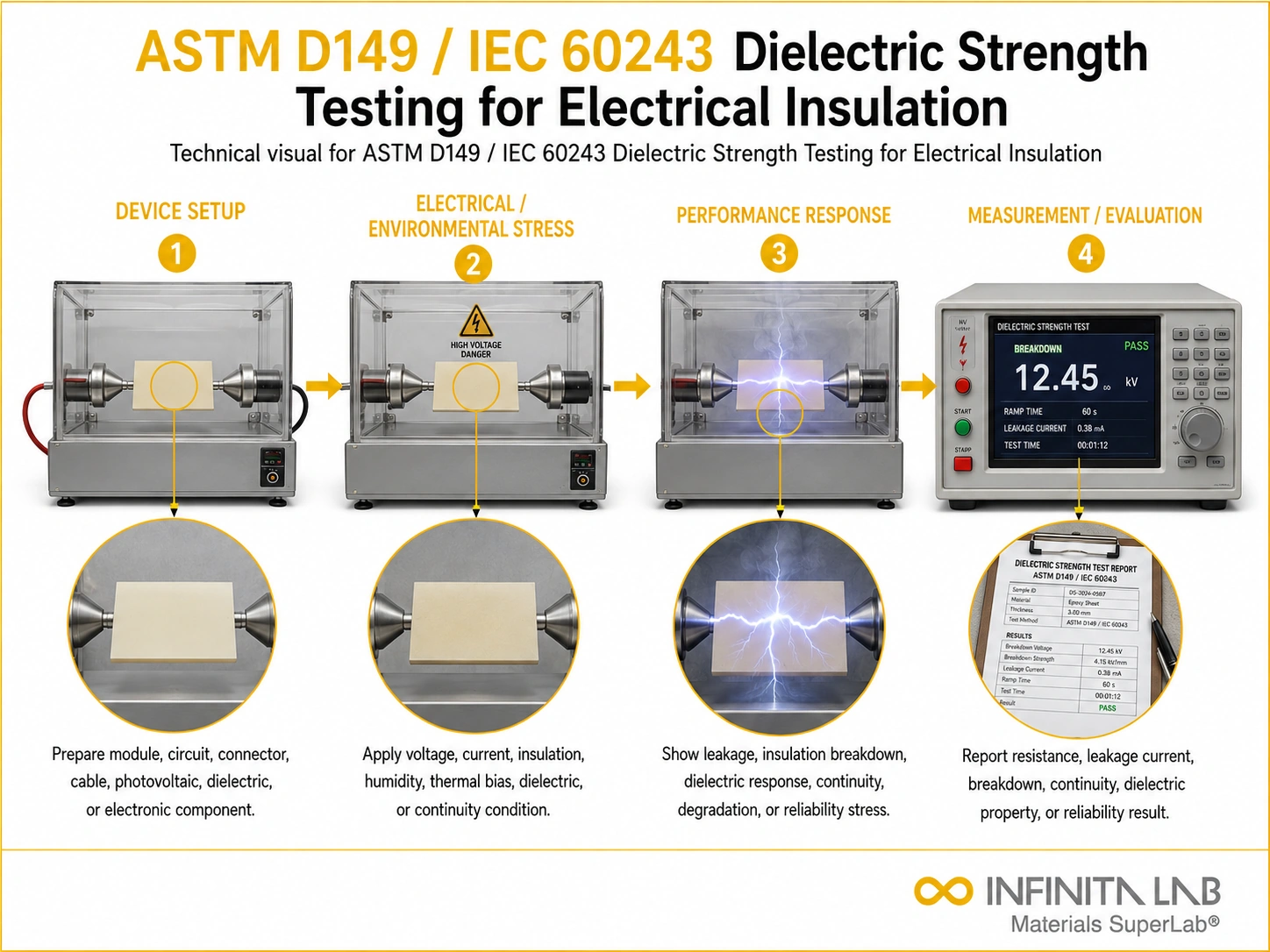
ASTM D149: Dielectric Strength Testing Services
-
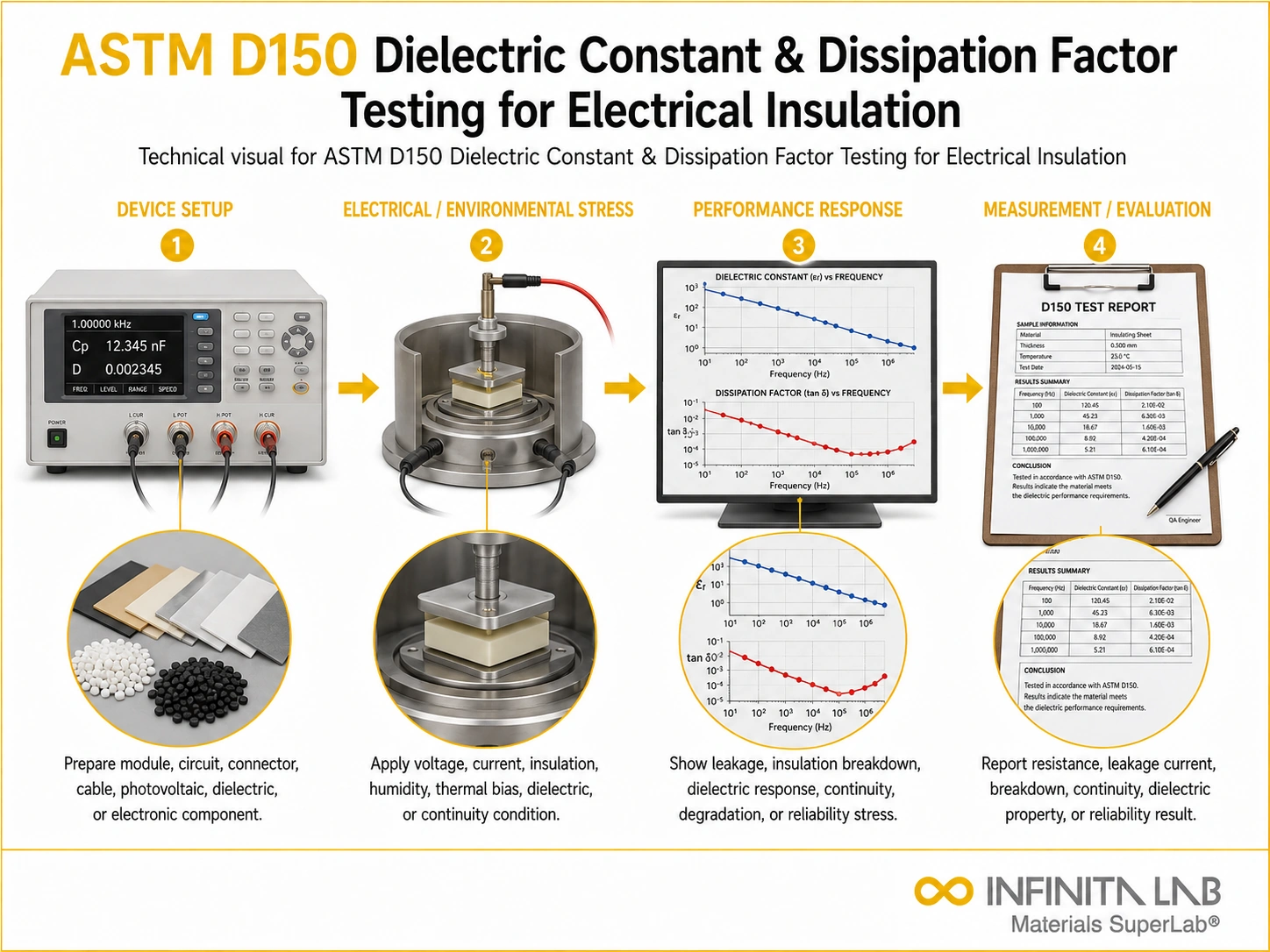
ASTM D150: Dielectric Constant Dissipation Factor Testing Services
-
BET Surface Area Pore Size Analysis Testing Services
-
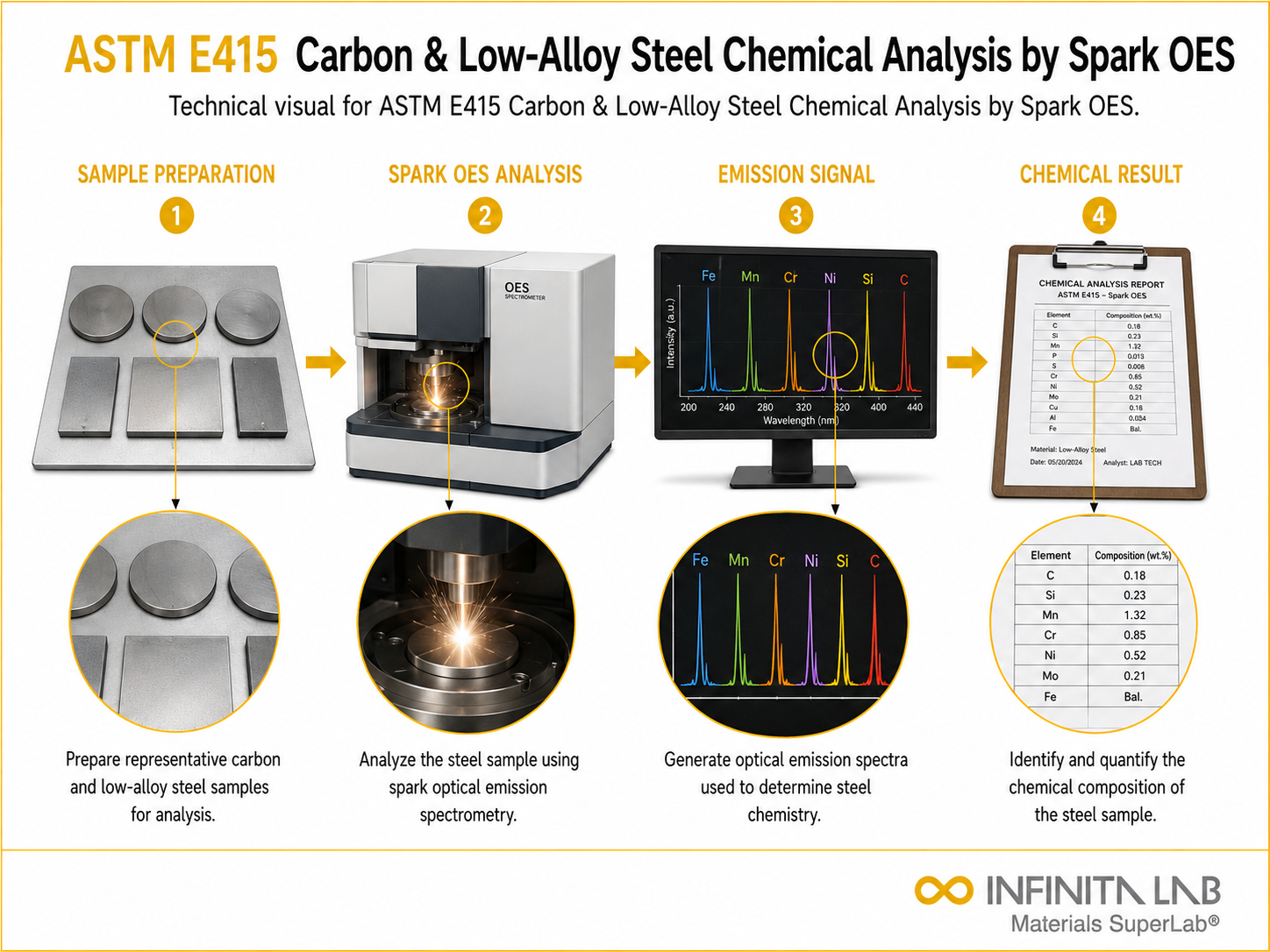
ASTM E415: Carbon Low Alloy Steel Spark OES Testing Services




Energy Testing Services
Energy materials testing services are crucial for ensuring and validating that every material used in solar, thermal, renewable energy, and power generation applications can withstand demanding operational and environmental conditions. Infinita Lab offers best-in-class materials testing services for the energy industry. This comprehensive offering encompasses a broad spectrum of materials analysis tests, as well as capabilities in both sample production and precision measurement.
The energy industry demands the highest levels of material performance, traceability, and compliance. Components and materials used in solar panels, thermal collectors, insulation systems, and energy storage must withstand extreme temperatures, prolonged UV exposure, mechanical stress, and environmental degradation – and must be rigorously verified before deployment. Infinita Lab supports energy engineers and manufacturers by adhering to the strictest quality and compliance guidelines, including relevant international standards such as ASTM and ISO 17025.
Our Energy Materials Testing Services
Solar Reflectance & Absorptance Testing
Solar reflectance and absorptance testing is fundamental to qualifying roofing systems, photovoltaic modules, solar thermal collectors, and cool-roof coating materials. Measuring how much solar radiation a surface reflects or absorbs directly determines its thermal performance, energy efficiency, and suitability for LEED and Energy Star compliance programs.
Relevant ASTM Standards:
ASTM E903 – Spectrophotometric measurement of solar absorptance, reflectance, and transmittance of materials, providing spectrally integrated solar reflectance values used as primary inputs for Solar Reflectance Index (SRI) calculation.
ASTM C1549 – Near-ambient temperature pyranometer method for measuring solar reflectance of flat or low-slope opaque surfaces, providing spectrally integrated solar reflectance values for cool roof and building materials qualification.
Solar Reflectance Index (SRI) Testing
ASTM E1980 – Standard Practice for Calculating Solar Reflectance Index of Horizontal and Low-Sloped Opaque Surfaces – defines a procedure for calculating the Solar Reflectance Index (SRI) from measured values of solar reflectance and thermal emittance. SRI is a single numerical parameter that characterizes a roofing or paving surface’s ability to reject solar heat, combining reflectance and emittance into a composite indicator. SRI is widely used in green building certification (LEED, Energy Star), cool roof specifications, and urban heat island mitigation programs to rank the thermal performance of roofing and paving materials.
Relevant ASTM Standards:
ASTM E1980 – Standard practice for calculating the Solar Reflectance Index (SRI) of horizontal and low-sloped opaque surfaces from measured solar reflectance and thermal emittance values, supporting LEED v4 heat island reduction credit compliance and Energy Star cool roof qualification.
Thermal Emittance Testing
Thermal emittance is a critical surface property governing how efficiently energy materials radiate absorbed heat as infrared radiation. Accurate emittance measurement is essential for passive thermal control systems, cool roof coatings, solar-selective absorbers, and surfaces of power-generation equipment.
Relevant ASTM Standards:
ASTM E408 – Standard test method for determining the total normal emittance of opaque surfaces using portable inspection-meter techniques, providing direct emittance measurements on large surfaces where rapid, non-destructive testing is required. The method utilizes emissometers operated within a temperature range of 27°C to 71°C and is applied across aerospace coatings, reflective roofing systems, and power generation equipment.
ASTM C1371 – Portable emissometer method for determination of emittance of materials near room temperature, used alongside ASTM E1980 to provide thermal emittance inputs for SRI calculation of roofing and paving materials.
Thermal Conductivity of Insulating Materials
Thermal conductivity testing is essential for qualifying insulation materials used across energy systems – from building envelopes and industrial pipelines to battery enclosures and power generation equipment. Accurate thermal conductivity data directly supports energy-efficiency design, R-value compliance, and heat-management system optimization.
Relevant ASTM Standards:
ASTM C177 – Standard test method for steady-state heat flux measurements and thermal transmission properties using a guarded-hot-plate apparatus. It measures how effectively heat flows through a flat, homogeneous specimen, expressing results as thermal conductivity (k) in W/m·K or thermal resistance (R) in m²·K/W. The method applies to materials with thermal conductivity values ranging from approximately 0.02 to 200 W/m·K, making it applicable to both low-conductivity insulators and high-conductivity metals.
ASTM C518 – Heat flow meter apparatus method for measuring steady-state thermal transmission properties of flat materials, including thermal transmittance and thermal conductivity. ASTM C177 is widely used as the primary reference method for calibrating heat flow meter systems used in ASTM C518 testing.
Photovoltaic Cell Electrical Performance Testing
Photovoltaic cell performance testing establishes the electrical output characteristics of solar cells and modules – providing the power conversion efficiency, current-voltage curve, and maximum power point data essential for product specification, R&D validation, and production line screening.
Relevant ASTM Standards:
ASTM E948 – Standard test method for electrical performance of photovoltaic cells under simulated sunlight, specifying a test for evaluating the electrical performance of PV cells in terms of the current-voltage curve upon illumination by a simulated AM1.5 solar spectrum light source at a flux of 1000 W/m² and a cell temperature of 25°C. Key measured parameters include short-circuit current, open-circuit voltage, maximum power, fill factor, and conversion efficiency.
Solar Concentrating Collector Performance Testing
Tracking solar concentrators – including parabolic trough, dish, and linear Fresnel systems – require rigorous thermal performance evaluations to validate energy conversion efficiency and optical alignment before deployment in solar thermal power generation and industrial process-heat applications.
Relevant ASTM Standards:
ASTM E905 – Standard test method for thermal performance of tracking solar concentrators, defining procedures for evaluating the thermal performance of tracking solar concentrator systems by measuring their ability to convert incident solar radiation into usable thermal energy. The standard focuses on efficiency, heat gain, and system response under real operating conditions. It applies to parabolic, linear, and other tracking concentrator designs used in solar thermal energy systems.
Elevated Temperature Mechanical Testing for Energy Materials
Materials used in turbines, heat exchangers, power generation equipment, and solar thermal systems are routinely exposed to sustained elevated temperatures. High-temperature mechanical testing defines yield strength, tensile strength, and elongation at service temperatures – providing design allowables for critical energy infrastructure components.
Relevant ASTM Standards:
ASTM E21 – Elevated temperature tensile testing for metallic materials, assessing yield strength, tensile strength, and elongation at temperatures encountered in energy generation equipment, including turbine blades, heat exchanger components, and high-temperature structural members.
Thermal Analysis of Energy Materials
Energy materials are exposed to extreme thermal environments – from cryogenic storage tanks to high-temperature solar receiver tubes. Thermal analysis characterizes melting points, glass transition temperatures, thermal stability, and coefficient of thermal expansion – all critical for energy material qualification.
Relevant ASTM Standards:
ASTM D3418 – Differential Scanning Calorimetry (DSC) for melting, crystallization, glass transition temperature (Tg), and oxidative induction time of polymers and composite matrices used in solar modules, wind turbine blades, and energy storage systems.
ASTM E1356 – DSC determination of glass transition temperatures for energy-grade polymers and amorphous materials used in photovoltaic encapsulants and insulation systems.
ASTM E1131 – Thermogravimetric Analysis (TGA) for compositional analysis, decomposition onset, and thermal stability of polymers, insulation materials, and composite matrices used in energy system components.
ASTM E831 – Coefficient of Linear Thermal Expansion (CTE) testing by TMA, essential for dimensional stability predictions in solar panel assemblies, energy storage enclosures, and power generation structural components.
ASTM E1269 – DSC determination of specific heat capacity of energy materials, including insulation, phase-change materials, and thermal storage media – providing essential thermophysical data for energy system design.
Read Our Blogs and Research Papers
In-depth examination of genuine material testing solutionsTorque Calibration: Methods, Standards & Traceability Guide

Torque Calibration: Methods, Standards & Traceability Guide
What Is Torque Calibration? Torque calibration is the process of comparing a torque-measuring instrument — torque wrench, torque transducer, torque...
Read ArticleAutomotive & Transportation Testing Services: Standards, Safety & Compliance
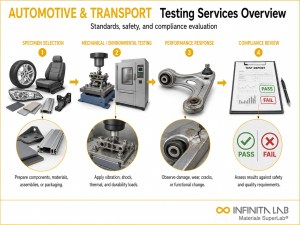
Automotive & Transportation Testing Services: Standards, Safety & Compliance
Testing for Automotive and transportation materials Infinita Lab has specialised in providing the best automotive testing and calibration services for...
Read ArticleISO 17025: Accredited Laboratory Standards Testing Services
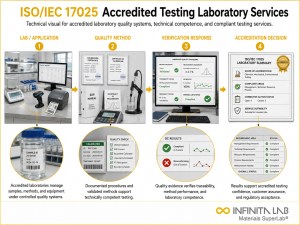
ISO 17025: Accredited Laboratory Standards Testing Services
ISO 17025 Standard ISO 17025 Standard is important for maintaining, managing, and safely handling a product and imposing hazard control...
Read Article
Get your Ceramic Material testing done from the largest network of accredited labs in the USA
We are a material testing lab with a vast network of accredited labs across the country. Our state-of-the-art equipment and experienced team provide accurate and timely testing services to meet the unique needs of our clients. Partner with us for reliable material testing solutions.
 Quick Turnaround and Hasslefree process
- Confidentiality Guarantee
- Free, No-obligation Consultation
- 100% Customer Satisfaction


