


ASTM D3811: Pressure Sensitive Tape Unwind Force Testing Services
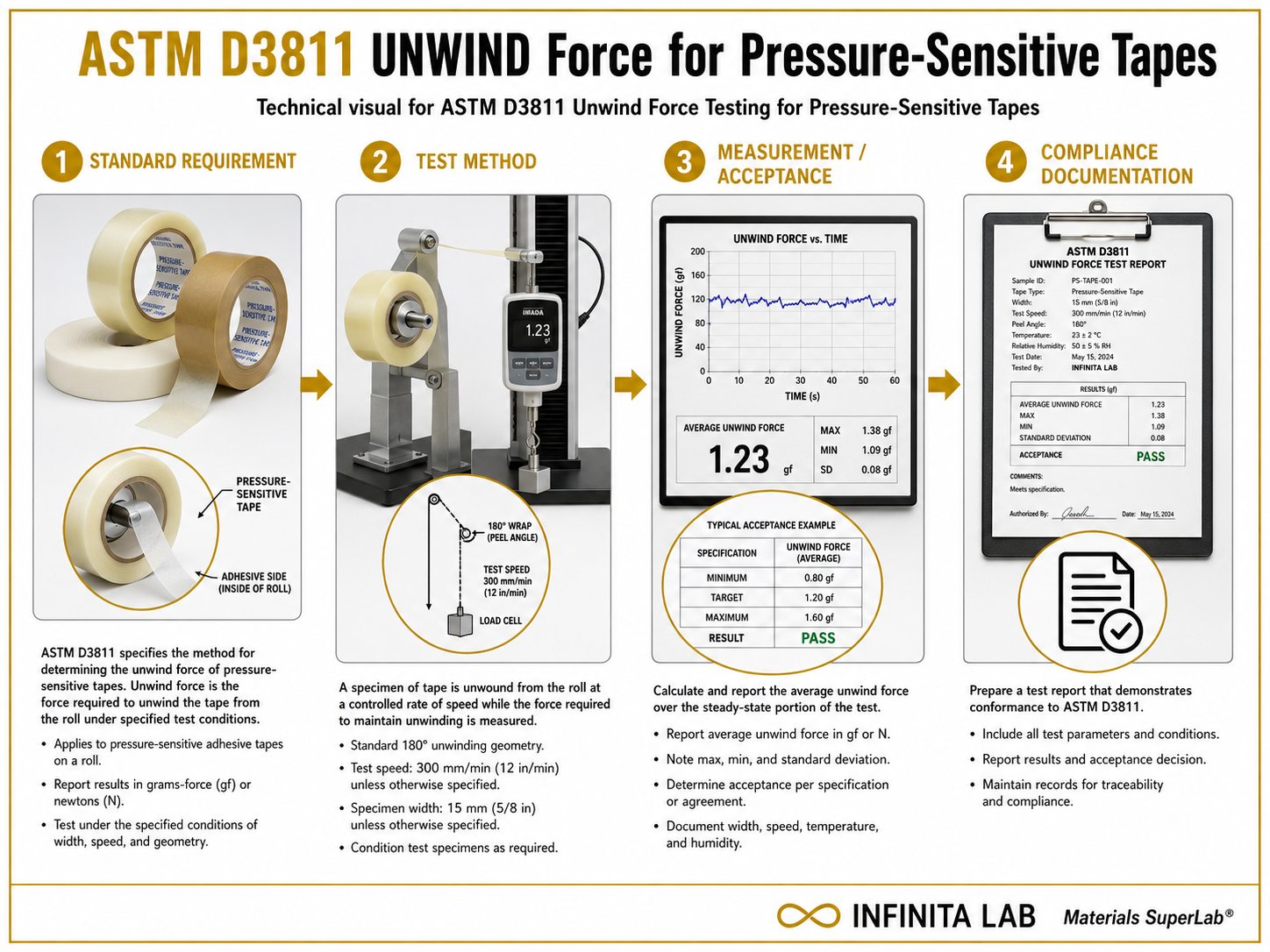
ASTM D3811/D3811M is a standard test method used to determine the force required to unwind a roll of pressure-sensitive tape. This test is applicable for hand and machine unwinding of tape at low rates.
TRUSTED BY


Get ASTM D3811 compliant results — request your pressure sensitive tape unwind force testing quote
- Overview
- Scope, Applications, and Benefits
- Test Process
- Specifications
- Instrumentation
- Results and Deliverables
What Is ASTM D3811 Pressure Sensitive Tape Unwind Force?
ASTM D3811 defines a standardized method for measuring the force required to unwind a pressure-sensitive tape from its own roll. Unwind force — also called release force or unwind adhesion — is a critical functional property of pressure-sensitive tapes, particularly for applications involving automated dispensing equipment, high-speed packaging lines, and roll-form label stock. If the unwind force is too high, tape dispensing becomes difficult and may cause web breaks; if too low, the roll may unwind prematurely during handling or shipping.
The test involves mounting a roll of tape on a mandrel and pulling the free end at a controlled speed while measuring the force required to peel one layer from the roll. The average unwind force per unit width of tape is reported. ASTM D3811 evaluates the tape in its as-wound condition, reflecting the combined effect of the adhesive’s tack and the release liner or backing surface properties.

Applications and Benefits of ASTM D3811 Pressure Sensitive Tape Unwind Force Testing
Scope
ASTM D3811 evaluates:
- Unwind the force of pressure-sensitive tape from the roll
- Effect of aging (blocking) on unwind force
- Influence of wind tension on unwind force
- Comparative unwind performance of tape products
- Batch-to-batch unwind force consistency
- Unwind behavior at different test speeds
Applications
- Packaging and sealing tapes
- Label stock and self-adhesive products
- Masking and painter’s tapes
- Medical-grade pressure-sensitive tapes
- Electrical insulation tapes
- Automotive assembly tapes
- Industrial maintenance and repair tapes
Benefits
- Ensures consistent tape dispensing in automated applications
- Detects blocking or adhesive transfer issues in aged tape rolls
- Supports tape specification for packaging line compatibility
- Enables comparison of unwind performance across tape types
- Provides data for tape roll design optimization
- Reduces production downtime from unwind-related tape issues
Our ASTM D3811 Testing Procedure
Roll Preparation
A fresh or aged tape roll of specified width is mounted on a free-spinning mandrel.
1Free End Attachment
The free end of the tape is attached to the load cell of the tensile testing machine.
2Unwind Test
The tape is unwound at a controlled speed (typically 300 mm/min); force is continuously recorded.
3Data Analysis
Average unwind force over the test length is calculated and normalized per unit tape width.
4ASTM D3811 Test Parameters and Requirements
| Parameter | Details |
|---|---|
| Test Principle | Controlled-rate unwind force measurement |
| Unwind Speed | 300 mm/min (standard) |
| Applicable Materials | Pressure-sensitive tapes in roll form |
| Output Units | N/m (oz/in or g/cm) |
| Measured Outputs | Average unwind force per unit width |


- Universal testing machine (UTM) with unwind fixture
- Free-spinning tape mandrel
- A load cell appropriate for the unwind force range
- Data acquisition software
- Conditioning chamber (23°C/50% RH)
- Ruler for width measurement
Equipment and Instrumentation Used for ASTM D3811 Testing
What You Receive: Test Report, Data, and Certification
- Average unwind force per unit tape width
- Unwind force vs. displacement trace
- Statistical summary of results
- Aging effect on unwind force (if applicable)
- Compliance documentation
- Quality assurance and production control reports
ASTM D3811 Pressure Sensitive Tape Unwind Force FAQs
ASTM D3811 measures unwind force of pressure-sensitive adhesive tapes. It evaluates force required to remove tape from roll, helping assess usability, handling, and performance during application processes in industrial and consumer applications.
Key parameters include unwind speed, roll diameter, temperature, and test angle. Controlled conditions ensure accurate measurement of force required to unwind tape under standardized testing procedures.
The test measures force required to unwind tape, typically expressed in force per width. Results indicate ease of application and consistency of adhesive performance during use.
ASTM D3811 applies to pressure-sensitive adhesive tapes used in packaging, electrical, medical, and industrial applications requiring controlled unwind characteristics and consistent performance.
ASTM D3811 results may vary with temperature, humidity, and roll condition. It may not fully represent real-world application conditions, requiring additional testing for comprehensive performance evaluation.
Why Choose Infinita Lab for Pressure Sensitive Tape Unwind Force Testing?
At the core of this breadth is our network of 2,000+ accredited laboratories across the USA, offering access to over 10,000 testing methods and analytical services. From advanced materials characterization (SEM, TEM, RBS, XPS) to mechanical, chemical, environmental, biological, and standardized ASTM/ISO-compliant testing, we deliver unmatched flexibility, specialization, and scale. You are never limited by geography, facility, or methodology — Infinita Lab connects you to the right expertise and testing solution, every time.

Need ASTM D3811 Pressure Sensitive Tape Unwind Force Testing You Can Rely On?
Send query us at hello@infinitalab.com or call us at (888) 878-3090 to learn more about our services and how we can support you.



Request a Quote
Submit your material details and receive testing procedures, pricing, and turnaround time within 24 hours.
 Quick Turnaround and Hasslefree process
 Confidentiality Guarantee
 Free, No-obligation Consultation
 100% Customer Satisfaction
