


MIL-STD-810: Rugged Computing Guide Testing Services
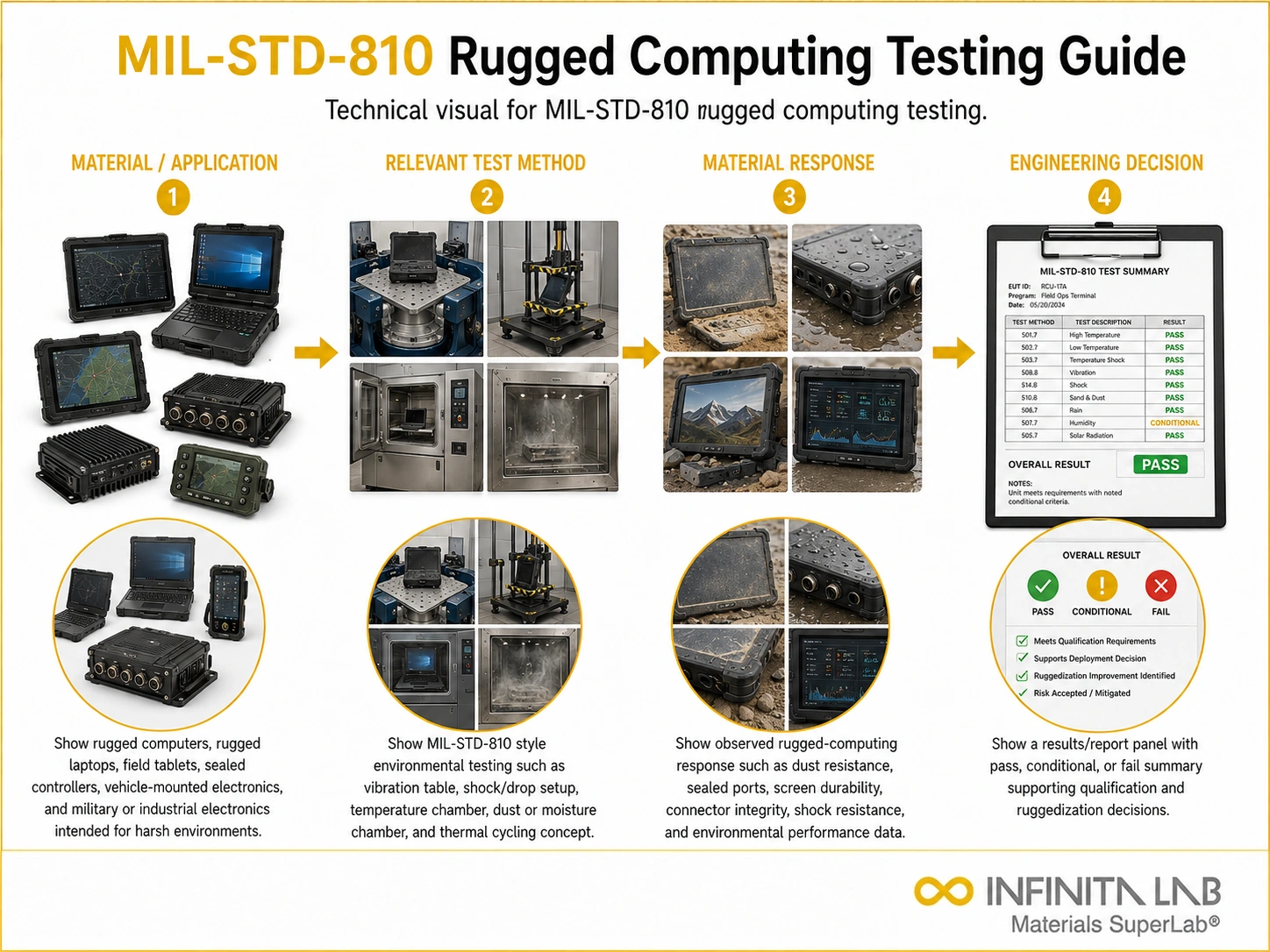
MIL-STD-810 is a set of standards developed to evaluate the ruggedness of equipment and systems in various environmental conditions. Rugged computing testing involves subjecting computing equipment to a battery of tests to ensure they can operate in harsh environments. These tests may include exposure to extreme temperatures, humidity, shock, vibration, dust, and water, among others.
TRUSTED BY


Get MIL-STD-810 compliant results — request your rugged computing guide testing quote
- Overview
- Scope, Applications, and Benefits
- Test Process
- Specifications
- Instrumentation
- Results and Deliverables
What Is MIL-STD-810 Rugged Computing Guide?
MIL-STD-810 is a U.S. military standard used to evaluate the durability and reliability of rugged computers under extreme environmental conditions. It simulates real-world stresses such as temperature extremes, shock, vibration, humidity, dust, and altitude to ensure devices perform reliably throughout their lifecycle.
Rugged computing devices—including laptops, tablets, and embedded systems—are tested using tailored methods from MIL-STD-810 to match their intended use environments. The standard focuses on environmental engineering and realistic condition simulation, rather than fixed pass/fail certification, ensuring devices can withstand harsh operational scenarios.

Applications and Benefits of MIL-STD-810 Rugged Computing Guide Testing
Scope
MIL-STD-810 rugged computing testing evaluates:
- Resistance to shock and drop impacts
- Vibration tolerance during transport and operation
- Performance under extreme temperatures (hot/cold)
- Humidity, rain, and water exposure
- Dust, sand, and contamination resistance
- Altitude and pressure effects
Applications
- Rugged laptops and tablets
- Military and defense computing systems
- Industrial and field service devices
- Automotive and transportation electronics
- Oil & gas, mining, and outdoor equipment
Benefits
- Ensures reliability in harsh environments
- Reduces failure during field operations
- Improves device durability and lifespan
- Supports mission-critical performance
- Enables deployment in extreme conditions
Our MIL-STD-810 Testing Procedure
Test Planning (Tailoring)
Environmental conditions (temperature, vibration, shock, etc.) are selected based on device use-case.
1Sample Preparation
Devices are configured in operational mode with required accessories and mounting conditions.
2Environmental Testing
Devices undergo tests such as vibration (Method 514), shock/drop (Method 516), temperature, humidity, and dust exposure.
3Data Analysis
Functional performance, physical damage, and reliability are evaluated before, during, and after testing.
4MIL-STD-810 Test Parameters and Requirements
| Parameter | Details |
|---|---|
| Number of Methods | 25–30+ test methods |
| Key Tests | Shock (516), Vibration (514), Temperature, Humidity, Dust |
| Temperature Range | ~-55°C to +125°C (method dependent) |
| Drop Testing | ~1.2 m typical drop height (device dependent) |
| Test Environment | Controlled chambers and mechanical systems |
| Measured Outputs | Functional performance, structural integrity |


- Environmental test chambers (temperature, humidity, altitude)
- Vibration test systems (multi-axis shakers)
- Shock and drop test equipment
- Dust and sand chambers
- Water immersion and rain test systems
- Data acquisition and monitoring systems
Equipment and Instrumentation Used for MIL-STD-810 Testing
What You Receive: Test Report, Data, and Certification
- Ruggedness and durability performance data
- Shock and vibration resistance evaluation
- Thermal and environmental behavior analysis
- Failure mode identification (cracks, malfunction, ingress)
- Pass/fail evaluation based on selected test methods
- Test report
MIL-STD-810 Rugged Computing Guide FAQs
It is a testing approach used to evaluate how rugged computers perform under environmental stresses such as shock, temperature, humidity, and vibration, ensuring durability in harsh conditions.
No, MIL-STD-810 is not a certification. It is a testing standard where manufacturers select relevant methods based on use-case and validate performance accordingly.
Shock/drop (Method 516), vibration (Method 514), temperature, humidity, and dust tests are the most critical for evaluating rugged laptop durability.
Industries such as defense, aerospace, oil & gas, construction, and field services use rugged computing testing to ensure reliable device performance in extreme environments.
It ensures devices can withstand real-world environmental stresses, improving reliability, reducing failures, and enabling consistent performance in demanding operational conditions.
Why Choose Infinita Lab for Rugged Computing Guide Testing
At the core of this breadth is our network of 2,000+ accredited laboratories across the USA, offering access to over 10,000 testing methods and analytical services. From advanced materials characterization (SEM, TEM, RBS, XPS) to mechanical, chemical, environmental, biological, and standardized ASTM/ISO-compliant testing, we deliver unmatched flexibility, specialization, and scale. You are never limited by geography, facility, or methodology — Infinita Lab connects you to the right expertise and testing solution, every time.

Looking for an Accredited Partner for MIL-STD-810 Rugged Computing Guide Testing?
Send query us at hello@infinitalab.com or call us at (888) 878-3090 to learn more about our services and how we can support you.



Request a Quote
Submit your material details and receive testing procedures, pricing, and turnaround time within 24 hours.
 Quick Turnaround and Hasslefree process
 Confidentiality Guarantee
 Free, No-obligation Consultation
 100% Customer Satisfaction
