


ASTM E967: DSC DTA Temperature Calibration Testing Services
ASTM E967 outlines the procedure for temperature calibration of differential thermal analyzers and differential scanning calorimeters across a temperature range from −40 to +2500°C. All values given in the standard are in SI units.
TRUSTED BY


Get ASTM E967 compliant results — request your DSC DTA temperature calibration testing quote
- Overview
- Scope, Applications, and Benefits
- Test Process
- Specifications
- Instrumentation
- Results and Deliverables
What Is ASTM E967 DSC DTA Temperature Calibration?
ASTM E 967 Temperature Calibration Testing: The standardized testing procedure to calibrate the temperature scale of differential scanning calorimeters and differential thermal analyzers using certified reference materials to ensure traceable accuracy in the range of temperatures that can be achieved in a defined melting point calibration procedure. The reference materials to be used in the calibration process, as well as the procedure for correcting the accuracy of DSCs and DTAs, are defined in the ASTM E 967 testing procedure to ensure accurate data can be obtained in DSC/DTA testing.

Applications and Benefits of ASTM E967 DSC DTA Temperature Calibration Testing
Scope
ASTM E 967 standards are used to calibrate the temperature scale of DSC and DTA instruments by determining the onset melting points of certified reference standards within the equipment’s operating range. The onset melting points are compared to the certified reference standards to establish the temperature correction factors and accuracy of the equipment temperature scale.
ASTM E 967 temperature calibration testing evaluates:
- Temperature scale accuracy of DSC and DTA instruments across the operating temperature range
- Onset melting temperature measurement of certified reference materials per ASTM E 967
- Temperature correction factor determination for DSC and DTA instrument calibration
- Instrument temperature linearity and accuracy across defined calibration temperature points
- Compliance with ASTM E 967 temperature accuracy acceptance criteria for thermal analysis instruments
Applications
- DSC and DTA instrument temperature calibration for polymer thermal analysis programs
- Pharmaceutical DSC temperature calibration for melting point and purity assessment
- Materials research DSC and DTA temperature accuracy verification programs
- Production laboratory thermal analysis instrument temperature calibration programs
- Calibration laboratories requiring ASTM E 967 DSC and DTA temperature calibration data
Benefits
- Provides reliable DSC and DTA temperature calibration data for thermal analysis accuracy assurance
- Supports thermal analysis instrument compliance and measurement traceability requirements
- Identifies temperature accuracy deficiencies in DSC and DTA instruments before analysis programs
- Delivers traceable temperature calibration records for laboratory and regulatory submissions
- Reduces thermal analysis measurement risk by verifying instrument temperature accuracy early in calibration
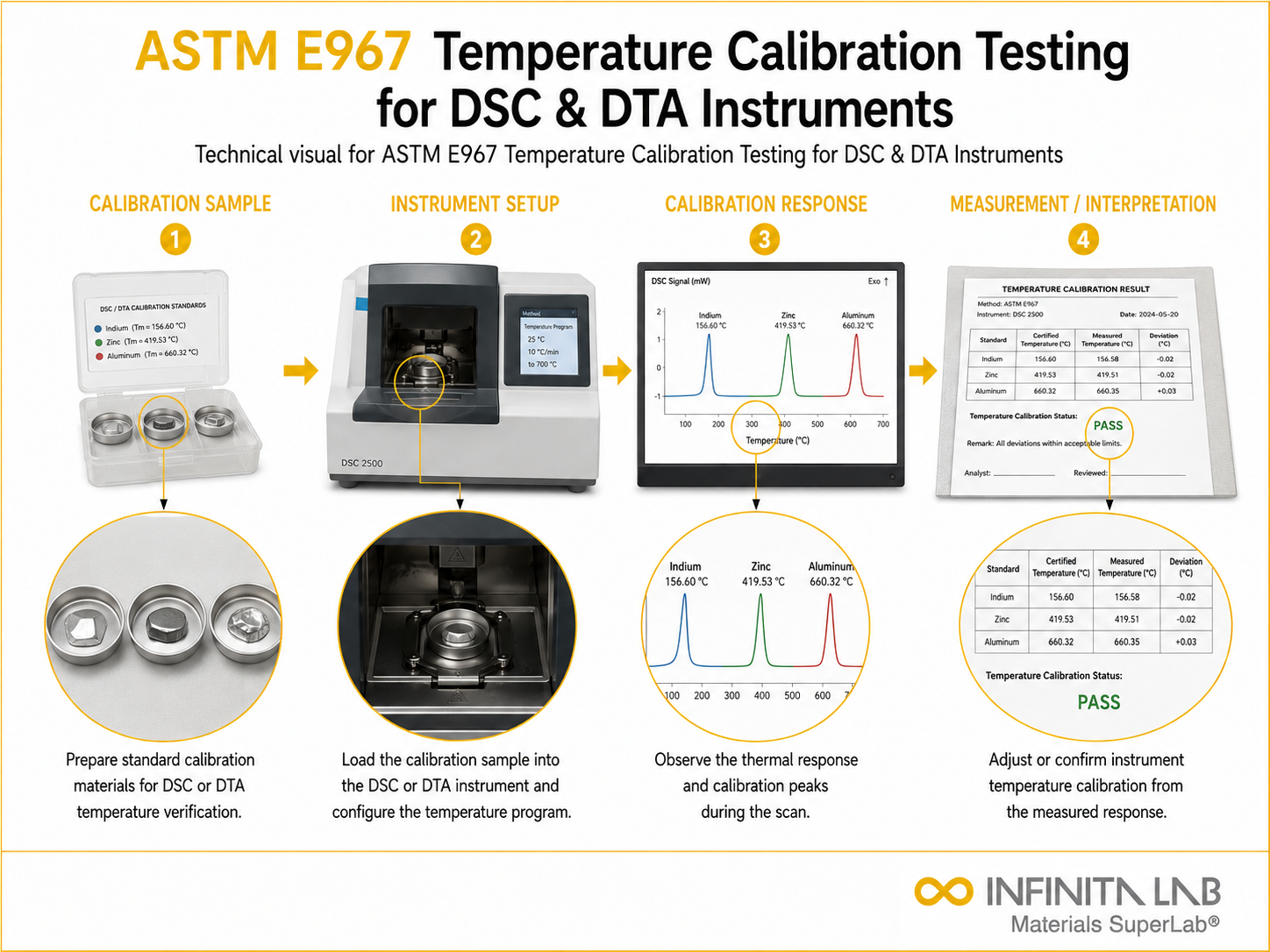
Our ASTM E967 Testing Procedure
Reference Material Preparation
Certified reference material specimens encapsulated in DSC or DTA pans per ASTM E 967 requirements.
1Thermal Scanning
Reference specimens heated through melting transition at 10°C/min scan rate per ASTM E 967.
2Onset Temperature Measurement
Melting onset temperature determined from extrapolated leading edge of melting endotherm peak.
3Data Analysis & Reporting
Measured onset temperatures compared against certified values to determine temperature correction and test compliance result.
4ASTM E967 Test Parameters and Requirements
| Parameter | Details |
|---|---|
| Applicable Instruments | Differential scanning calorimeters and differential thermal analyzers across defined operating ranges |
| Reference Materials | Certified NIST-traceable reference materials including indium 156.6°C, tin 231.9°C, and zinc 419.5°C |
| Heating Rate | 10°C/min standard heating rate per ASTM E 967 calibration scan conditions |
| Temperature Accuracy | Onset temperature accuracy within ±0.5°C of certified reference material melting temperature |
| Measured Outputs | Onset temperatures, temperature correction factors, calibration curves, and test compliance result |


- A differential scanning calorimeter or differential thermal analyzer requires temperature calibration
- Certified NIST-traceable reference materials ,including indium, tin, and zinc standards
- Precision analytical balance for reference material specimen mass measurement
- Aluminum and hermetic DSC pan encapsulation equipment
- Specialist DSC and DTA thermal data acquisition and onset temperature analysis software
- Data reporting and calibration curve visualization system
Equipment and Instrumentation Used for ASTM E967 Testing
What You Receive: Test Report, Data, and Certification
- Onset melting temperature measurements for all certified reference materials per ASTM E 967
- Temperature correction factor data across the instrument calibration temperature range
- Calibration curve showing measured versus certified reference material temperatures
- Test compliance result assessed against ASTM E 967 ±0.5°C temperature accuracy requirements
- ASTM E 967 DSC and DTA temperature calibration report
ASTM E967 DSC DTA Temperature Calibration FAQs
ASTM E967 uses reference materials with known transition temperatures, controlled heating rates typically 1 to 20°C per minute, baseline stability, and peak temperature accuracy to calibrate DSC and DTA instruments.
ASTM E967 uses standard materials such as indium, tin, zinc, and aluminum with well-defined melting points to verify and adjust temperature accuracy of thermal analysis instruments.
ASTM E967 calibration covers a broad temperature range depending on selected reference materials, typically from near ambient conditions up to several hundred degrees Celsius for accurate instrument performance verification.
ASTM E967 is used to calibrate differential scanning calorimeters and differential thermal analyzers, ensuring accurate temperature measurement during thermal analysis of materials.
ASTM E967 calibration accuracy depends on proper sample preparation, heating rates, and instrument condition, and may not account for variations during real testing conditions or different sample types.
Why Choose Infinita Lab for DSC DTA Temperature Calibration Testing?
At the core of this breadth is our network of 2,000+ accredited laboratories across the USA, offering access to over 10,000 testing methods and analytical services. From advanced materials characterization (SEM, TEM, RBS, XPS) to mechanical, chemical, environmental, biological, and standardized ASTM/ISO-compliant testing, we deliver unmatched flexibility, specialization, and scale. You are never limited by geography, facility, or methodology — Infinita Lab connects you to the right expertise and testing solution, every time.

Need ASTM E967 DSC DTA Temperature Calibration Testing You Can Rely On?
Send query us at hello@infinitalab.com or call us at (888) 878-3090 to learn more about our services and how we can support you.



Request a Quote
Submit your material details and receive testing procedures, pricing, and turnaround time within 24 hours.
 Quick Turnaround and Hasslefree process
 Confidentiality Guarantee
 Free, No-obligation Consultation
 100% Customer Satisfaction
