


ASTM E181 Detector Calibration & Radionuclide Analysis Testing
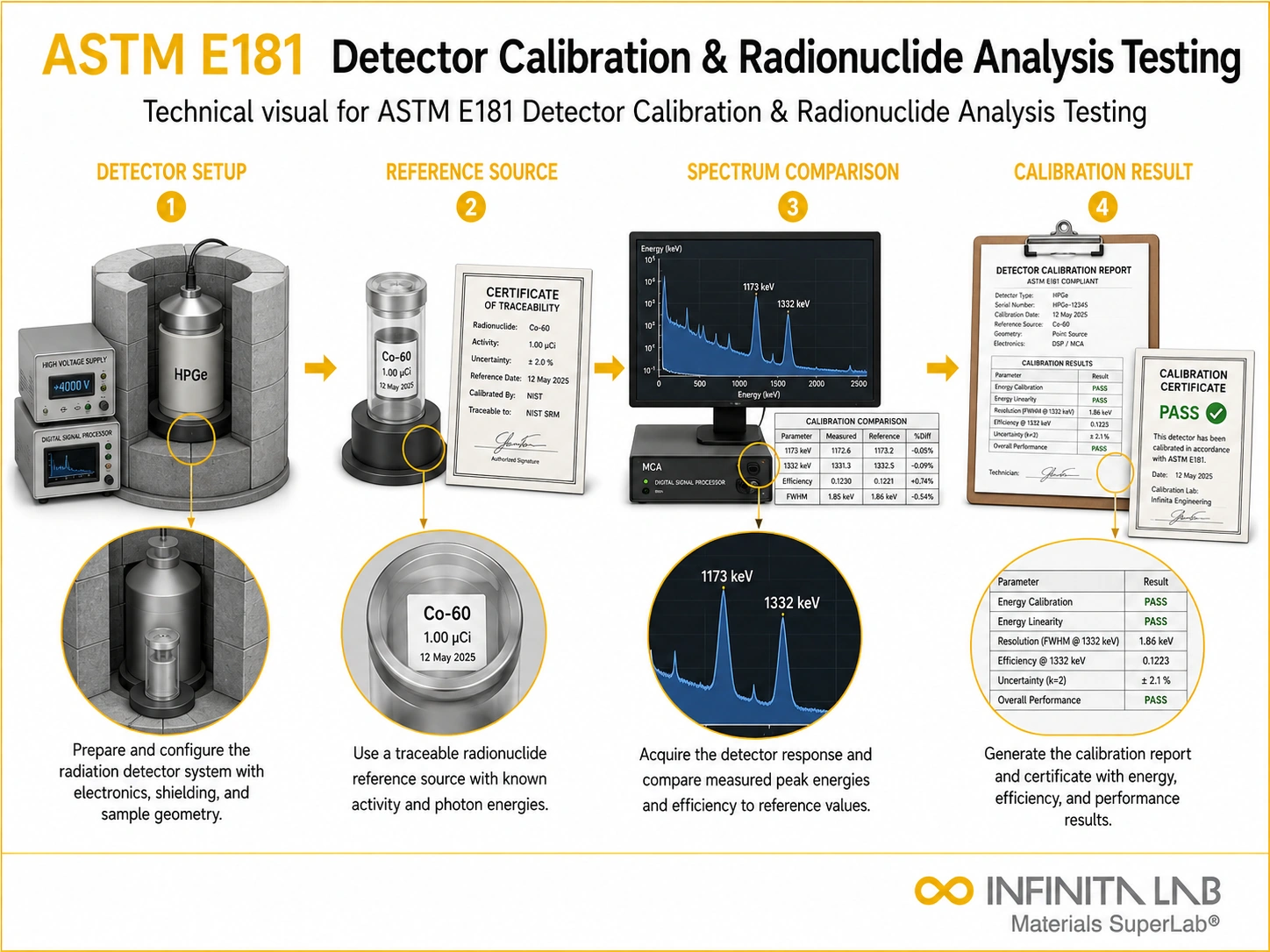
ASTM E181 covers the procedure for calibration of a radiation detector and analysis of radionuclides. For each radionuclide, one or more of these methods can be applied.
TRUSTED BY


Precision-driven testing for dimensional accuracy and compliance
- Overview
- Scope, Applications, and Benefits
- Test Process
- Specifications
- Instrumentation
- Results and Deliverables
Overview
ASTM E181-10 provides test methods for calibrating radiation detectors and analyzing radionuclides in various samples. Accurate calibration is essential to ensure reliable measurement of radioactive materials and their activity levels.
This standard is widely used in nuclear, environmental, and laboratory applications to ensure precise detection and quantification of radionuclides.

Scope, Applications, and Benefits
Scope
ASTM E181-10 focuses on establishing calibration procedures for radiation detectors and performing radionuclide analysis. It ensures accurate measurement of radioactive emissions.
The test evaluates:
- Detector calibration accuracy
- Radionuclide identification
- Activity measurement
- Energy calibration
- Measurement reliability
Applications
- Nuclear power plants
- Environmental monitoring
- Radiation safety laboratories
- Medical and research facilities
- Radioactive material analysis
Benefits
- Ensures accurate radiation measurement
- Improves detector performance
- Supports regulatory compliance
- Enhances safety and monitoring
- Enables reliable radionuclide analysis
Test Process
Detector Calibration
Detector is calibrated using known radioactive sources.
1Energy Calibration
Energy response is adjusted for accurate detection.
2Sample Measurement
Sample is analyzed for radionuclide emissions.
3Data Recording & Evaluation
Activity and identification results are calculated.
4Technical Specifications
| Parameter | Details |
|---|---|
| Applicable Materials | Radioactive samples |
| Detector Type | Gamma or beta detectors |
| Calibration Source | Known radionuclide standards |
| Measurement Unit | Activity (Bq or Ci) |
| Measured Outputs | Radionuclide type and activity |


- Radiation detector (e.g., gamma spectrometer)
- Calibration sources
- Counting system
- Shielding setup
- Data acquisition system
Instrumentation Used for Testing
Results and Deliverables
- Detector calibration data
- Radionuclide identification
- Activity measurement report
- Test condition summary
- ASTM compliance report
Frequently Asked Question
ASTM E181-10 is a standard test method used for detector calibration and analysis of radionuclides, ensuring accurate measurement of radioactive materials in environmental and industrial samples.
ASTM E181-10 is important because accurate detector calibration ensures reliable radionuclide identification and quantification, supporting safety, regulatory compliance, and environmental monitoring in nuclear-related activities.
ASTM E181-10 involves using known radioactive standards to calibrate detectors, then measuring emitted radiation to identify and quantify radionuclides based on energy and intensity.
ASTM E181-10 requires radiation detectors such as gamma spectrometers, calibration sources, shielding, and data acquisition systems to ensure precise measurements.
Results are reported as radionuclide type and activity concentration, typically in becquerels or curies, helping assess radiation levels and ensure compliance with safety standards.
Why Choose Infinita Lab for Advanced Materials Testing and Characterization?
At the core of this breadth is our network of 2,000+ accredited laboratories across the USA, offering access to over 10,000 testing methods and analytical services. From advanced materials characterization (SEM, TEM, RBS, XPS) to mechanical, chemical, environmental, biological, and standardized ASTM/ISO-compliant testing, we deliver unmatched flexibility, specialization, and scale. You are never limited by geography, facility, or methodology — Infinita Lab connects you to the right expertise and testing solution, every time.

Looking for a Trusted Partner for Accurate and Reliable Testing Services?
Send query us at hello@infinitalab.com or call us at (888) 878-3090 to learn more about our services and how we can support you.



Request a Quote
Submit your material details and receive testing procedures, pricing, and turnaround time within 24 hours.
 Quick Turnaround and Hasslefree process
 Confidentiality Guarantee
 Free, No-obligation Consultation
 100% Customer Satisfaction
