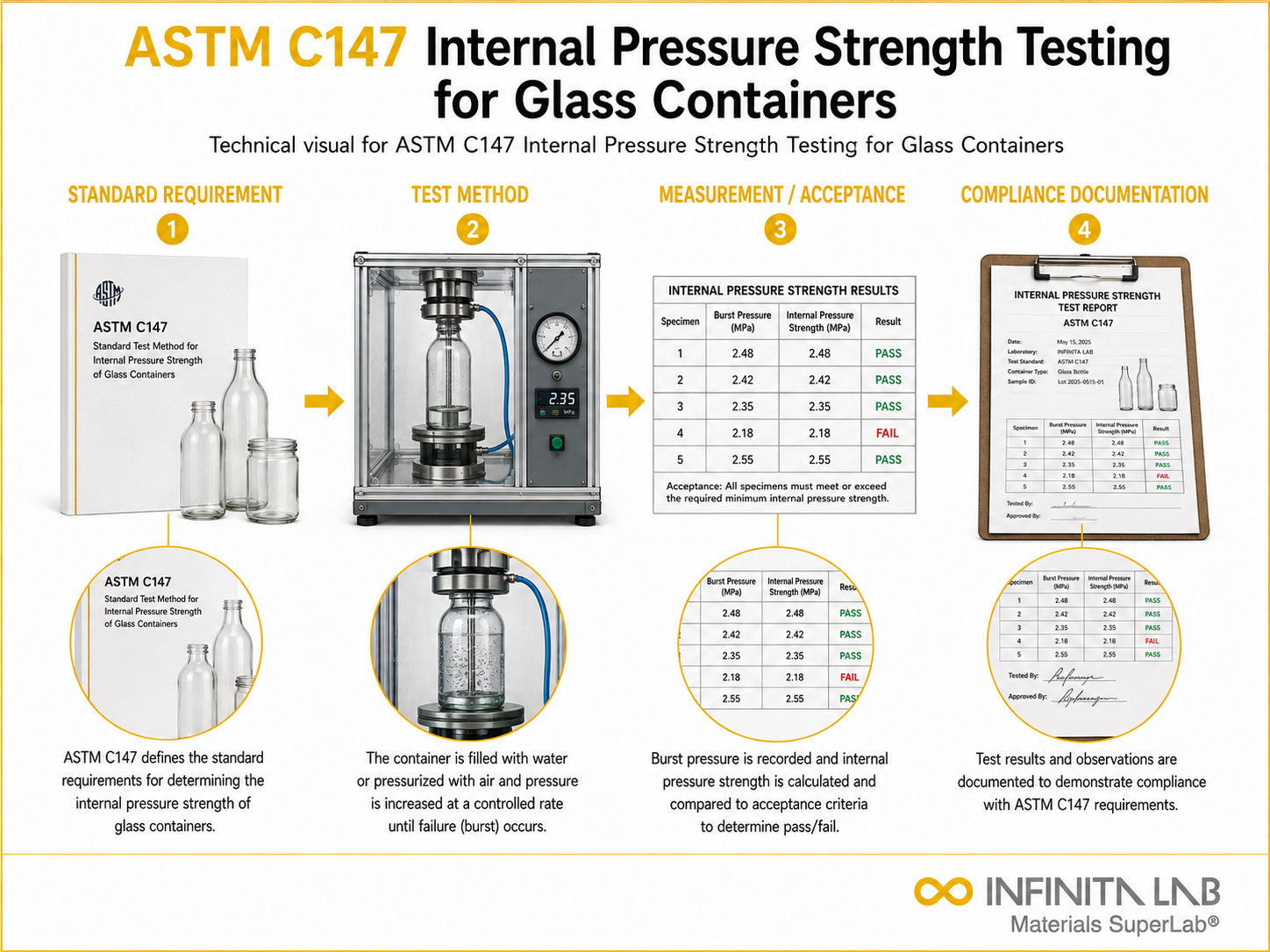


OverviewWhat Is ASTM C147 Glass Container Internal Pressure Strength?
ASTM C147 specifies a standardized method for determining the internal pressure strength of glass containers such as bottles and jars. The test evaluates the ability of containers to withstand internal pressure without failure, ensuring structural integrity during filling, storage, and transportation. It is critical for assessing the safety of containers used with pressurized or carbonated contents.
This method is widely used to verify container performance under simulated service conditions. By measuring burst pressure and failure characteristics, ASTM C147 helps manufacturers optimize design, improve quality control, and ensure compliance with safety requirements for glass packaging applications.

Applications and Benefits of ASTM C147 Glass Container Internal Pressure Strength Testing
Scope
ASTM C147 outlines procedures for evaluating the internal pressure resistance of glass containers by applying controlled pressure until failure occurs, ensuring accurate assessment of strength and durability.
- Applicable to glass bottles, jars, and similar containers
- Measures resistance to internal hydraulic or pneumatic pressure
- Covers burst pressure determination
- Includes specimen preparation and conditioning
- Ensures controlled pressurization and safety procedures
- Suitable for quality control and design verification
Applications
- Beverage bottles including carbonated drinks
- Pharmaceutical and chemical storage containers
- Food packaging glass jars
- Pressure-resistant glass containers
- Packaging design and development
- Quality assurance in glass manufacturing
Benefits
- Ensures safety of pressurized containers
- Determines maximum pressure resistance
- Supports packaging design optimization
- Reduces risk of container failure
- Provides standardized and reliable results
- Enhances product quality and compliance
Our ASTM C147 Testing Procedure
Specimen Preparation
Select and condition glass containers ensuring they are clean and free from defects.
1Filling and Sealing
Fill the container with liquid or air and securely seal it for testing.
2Pressure Application
Apply internal pressure at a controlled rate until the container bursts.
3Result Recording
Record the burst pressure and analyze failure characteristics.
4ASTM C147 Test Parameters and Requirements
| Parameter | Details |
|---|---|
| Material Type | Glass containers (bottles, jars) |
| Pressure Medium | Water or air |
| Loading Mode | Gradual pressure increase until burst |
| Measurement Parameter | Burst pressure at failure |
| Specimen Condition | Clean and defect-free containers |
| Test Environment | Ambient conditions |
| Output Result | Internal pressure strength (burst pressure) |


- Pressure testing machine
- Hydraulic or pneumatic pressure system
- Pressure gauges or sensors
- Sealing fixtures and closures
- Safety enclosure or shield
- Data acquisition system
Equipment and Instrumentation Used for ASTM C147 Testing
What You Receive: Test Report, Data, and Certification
- Burst pressure values of containers
- Failure mode analysis (crack or explosion pattern)
- Pressure vs time data
- Quality assessment of containers
- Compliance verification with specifications
- Detailed test report with observations
ASTM C147 Glass Container Internal Pressure Strength FAQs
ASTM C147 is used to determine the internal pressure strength of glass containers by measuring the pressure at which they fail. It helps ensure container safety and performance when used with pressurized or carbonated products.
This test is important because glass containers may fail under pressure during use. Evaluating their strength helps prevent accidents, ensures product safety, and improves packaging reliability.
Hydraulic testing uses water and is safer, while pneumatic testing uses air and may pose higher risk due to sudden energy release during failure.
Common failure modes include cracking, fragmentation, or explosive breakage. These patterns help identify weak points in the container design.
ASTM C147 helps manufacturers detect defects, maintain consistent quality, and ensure that glass containers meet required safety and performance standards.
Lightweight glass bottles can be evaluated for internal pressure resistance using ASTM C147. Bottles are subjected to controlled internal pressure to assess their breaking strength and ability to withstand pressure during use. Additional impact and packaging tests may be needed to evaluate transport safety.
ASTM C147 measures the internal pressure strength of glass containers by applying either a constant pressure for a specified period or increasing pressure at a controlled rate until failure. The pressure at failure or the ability to withstand a specified pressure is recorded to assess container strength and suitability for pressurized products.
Why Choose Infinita Lab for Glass Container Internal Pressure Strength Testing?
When your Glass Container Internal Pressure Strength results have to hold up - for compliance, a customer audit, or an engineering decision - ASTM C147 accuracy and an unbiased third-party report matter more than price. Infinita Lab routes your ASTM C147 glass container internal pressure strength testing to ISO/IEC 17025-accredited U.S. partner labs with hands-on method experience, so you get defensible data, transparent reporting, and turnaround times built around your project deadline - not ours.

Need ASTM C147 Glass Container Internal Pressure Strength Testing You Can Rely On?
Send query us at hello@infinitalab.com or call us at (888) 878-3090 to learn more about our services and how we can support you.





