


ASTM A754: Metallic Coatings Steel Xrf Testing Services
ASTM A754 test method determines the coating weight of metallic coatings such as zinc coating or zinc alloy coating on steel sheets by using X-ray fluorescence and can be applied to the layers covered by various ASTM specifications. The test method’s final results must be expressed in either inch-pound units or SI units.
TRUSTED BY


Get ASTM A754 compliant results — request your metallic coatings steel xrf testing quote
- Overview
- Scope, Applications, and Benefits
- Test Process
- Specifications
- Instrumentation
- Results and Deliverables
What Is ASTM A754 Metallic Coatings Steel Xrf?
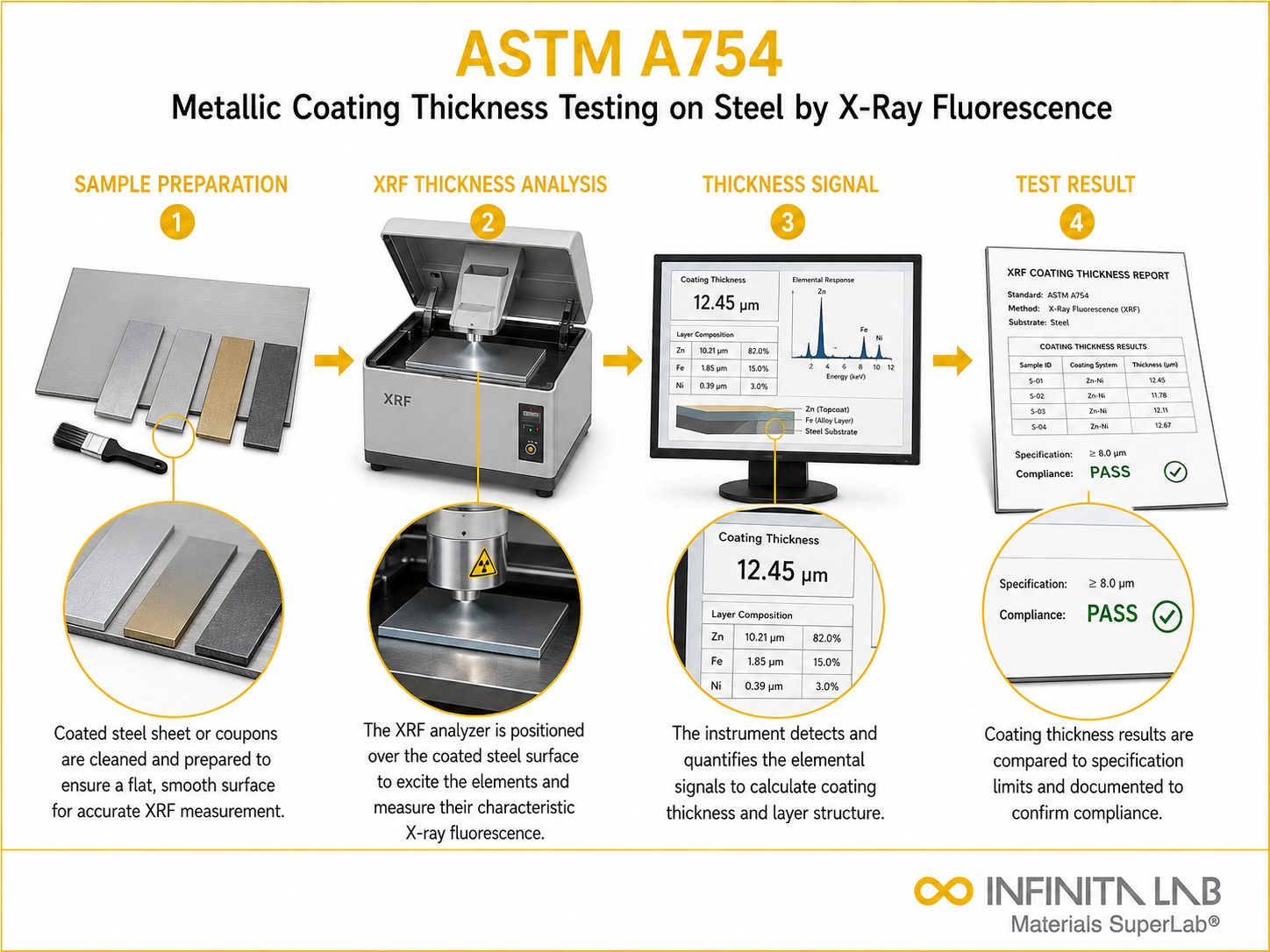
ASTM A754 specifies a non-destructive test method for measuring the thickness and composition of metallic coatings on steel using X-ray fluorescence (XRF). The method enables rapid and accurate evaluation of coating weight without damaging the sample.
This standard is widely used in industries such as automotive, construction, and manufacturing, where coated steel products are critical for corrosion resistance and durability. It helps ensure coating uniformity and compliance with specified requirements.

Applications and Benefits of ASTM A754 Metallic Coatings Steel Xrf Testing
Scope
ASTM A754 evaluates metallic coatings on steel by analyzing X-ray fluorescence emitted from the sample. The test determines coating thickness and composition for quality control and compliance verification.
The test evaluates:
- Coating thickness of metallic layers
- Coating composition and elemental distribution
- Uniformity of coating across the surface
- Effectiveness of coating application
- Compliance with coating specifications
Applications
- Galvanized and coated steel sheets
- Automotive body panels and components
- Construction and structural materials
- Industrial coated products
- Corrosion-resistant metal components
- Quality control in coating processes
Benefits
- Non-destructive and rapid testing method
- Provides accurate coating thickness measurement
- Enables real-time quality control
- Reduces sample preparation requirements
- Supports compliance with coating standards
Our ASTM A754 Testing Procedure
Sample Preparation
Coated steel samples are cleaned to remove surface contaminants.
1Instrument Calibration
XRF equipment is calibrated using reference standards.
2Measurement
X-ray fluorescence is used to determine coating thickness and composition.
3Data Recording & Evaluation
Results are analyzed and compared with specified coating requirements.
4ASTM A754 Test Parameters and Requirements
| Parameter | Details |
|---|---|
| Applicable Materials | Metallic-coated steel (Zn, Al, Zn-Al alloys) |
| Measurement Range | ~0.1 µm to 100 µm |
| Detection Elements | Zn, Al, Fe, Ni, Cr |
| Measurement Accuracy | ±1% to ±5% |
| Analysis Area | ~1 mm² to 10 mm² |
| Measured Outputs | Coating thickness (µm), composition (%) |


- X-ray fluorescence (XRF) analyzer
- Calibration standards
- Sample positioning stage
- Surface cleaning tools
- Data acquisition software
- Radiation safety equipment
Equipment and Instrumentation Used for ASTM A754 Testing
What You Receive: Test Report, Data, and Certification
- Coating thickness measurements (µm)
- Elemental composition analysis
- Coating uniformity assessment
- Compliance with specification requirements
- Test condition summary
- ASTM compliance report
ASTM A754 Metallic Coatings Steel Xrf FAQs
X-ray Fluorescence is an analytical technique. The technique relies on interaction between X-rays and a material for finding out its elemental composition. In most circumstances, it's non-destructive and applicable for solids, liquids, and powders.
Another useful technology for measuring the thickness of metal layers is X-ray fluorescence (XRF) spectrometry. The XRF method is based on irradiating a specimen using an X-ray tube and measuring the emitted X-ray characteristics from elements contained in the coating layers and the substrate.
Bowman XRF instruments use X-ray fluorescence technology to accurately determine the thickness and composition of plating deposits. The instrument exposes a precisely defined test specimen area to X-ray energy to perform the measurement.
ASTM A754 evaluates coating thickness, uniformity, and composition, ensuring metallic coatings meet specified requirements for corrosion protection and performance.
ASTM A754 results may be influenced by surface roughness, coating composition variations, and calibration accuracy, requiring proper standards and preparation to ensure reliable measurements.
Why Choose Infinita Lab for Metallic Coatings Steel Xrf Testing?
At the core of this breadth is our network of 2,000+ accredited laboratories across the USA, offering access to over 10,000 testing methods and analytical services. From advanced materials characterization (SEM, TEM, RBS, XPS) to mechanical, chemical, environmental, biological, and standardized ASTM/ISO-compliant testing, we deliver unmatched flexibility, specialization, and scale. You are never limited by geography, facility, or methodology — Infinita Lab connects you to the right expertise and testing solution, every time.

Looking for an Accredited Partner for ASTM A754 Metallic Coatings Steel Xrf Testing?
Send query us at hello@infinitalab.com or call us at (888) 878-3090 to learn more about our services and how we can support you.



Request a Quote
Submit your material details and receive testing procedures, pricing, and turnaround time within 24 hours.
 Quick Turnaround and Hasslefree process
 Confidentiality Guarantee
 Free, No-obligation Consultation
 100% Customer Satisfaction
