
ASTM C201 High-Temperature Thermal Conductivity Testing for Refractories
Refractory materials are used to finish the task in industries that need to use furnaces, kilns, `and vessels that hold hot material. Refractories can have a variety of different properties, so makers must pick one that has the qualities they want. The ASTM C201 test establishes a steady environment for testing these materials in order to determine their properties.
TRUSTED BY


Precision-driven testing for dimensional accuracy and compliance
- Overview
- Scope, Applications, and Benefits
- Test Process
- Specifications
- Instrumentation
- Results and Deliverables
Overview
The standard test method for measuring the thermal conductivity of refractory materials at high temperatures using the guarded hot plate or a comparable steady-state heat-flow technique is defined in ASTM C201. This test method specifies the refractory material’s capacity for thermal conduction under high, controlled temperature conditions. The test result is the thermal conductivity, expressed in W/m·K, as a function of the average test temperature.
The test is vital for the operation of various high-temperature equipment such as kilns, furnaces, reactors, and thermal insulation systems. This test allows engineers and refractory material scientists to select and validate refractory linings, insulating firebricks, ceramic fibre materials, and other refractory materials based on the actual thermal performance of the materials at high and controlled temperature conditions, as opposed to ambient and estimated temperature conditions.

Scope, Applications, and Benefits
Scope
ASTM C201 covers steady-state thermal conductivity measurement of refractory and insulating materials at temperatures representative of actual service conditions.
- Applicable to dense refractories, insulating firebricks, castables, ceramic fibres, and refractory cements
- Test temperatures from ambient up to 1400°C or higher depending on material and equipment
- Thermal conductivity reported as a function of mean temperature across the specimen
- Covers both high-conductivity dense refractories and low-conductivity insulating materials
- Supports material qualification, product comparison, and thermal design input
- Applicable to new material development and in-service material performance verification
Applications
Furnace and kiln linings
Refractory insulation materials
Steel and metal processing industries
Glass and ceramic manufacturing
High-temperature industrial equipment
Benefits
Provides accurate thermal performance data at high temperatures
Helps improve energy efficiency in thermal systems
Supports proper material selection
Enhances safety and durability of high-temperature equipment
Ensures compliance with industry standards
Test Process
Specimen Preparation
Specimens cut or cast to required dimensions and dried to remove moisture before testing.
1Furnace Setup & Stabilisation
Specimen is placed in a guarded hot plate apparatus and tested at a set temperature until steady state is reached.
2Heat Flow Measurement
Power input and temperature differential across the specimen recorded at each test temperature point.
3Calculation & Reporting
Thermal conductivity calculated from heat flux and temperature gradient; results reported vs. mean temperature.
4Technical Specifications
| Parameter | Details |
|---|---|
| Material Tested | Refractory bricks, castables, insulating materials |
| Test Principle | Steady-state heat flow method |
| Temperature Range | Typically up to 1500°C or higher |
| Measured Parameter | Thermal conductivity (W/m·K) |
| Specimen Shape | Usually rectangular or cylindrical |
| Heat Source | Controlled high-temperature furnace |
| Environment condition | Controlled laboratory conditions |
Instrumentation Used for Testing
High-Temperature Furnace
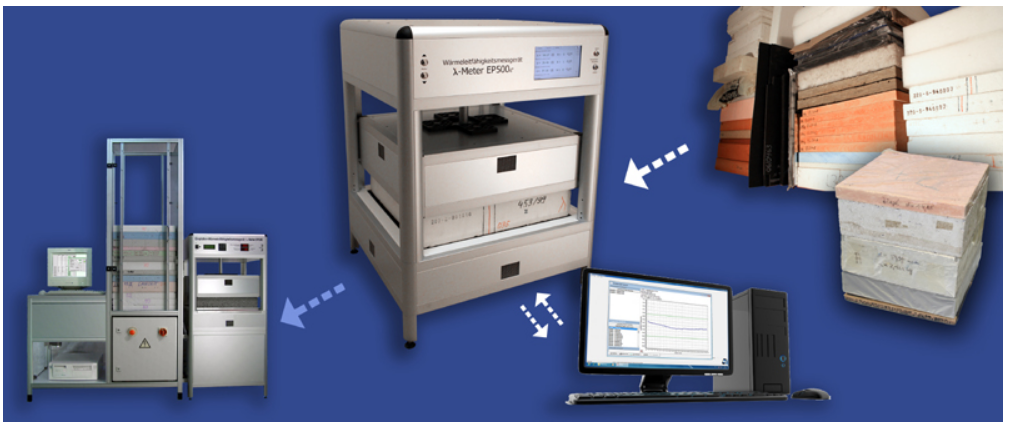
Thermal Conductivity Apparatus (Guarded Hot Plate or similar setup)
Thermocouples
Temperature Controller
Data Acquisition System
Results and Deliverables
Thermal conductivity values at various temperatures
Temperature vs conductivity graph
Heat flow analysis
Material performance evaluation
Detailed ASTM C201 test report
Partnering with Infinita Lab for Optimal Results
Infinita Lab addresses the most frustrating pain points in the High-Temperature Thermal Conductivity Testing testing process: complexity, coordination, and confidentiality. Our platform is built for secure, simplified support, allowing engineering and R&D teams to focus on what matters most: innovation. From kickoff to final report, we orchestrate every detail—fast, seamlessly, and behind the scenes.
Looking for a trusted partner to achieve your research goals? Schedule a meeting with us, send us a request, or call us at (888) 878-3090 to learn more about our services and how we can support you. Request a Quote
Frequently Asked Questions
ASTM C201 is a standard test method used to measure the thermal conductivity of refractory materials at high temperatures under steady-state heat flow conditions.
This property is of primary importance in materials used in furnaces, kilns, and reactors at high temperatures for sufficient insulation and protection against heat loss.
ASTM C201 shall apply to refractory materials, ceramic insulators, and all other insulating materials for use at elevated temperatures in the various fields of metallurgy, aerospace, and building construction.
Quality preparation of samples regarding surface finish and uniformity, constancy of the temperature gradient, minimizing heat losses, and correct calibration of the equipment used during testing are the major factors affecting accuracy.
Thermal conductivity of refractory materials changes significantly with temperature. Ambient measurements do not represent actual service behaviour. High-temperature data is essential for accurate heat loss calculations and safe refractory lining design.




Request a Quote
Submit your material details and receive testing procedures, pricing, and turnaround time within 24 hours.
 Quick Turnaround and Hasslefree process
 Confidentiality Guarantee
 Free, No-obligation Consultation
 100% Customer Satisfaction
