
Product Testing Service

Introduction to Product Testing Services

Product testing is among the fundamental steps in the product development and quality assurance process. It ensures that all products meet the intended design needs, operational performance, and level of safety before being introduced into the marketplace. By testing how a product will function under normal conditions as well as extreme conditions, manufacturers can identify areas of potential weakness, define reliability, and ensure customer satisfaction.

Infinita Lab offers comprehensive Product Testing Services designed to validate the end products’ durability, performance, and conformance across sectors. We have the newest testing equipment that simulates on-ground conditions and can test the products’ reactions under tension, enabling you to offer consistent, safe, and quality products to the market.

Key Product Testing Capabilities

1. Environmental and Reliability Testing

The environmental and reliability testing simulates real conditions under which products will be stored, transported, and in service operation. It is performed to check the products’ response under changes of temperatures, humidity, pressure, and mechanical forces — that they keep working, remain useful, and are safe throughout their life span.

  • Temperature & Humidity Cycling – It exposes the products to alternating high and low temperature and humidity environments in order to test material stability, seal integrity, and consistency of performance. It checks possible failures like delamination, warping, corrosion, or a shift in the material and electrical characteristics.
  • Thermal Shock & Vibration Tests – Thermal shock testing subjects products to sudden changes in temperature in order to simulate extreme environmental changes, whereas vibration testing simulates transportation, machine usage, and field use. They, as a combination, can be utilized to evaluate the product’s resistance towards mechanical fatigue, cracking, and displacing the components.
  • Solar Radiation Testing – The product is exposed to accelerated sunlight and UV to test how the material ages over time, retains color, and maintains performance under exterior exposure. The test offers durability and visual stability to the product that will undergo exposure to the outdoors for a longer period.
  • Salt-Fog Testing – Replicates harsh industrial or marine corrosive conditions by subjecting product specimens to continuous saline fog. It assesses the ability of metals, coatings, and surface treatments to resist rusting, corrosion, and surface degradation.
  • Reliability Testing – Involves putting products under multiple mechanical, thermal, and environmental stresses to estimate their service lifetime. It guarantees consistent performance, detects points where the product is likely to fail, and certifies product durability.

2. Ingress Protection (IP) Testing

Ingress Protection testing determines how well a product’s enclosure safeguards internal components from dust and moisture.

  • Spraying Water Test (IPX3) – This test subjects the product to spraying with water up to angles of 60° from the vertical, equivalent to conditions such as light rain or incidental splashing. It is used as a check that the enclosures and the seals exclude the water, and performance is not impaired under moderate exposure.
  • Splashing Water Test (IPX4) – In this test, the product is exposed to all-around splashing water as if under heavy rain, outdoor weather, or cleaning use. IPX4 testing is an affirmation that enclosures prevent the penetration of water under prolonged or direct splashing.

The IP test is especially relevant for electrical, outdoor, consumer, and industrial units, where protection against environmental exposure has a direct impact on the lifetime, safety, and serviceability.

3. Optical and Material Characterization

Optical and material characterization determines the material’s intrinsic physical and chemical properties. Such data are key factors in product uniformity, appearance quality, and performance for purposes in optics, electronics, and packaging.

  • Refractive Index (RI) Testing –  It is a parameter that determines the transmission of light through a material and is one of the principal optical quality determinants. RI testing is desirable in the determination of the purity, density, and chemical nature of clear or translucent products such as lenses, coatings, polymers, and glass. Consistent values of the refractive index will deliver predictable transmission of light, minimize optical distortion, and ensure optical performance in displays, light components, and imaging devices. 

With accurate optical characterization, material selection can be improved, products can be kept uniform, and design and regulations can be met effectively.

Why Choose Infinita Lab for Product Testing Services?

Infinita Lab is a leading provider of Product Testing Services and streamlined material testing services, addressing the critical challenges faced by emerging businesses and established enterprises. With access to a vast network of over 2,000+ accredited partner labs across the United States, Infinita Lab ensures rapid, accurate, and cost-effective testing solutions. The company’s unique value proposition includes comprehensive project management, confidentiality assurance, and seamless communication through a Single Point of Contact (SPOC) model. By eliminating inefficiencies in traditional material testing workflows, Infinita Lab accelerates research and development (R&D) processes.

Looking for a trusted partner to achieve your research goals? Schedule a meeting with us, send us a request, or call us at (888) 878-3090  to learn more about our services and how we can support you. Request a Quote

Essential FAQs on Product Testing Materials Testing Services

What is product testing used for?

Product testing evaluates the properties and performance of an end product under normal and stressed conditions. Product testing is performed regularly to ensure product compliance, safety, and reliable performance.

What are the techniques employed to carry out product testing?

Product testing includes a suite of reliability and environmental tests. Tests like Highly Accelerated Life Testing (HALT), Highly Accelerated Stress Screening (HASS), Accelerated Life Cycle Testing, Accelerated Weathering Testing, Environmental Stress Screening (ESS), Thermal and Humidity Environmental Testing, Mechanical Endurance Testing, Vibration and Shock Testing and Reliability Growth Testing are usually employed to gauge safety and performance of products.

Where can I get reliable product testing done?

Our material testing labs regularly provide testing services for finished products evaluating their performance while keeping pace with quality control and certification requirements.

What is the cost involved in product testing?

Product testing is a suite of certification, safety, and reliability testing services. Pricing depends on the type of testing, product, and industry. Please contact us for a detailed quote for your testing needs.


3 Easy Steps to Start Testing

1
Share Your Testing Material Details with Us
2
Hassle-Free Collection Pick-Up Service
3
We Find the Lab, You Get the Results

BHAST: Biased Highly Accelerated Stress Tests Essential Laboratory Tests for Soap Composition (Saponification) The Modulus of Rupture of Tiles Critical Medical Device Testing Services Material Selection for Better Products Orange Peel Failure Analysis Rheology and Dynamic Viscosity in Fluid Dynamics: Testing for Product Performance Refractive Index (RI) How to Read Screw Thread Designation? Cotter Joint Types: Design, Testing, and Mechanical Applications How to Design a Cotter Foundation Bolt? Turnbuckle: Round Rod Adjustable Screwed Joint A Comprehensive Guide to Welding Process Classification? Bearing Failure Analysis Blade Failure Analysis Chain Failure Analysis: Root Causes, Fracture Modes & Testing Methods Boiler Tube Failure Analysis for Industrial Excellence Bolt Failure Analysis Component Failure Analysis: Significance, Methods & Industry Applications Who are Failure Analysis Experts? Failure Investigation Fastener Failure Analysis: Causes, Fracture Modes & Testing Methods Fatigue Failure Analysis Gear Failure Analysis Heat Exchanger Failure Analysis: Root Causes, Corrosion & Testing Methods Hose Failure Analysis Analysis of Failure Prevention Durability Engineering ( Hydrogen Embrittlement) Selection of Methodology for 13Cr-Type Alloy Oil Country Tubular Goods (OCTG) What Is Wire Rope Failure Analysis? Methods, Causes, and Prevention What Is Failure Analysis and Its Significance in Product Development? Shaft Failure Analysis — Preventing Revenue Losses Pump Failure Analysis: Root Cause Investigation for Reliable Pump Systems Lateral Rigidity vs. Torsional Rigidity Shaft Diameter Determination Under Axial Load What Is an Optical Square in Metrology? Uses and Applications Failure Analysis Lab Spring Failure Analysis Weld Failure Analysis Performance Testing Product-Related Impurity Analysis per ICH Q6B: Chromatography & Mass Spectrometry Spraying Water and Splashing Water (IPX3 & IPX4) IPX9 High-Temperature & High-Pressure Water Jet Testing: IEC 60529 Standard Ingress Protection: Water Jets and Powerful Water Jets Tests (IPX5 & IPX6) Ingress Protection Code: Dripping Water Tests (IPX1 and IPX2) Field Metallographic Replication (FMR) to Analyze Microstructure In-Situ Microstructural and Metallographic Analysis of Metallic Materials Accelerated Aging Laboratory Package Testing What Is Altitude Package Testing? Protecting Products Shipped by Air Bridge Impact Integrity Testing and its Importance Bubble Leak Integrity Testing for Systems Cold Chain Packaging Overview Compression Testing and Its Methods What is Package Conditioning? What Is Drop Integrity Testing? Methods, Standards, and Package Protection What Is a Flexible Package Integrity Test? What Is Forklift Handling Integrity Testing? Why Is Horizontal Compression Testing Important? Package Integrity in the Distribution Chain Inclined Impact Integrity Test Impact Integrity Compliance Test Parcel Integrity Testing  Rotational Corner Integrity Test: Validating Package Strength at the Most Vulnerable Point Thermal Properties Testing by TGA and DSC Shielding Effectiveness Test Vibration Test Solar Radiation Testing Shock Testing Sand and Dust Testing Salt-fog Testing Salt-fog Testing Reliability Testing Loose Cargo Compliance Testing What Is Immersion Testing? Methods, Standards, and Applications Icing and Freezing Rain Testing Humidity Testing Fungus Resistance Testing Dynamics Testing Drop Testing Acceleration Testing Lab Vibration Package Integrity Testing: What Is It and Why Does It Matter? Tip-Over Integrity Testing: What is it? Testing for Temperature Validation of Packages Seal Strength Integrity Testing: What Is It? Rotational Flat Drop Compliance Testing: What Is It? What is Rotational Edge Drop Integrity Testing? What Is Rotational Corner Drop Testing? What is Parcel Integrity Testing? Pallet Integrity Testing Forklift Handling Testing Printed Circuit Board Testing and Failure Analysis Reducing Charging in SEM Using Low Voltage Imaging: Techniques and Best Practices Automated Wet Chemical Analysis and its Importance Insights on Density-neutron log porosity Ultrasonic Testing of Welds for Flaw Detection What Is the Fatigue Testing Process? Evaluating Material Durability Under Cyclic Loading Strategies and Techniques to Optimize Process Faster Testing — Strategies and Techniques to Accelerate Product and Material Testing Portable FTIR Spectrometers Dispersive IR Spectrometer IR Spectrometers & IR Spectroscopy The Right Measurement Service Provider Process Insufficiencies Maintaining Ring Gages: Best Practices for Accuracy and Longevity Truck Scale Overhauls Truck Scale Planning Metallographic Grinders and Polishers for Sample Preparation What Makes the Digi Test II – Fully Automatic Shore and IRHD System the Global Leader for Accuracy, Durability, and Simplicity of Use? The Digital Shore Durometer and Its importance  Better Insights on Reliable Softgel Capsule Hardness Tester Comparison of Thermally Conductive Fillers: Selecting the Right Material for Electronics Thermal Management Measuring Thermal Conductivity of Thermal Interface Materials with MTPS Using Dynamic Mechanical Analysis to Evaluate Shoe Floor Friction Performance Measuring Damping Performance Using a High-Frequency Dynamic Mechanical Analyzer Forward Groundbreaking Production Technologies Automotive & Transportation Testing Services: Standards, Safety & Compliance Contact Angle Measurement Determining Hardenability of Steel: The Jominy Test and Its Engineering Applications Guided Bend Test for Ductility of Welds Test Methods for Resistance of Glass Containers to Chemical Attack Test for Thermal Shock Resistance of Glass Containers Test for Internal Pressure Strength of Glass Containers Sandwich Corrosion Test of Aircraft Maintenance Materials Leeb Hardness Testing of Steel Products: Principle, Standards & Applications Accelerated Weathering Coal and Charcoal Testing Services for Failure Analysis Testing: Comprehensive Investigation to Prevent Recurrence Thermogravimetric Analysis Mechanical Testing Services Laboratories: Capabilities, Accreditation, and Selecting the Right Partner Key Advantages of Optical Emission Spectroscopy (OES) for Metal & Alloy Analysis Advantages of Temperature Humidity Bias (THB) Testing for Semiconductor Reliability Artificial Daylight Stability Testing Solar Climatic Testing Mechanical Shock Testing: Protecting Products from Real-World Impact Events ICH Photostability testing Moisture Resistance Testing Artificial Weathering Tests Hydraulics Testing Thermal Physical Analysis Critical Medical Device Testing Services Types of VOC Testing: Methods, Standards, and Industrial Applications Medical Accessories Testing: Safety, Biocompatibility & Performance Standards Dynamics Testing LIQUID FUEL TESTING ENVIRONMENTAL TESTING Contaminated Fuel Analysis: Protecting Engines, Equipment, and Supply Chains Shielding Effectiveness Test Electrostatic Discharge Testing / ESD Testing Lightning Testing and Surge Immunity Testing Electromagnetic Compatibility (EMC) Testing Wind and Rain Testing Types of Packages Tested for Temperature Validation Temperature Testing Shock Testing Salt-Fog Testing Reliability Standard Compliance Product Testing Loose Cargo Bounce Testing Ingress Protection Testing Immersion Testing Icing/Freezing Rain Fungus Resistance Testing Drop Testing Climatics Testing Altitude Testing Acceleration Testing Vibration Package Integrity Testing Vertical Compression Package Testing Sterile Barrier System Package Testing Seal Strength Integrity Testing Rotational Flat Drop Compliance Testing: Validating Heavy Shipping Systems Against Impact Rotational Edge Drop Integrity Testing: Ensuring Package Survival Through the Edge Impact Scenario Temperature Validation Package Testing Rotational Corner Drop Testing: Protecting Packages Through Impact Simulation Parcel Integrity Testing Pallet Integrity Testing Impact Package Testing Inclined Impact Testing Chiral Analysis of Optical Isomers: Methods, Techniques & Lab Testing Detection of Flow-Accelerated Corrosion (FAC): Methods & Testing Services Advanced Lighting Controls Testing: Standards, Safety & Performance Horizontal Compression Integrity Testing Forklift Handling Testing Flexible Package Integrity Testing Compression Package Testing Package Conditioning: Simulating Real-World Environments Before Distribution Testing Cold Chain Package Testing Burst Strength Package Testing: Methods, Standards & Performance Criteria Bubble Leak Package Testing Bridge Impact Testing (Package Testing) Accelerated Aging Package Testing Altitude Package Testing Heat Flow Meter Testing Perfluorooctanoic Acid (PFOA) and Perfluorooctane Sulfonate (PFOS) Analysis Design Failure Mode and Effects Analysis (DFMEA): Engineering Reliability from the Ground Up Elemental or CHN Analysis Automotive Testing Service Electrical Safety Testing Apparel/Cloth Testing Failure Analysis in Semiconductors Reliability Testing and Analysis Food Toxicology Testing Printed Circuit Board (PCB) Analysis Cytotoxicity Testing FATIGUE TESTING METHODS Bio-compatibility Testing Good Manufacturing Practice (GMP) Certification Copper Accelerated Salt Spray (CASS) Test: A Complete Guide Bio-burden Testing Shock and Vibration Testing Services Heat Aging Testing Services Temperature Humidity Bias (THB) Testing: Standards, Methods & Electronics Reliability ASTM E224-08 Analysis of Hydrochloric Acid ASTM D6653 High-Altitude Packaging Testing Services Accelerated Corrosion Testing Services Hail Impact Testing for Solar Panels Thermal Resistance Testing Services Environmental Vibration Testing Thermal Expansion Testing Polymer Hardness Testing: Shore A, Shore D & Rockwell Methods Explained Thermal Shock Resistance Test Method Liquid to Liquid Thermal Shock Testing Air-to-Air Thermal Shock Testing — Principles and Applications Battery Charge-Discharge Testing Microbiological Testing of Packing Thermal Shock Testing Hail Impact Testing Salt Spray – Salt Fog Corrosion Testing Sand and Dust Testing Solar Radiation Testing Vibration Testing Waterproofness Testing Accelerated Weathering Testing Altitude Testing and Simulation Services Combined Temperature & Vibration Testing: Methods, Standards & Applications Electrical Enclosure Rating Testing Highly Accelerated Life Testing HALT and Highly Accelerated Stress Screening HASS Ingress Protection (IP) Testing Fluid Susceptibility and Contamination Testing

Read Our Blogs and Research Papers

NFPA 80 Compliance & Fire Door Inspection Services

NFPA 80 Compliance & Fire Door Inspection Services

NFPA 80 The effectiveness of a fire protection system depends on fire doors. By restricting fire flow, they safeguard lives...

Read Article

Types of Mechanical Testing: A Complete Guide to Material Characterisation
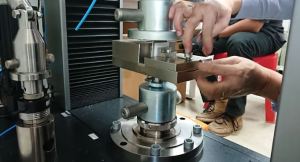
Types of Mechanical Testing: A Complete Guide to Material Characterisation

What Is Mechanical Testing? Mechanical testing is the systematic application of controlled forces, displacements, or environmental conditions to materials and...

Read Article

Common Uses of Environmental Vibration Testing: Qualifying Products for Dynamic Real-World Environments
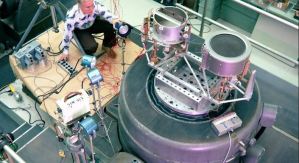
Electronic component mounted on electrodynamic shaker for environmental vibration test

Common Uses of Environmental Vibration Testing: Qualifying Products for Dynamic Real-World Environments

Every product that moves — or exists in an environment that moves — is subject to vibration. Aircraft avionics experience...

Read Article
Where Quality Meets Trust
New Benchmarks in Quality Standards

Empowering you to recognize and address inherent risks within your operations, supply chains, and quality management systems

Advanced Testing Services

Assessing the alignment of your products and services with, and their surpassing of, quality, safety, sustainability, and performance benchmarks.

100% Inspection Guarantee

Confirming the specifications, worth, and safety of your raw materials, products, and assets.

Certification
Certification

Officially verifying that your products and services adhere to both established external and internal standards.

Meet our Team

Best Industry Experts to Help You
Pradyumna Gupta
Expert in optics, materials engineering, and physical sciences. Ph.D. in Materials Science with specialization in glasses and thin films for electronic and photonic applications.

Pradyumna Gupta PhD, MBA

Vinay Vidyarthi
Seasoned engineering leader specializing in materials engineering with a focused background in semiconductor capital equipment hardware and process development. Subject matter expertise across multiple disciplines, including thin film fabrication by PVD, CVD, ALD, and plasma etching processes.

Vinay Vidyarthi  PhD

Dhairya Srivastava
Multidisciplinary experience in semiconductor processes, capital equipment design, factory automation, and software and controls development. M.S. in Mechanical Engineering, specializing in robotics and automation.

Dhairya Srivastava MBA

Rana Pratap
Experience in hardware design, cost optimization, and high-volume manufacturing operations. Ph.D. in Electrical and Computer Engineering with a minor in Industrial Engineering.

Rana Pratap PhD

Gautam Kumar
Expert in computational modeling, data sciences, and neural networks. Gautam holds a Ph.D. in Chemical Engineering with a specialization in process analysis and control.

Gautam Kumar PhD

Keisha Antoine
Specialization in semiconductor and battery materials, melt processes, and gas/glass chemical interactions. Keisha holds a Ph.D. in Materials Science and Engineering.

Keisha Antoine PhD

Animangsu Ghatak
Expert in mechanics of soft materials, adhesion, multiphase flow through micro and nanochannels, membrane-less fuel cell. He holds a Ph.D. in Chemical Engineering.

Animangsu Ghatak PhD

Sabyasachi Roy
Experience in processing of oxide ceramics, fuel cell, and other specialty materials. Sabyasachi earned his Master's in Materials Science with a specialization in Ceramic Processing Technologies.

Sabyasachi Roy  

Srinivas Mettu
Expert in a variety of fields, including thin film deposition, coating, material characterization, surface engineering, surface modification, and rheology. Ph.D. in Chemical Engineering.

Srinivas Mettu PhD

Shantanu Behera
Experience in batteries, semiconductors, thin-films, advanced ceramics using X-Ray spectroscopy, electron microscopy, thermal and optical methods. Ph.D. in Materials Science, specialization in Nanomaterials.

Shantanu Behera PhD

Show All Experts

Talk to Our Experts Today!

Submit your contact info and we’ll get back to you within 24 hours

    Home / Product Testing
    ×

    Talk to an Expert

      Connect Instantly

      (888) 878-3090
      Ensure Quality with the Widest Network of Accredited Labs
      • ddd
        Quick Turnaround and Hasslefree process
      • ddd
        Confidentiality Guarantee
      • ddd
        Free, No-obligation Consultation
      • ddd
        100% Customer Satisfaction

        ddd

        Start Material Testing