


Genotoxicity Testing Services for Materials & Medical Devices
Genotoxicity testing is used to assess the ability of medical devices and materials to cause mutations, chromosomal abnormalities, and other gene toxicities. Tests include Ames Mutagenicity, Chromosomal Aberration, Mouse Lymphoma, and Mouse Micronucleus assessments. These tests are conducted to ensure that medical devices do not increase the risk of cancer when in contact with the body for an extended period of time.
TRUSTED BY


Precision Testing Solutions for Accurate, Reliable, and Standards-Compliant Results
- Overview
- Scope, Applications, and Benefits
- Test Process
- Specifications
- Instrumentation
- Results and Deliverables
Genotoxicity Testing Overview
Genotoxicity testing evaluates the potential of substances to damage genetic material, including DNA and chromosomes, potentially leading to mutations, cancer, or heritable defects. It is a critical component in assessing the biological safety of chemicals, pharmaceuticals, and materials.
These tests are widely used to identify mutagenic and clastogenic effects under controlled laboratory conditions. The results support risk assessment, regulatory submissions, and safe product development across medical, pharmaceutical, and chemical industries.

Scope, Applications, and Benefits
Scope
Genotoxicity testing evaluates:
- DNA damage and mutation potential
- Chromosomal aberrations and structural changes
- Gene mutation and mutagenicity
- Cellular response to toxic exposure
Applications
- Pharmaceutical and drug development
- Medical devices and biomaterials
- Chemical safety assessment
- Cosmetics and consumer products
- Environmental toxicology studies
Benefits
- Identifies potential genetic hazards early
- Supports safe product development decisions
- Enables regulatory compliance for biological safety
- Reduces risk of long-term health effects
- Provides reliable toxicological data for evaluation
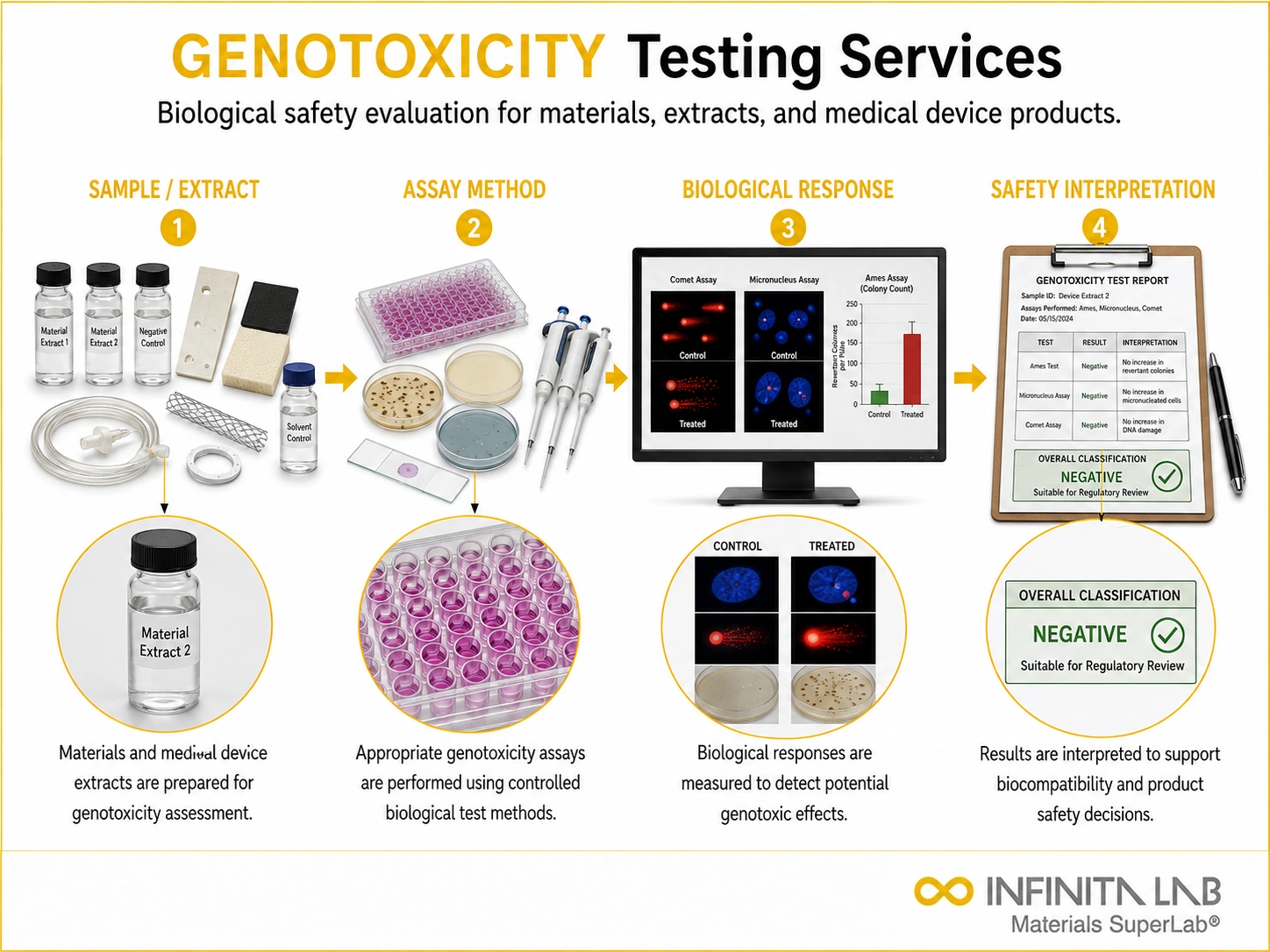
Genotoxicity Testing Test Process
Sample Preparation
Test substances are prepared at different concentrations and introduced into biological test systems.
1Exposure
Cells or organisms are exposed under controlled conditions to evaluate genetic impact.
2Detection
DNA damage, mutations, or chromosomal changes are measured using validated assays.
3Data Analysis
Results are analyzed to determine genotoxic potential and dose-response relationships.
4Genotoxicity Testing Technical Specifications
| Parameter | Details |
|---|---|
| Standard | OECD, ISO, ICH guidelines |
| Applicable Materials | Chemicals, pharmaceuticals, biomaterials |
| Minimum Sample Size | Depends on assay type |
| Measured Outputs | Mutation rate, DNA damage indicators |
| Accuracy | High sensitivity biological detection |


Instrumentation Used for Testing
- Cell culture systems
- Microscopes and imaging systems
- Flow cytometer
- Incubators and controlled environments
- Molecular biology assay kits
- Data analysis software
Results and Deliverables
- Mutation and DNA damage assessment
- Chromosomal aberration data
- Dose-response analysis
- Toxicological evaluation reports
- Comparative biological impact data
Frequently Asked Questions
Genotoxicity testing assesses whether a substance can damage DNA or cause mutations. It is important because such damage can lead to cancer or genetic defects, making it essential for evaluating the safety of chemicals and materials.
Common tests include the Ames test, micronucleus assay, and chromosomal aberration test. These methods evaluate different types of genetic damage and provide a comprehensive understanding of a substance’s genotoxic potential.
Industries such as pharmaceuticals, medical devices, chemicals, cosmetics, and environmental sciences require genotoxicity testing to ensure products are safe for human use and do not pose long-term genetic risks.
A positive result indicates that a substance has the potential to damage genetic material. This may require further investigation, risk assessment, or reformulation to reduce potential health hazards.
Genotoxicity testing helps identify harmful effects early in development, allowing safer materials to be selected. It reduces risks, supports regulatory approval processes, and ensures products are safe for long-term human exposure.
Why Choose Infinita Lab for Advanced Materials Testing and Characterization?
At the core of this breadth is our network of 2,000+ accredited laboratories across the USA, offering access to over 10,000 testing methods and analytical services. From advanced materials characterization (SEM, TEM, RBS, XPS) to mechanical, chemical, environmental, biological, and standardized ASTM/ISO-compliant testing, we deliver unmatched flexibility, specialization, and scale. You are never limited by geography, facility, or methodology — Infinita Lab connects you to the right expertise and testing solution, every time.

Looking for a Trusted Partner for Accurate and Reliable Testing Services?
Send query us at hello@infinitlab.com or call us at (888) 878-3090 to learn more about our services and how we can support you.



Request a Quote
Submit your material details and receive testing procedures, pricing, and turnaround time within 24 hours.
 Quick Turnaround and Hasslefree process
 Confidentiality Guarantee
 Free, No-obligation Consultation
 100% Customer Satisfaction
