
Flow-Accelerated Corrosion (FAC) Testing for Power & Process Piping
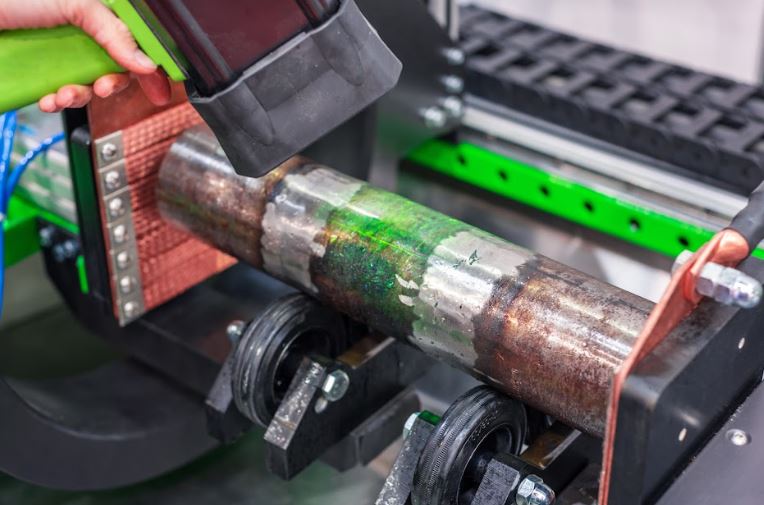
Flow-Accelerated Corrosion (FAC), also known as flow-assisted corrosion, is a phenomenon that happens when the protective oxide coating on the metal surface is broken down by swiftly moving water, causing metal loss from pipelines, vessels, and equipment composed of carbon steel. FAC testing is done to identify FAC before failure occurs.
TRUSTED BY


Precision-driven testing for dimensional accuracy and compliance
- Overview
- Scope, Applications, and Benefits
- Test Process
- Specifications
- Instrumentation
- Results and Deliverables
Overview
Material deterioration caused by high-velocity fluids interacting with metal surfaces is assessed using Flow Accelerated Corrosion (FAC) testing. Because of the combined impacts of flow dynamics and electrochemical processes, FAC is a corrosion mechanism that causes carbon steel and low-alloy steel components to thin more quickly.
In contrast to normal erosion or general corrosion, FAC causes protective oxide layers to dissolve under flowing circumstances, resulting in fast wall weakening without visible localised pitting. FAC is critical in boiler systems, power plants, oil and gas pipelines, and feedwater lines where steam or high-temperature water is constantly flowing.
FAC testing supports preventative maintenance plans, evaluates susceptibility under simulated service conditions, and forecasts material loss rates.

Scope, Applications, and Benefits
Scope
Flow Accelerated Corrosion (FAC) testing is used to assess the rate at which material loss occurs due to the combined action of corrosion and high-velocity fluid flow. It helps evaluate how operating conditions influence wall thinning and the long-term integrity of piping and steel components in industrial systems.
Key parameters evaluated include:
- Mass loss and wall thinning rate under dynamic flowing conditions
- Effect of fluid velocity, temperature, and pH on the FAC rate
- Comparative resistance of different steel grades, including the impact of chromium (Cr) additions
- Influence of dissolved oxygen and hydrazine on material susceptibility to FAC
Applications
- Power plant feedwater and condensate systems
- High-temperature steam pipelines
- Oil and gas transport systems
- Boiler tubes and heat exchangers
- Nuclear plant secondary systems
- Material qualification for high-flow environments
Benefits
- Quantify corrosion rates under flowing conditions
- Identify susceptible materials and system areas
- Predict long-term wall thinning and service life
- Optimize water chemistry control strategies
- Reduce risk of catastrophic pipe rupture
- Support regulatory and safety compliance
Test Process
Test Loop Setup
A recirculating loop is set up with specimens under controlled fluid conditions.
1Exposure Run
Specimens are exposed to flowing fluid at set temperature and velocity.
2Post-Exposure Analysis
Samples are cleaned, weighed, and surface changes are examined.
3FAC Rate Calculation
Corrosion rate is calculated and correlated with test conditions.
4Technical Specifications
| Parameter | Details |
|---|---|
| Standard References | ASTM G31 (general immersion), ASTM G170 (flow-assisted corrosion guidance), industry-specific protocols |
| Fluid Medium | Deoxygenated water, wet steam, or process fluid |
| Flow Velocity | Typically 1–10 m/s (or as per service simulation) |
| Temperature Range | Ambient to 300°C (depending on system simulation) |
| Exposure Duration | Weeks to months |
| Measurement Accuracy | Thickness measurement ±0.01 mm |
Instrumentation Used for Testing
- High-pressure flow loop systems with corrosion-resistant piping
- Precision flow meters and pressure control systems
- Temperature control units and heating elements
- Ultrasonic thickness gauges for in-situ monitoring
- Analytical instruments for water chemistry control (pH, dissolved oxygen meters)
- Scanning Electron Microscopy (SEM) for oxide layer evaluation
- Data logging systems for continuous monitoring
Results and Deliverables
- Corrosion Rate (mm/year) under dynamic flow conditions
- Wall Thinning Measurements
- Oxide Layer Characterization
- Surface Morphology Analysis
- Flow Velocity vs. Corrosion Rate Correlation
- Failure Risk Assessment
- Recommendations for Material Upgrade or Chemistry Control
Why Choose Infinita Lab for Flow Accelerated Corrosion (FAC) Testing?
With Infinita Lab (www.infinitalab.com), you are guaranteed a Nationwide Network of Accredited Laboratories spread across the USA, the best Consultants from around the world, Convenient Sample Pick-Up and Delivery, and Fast Turnaround Time.
Our team understands the stakes and subtleties of every test. Whether you’re validating a new Product, de-risking a prototype, or navigating complex compliance requirements, our specialists guide the process with rigour and clarity.
Looking for a trusted partner to achieve your research goals? Schedule a meeting with us, send us a request, or call us at (888) 878-3090 to learn more about our services and how we can support you. Request a Quote
Frequently Asked Questions
FAC is most severe at temperatures between 130–180 °C in single-phase water, at low pH (<9), high flow velocities (>1 m/s), turbulent flow geometry (elbows, tees), and with low-chromium carbon steels and minimal dissolved oxygen.
Even small additions of chromium (0.1–0.3 wt%) significantly stabilize the magnetite film and reduce FAC rate by an order of magnitude. Steels with Cr ≥ 1.0% are generally considered FAC-resistant.
FAC is a dissolution-driven electrochemical process affecting the oxide film on steel, while erosion-corrosion involves mechanical removal of the oxide or metal by high-velocity fluid particles or cavitation. Both can cause similar orange-peel surface morphology but have different mitigation strategies.
Dissolved oxygen promotes the formation and stability of a protective magnetite/hematite film, significantly reducing FAC rates. This is the basis for Oxygenated Treatment (OT) in power plant water chemistry programs to control FAC.
Yes. FAC test data combined with plant flow modeling (using CHECWORKS or BRT-CICERO codes) enables quantitative remaining life calculations and prioritization of pipe sections for inspection and replacement.




Request a Quote
Submit your material details and receive testing procedures, pricing, and turnaround time within 24 hours.
 Quick Turnaround and Hasslefree process
 Confidentiality Guarantee
 Free, No-obligation Consultation
 100% Customer Satisfaction
