
ASTM D2295 Strength Properties of Adhesives in Shear by Tension Loading
The ASTM D2295 test method covers the determination of strength properties of adhesives in shear by tension loading at elevated temperatures (metal-to-metal). This test method is applicable for the temperature range from 315 to 850°C (600 to 1500°F).
TRUSTED BY


Precision-driven testing for dimensional accuracy and compliance
- Overview
- Scope, Applications, and Benefits
- Test Process
- Specifications
- Instrumentation
- Results and Deliverables
Overview
ASTM D2295 provides a standardised method for determining the tensile shear strength of adhesive bonds at elevated temperatures. While many adhesive tests are conducted at ambient conditions, this standard specifically addresses the performance of adhesives at service temperatures above room temperature, which is critical for applications in high-heat environments such as automotive engines, aerospace structures, and industrial equipment.
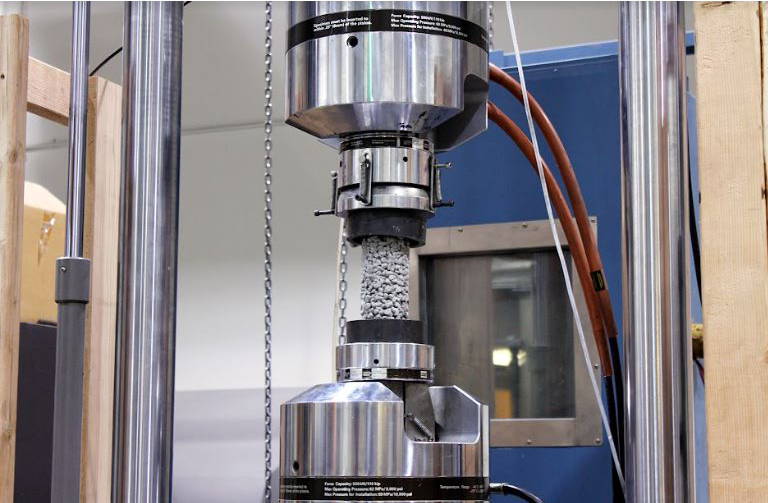
Single-lap shear specimens are prepared and tested in a heated environment using a universal testing machine equipped with a temperature-controlled chamber. The shear strength is calculated from the maximum load at failure divided by the bond area. Results are used to characterise the adhesive’s heat resistance and to set upper service temperature limits for bonded assemblies.

Scope, Applications, and Benefits
Scope
ASTM D2295 evaluates:
- Tensile shear strength of adhesives at elevated temperatures
- Effect of temperature on adhesive bond strength
- Thermal degradation of adhesive performance
- High-temperature service limit determination
- Comparative ranking of adhesives at various temperatures
- Substrate-adhesive compatibility at elevated temperature
Applications
- Automotive under hood adhesive bonds
- Aerospace structural adhesives
- Industrial furnace and oven components
- Electronic power module assembly
- High-temperature pipeline bonding
- Defence and military equipment
- Appliance and HVAC component assembly
Benefits
- Defines the upper temperature service limit of adhesive bonds
- Enables adhesive selection for high-heat applications
- Detects thermal softening or degradation behaviour
- Reduces joint failures from thermally induced bond weakening
- Provides data for material qualification at operating temperature
- Supports engineering design of thermally loaded structures
Test Process
Specimen Fabrication
Single-lap shear specimens are prepared per ASTM D1002 geometry and cured.
1Temperature Conditioning
Specimens are placed in the heated test chamber and equilibrated at the test temperature.
2Tensile Shear Testing
Load is applied at a controlled rate until the bond fails; the maximum load is recorded.
3Shear Strength Calculation
Shear strength is calculated as the peak load divided by the bond overlap area.
4Technical Specifications
| Parameter | Details |
|---|---|
| Applicable Materials | Metal-to-metal adhesive bonded joints |
| Specimen Types | Standard bonded metal shear specimens |
| Formula Used | Shear Strength = Load / Bonded Area |
| Maximum Load | Load at bond failure |
| Bonded Area | Original adhesive bond area (mm²) |
| Test Environment | Elevated temperature (315°C to 850°C) |
| Loading Mode | Tension-induced shear loading |
Instrumentation Used for Testing
- Universal testing machine (UTM)
- Heated environmental chamber
- Single-lap shear fixtures
- Load cell calibrated to test range
- Thermocouples and temperature controller
- Data acquisition software
Results and Deliverables
- Tensile shear strength at each test temperature
- Load-displacement curves
- Failure mode classification
- Temperature-strength relationship curves
- Quality assurance reports
Why Choose Infinita Lab for ASTM D2295?
At the core of this breadth is our network of 2,000+ accredited labs in the USA, offering access to over 10,000 test types. From advanced metrology (SEM, TEM, RBS, XPS) to mechanical, dielectric, environmental, and standardised ASTM/ISO testing, we give clients unmatched flexibility, specialisation, and scale. You’re not limited by geography, facility, or methodology—Infinita connects you to the right testing, every time.
Looking for a trusted partner to achieve your research goals? Schedule a meeting with us, send us a request, or call us at (888) 878-3090 to learn more about our services and how we can support you. Request a Quote
Frequently Asked Questions
The ASTM D2295 test method determines adhesive strength properties in shear by tension loading at elevated temperatures (metal-to-metal).
The ASTM D2295 standard aids industries and manufacturers in selecting adhesives that offer a high level of dependability in extreme actual use conditions, thus enhancing product durability and safety.
Metal-to-metal adhesives are tested using this method. The test takes place at elevated temperatures.
The critical factors in ASTM D2295 include temperature regulation (controlled by an external thermocouple with less than 1% tolerance), load application rate (8.3 to 9.7 MPa), and precise specimen preparation to ensure accurate and reproducible results.
The standard aids industries and manufacturers in selecting adhesives that offer a high level of dependability in extreme actual use conditions, thus enhancing product durability and safety.
Case Studies
In-depth examination of genuine material testing solutions
Case Study: Dopant & Ultra-Low Concentration Analysis via…

Case Study: Dopant & Ultra-Low Concentration Analysis via…
Introduction to STEM-EELS for Elemental Analysis Scanning Transmission Electron Microscopy (STEM) combined with Electron Energy Loss...
Read Case StudyAnalysis of PVC Pipe Degradation Using FTIR Spectroscopy

Analysis of PVC Pipe Degradation Using FTIR Spectroscopy
PVC Pipe in Infrastructure — and Why Degradation Matters Polyvinyl chloride (PVC) pressure pipe is one...
Read Case StudyNano-scale roughness measurement of Si-wafers by Atomic Force…

Nano-scale roughness measurement of Si-wafers by Atomic Force…
Nano-scale surface roughness is a critical parameter in fabricated thin-films that are used in optics, solar...
Read Case Study
Request a Quote
Submit your material details and receive testing procedures, pricing, and turnaround time within 24 hours.
 Quick Turnaround and Hasslefree process
 Confidentiality Guarantee
 Free, No-obligation Consultation
 100% Customer Satisfaction
