
Combustion analysis is a powerful technique used to obtain the elemental composition of organic and inorganic materials.



Combustion analysis is a powerful technique for obtaining the elemental composition of organic and inorganic materials. Laboratory analyzers can provide susceptible and reliable Carbon, hydrogen, oxygen, nitrogen, and sulfur measurements. This technique is critical in various domains, including chemistry, environmental science, pharmaceuticals, and materials science, where precisely identifying these components is required to understand material characteristics, quality control, and standard compliance.
Combustion analysis is mainly focused on measuring elemental quantification and also helps calculate the empirical or molecular formula of organic compounds. It additionally helps in quality control and environmental monitoring.
Principle:
The principle behind the combustion analysis is to burn the sample at a high temperature in excess of oxygen, which causes complete combustion of the sample. During the combustion process, Carbon is oxidized to Carbon dioxide, hydrogen is oxidized to water, etc.
Total organic Carbon (TOC) and total inorganic Carbon (TIC) are also measured after sample acidification. The operating temperature could be as high as 3000 °C and vary depending on the furnace. The infrared cells are customized based on the type of analyzer. Combustion analysis done in testing labs can detect concentrations of C/S and O/N/H as low as one ppm. Combustion analysis is a highly reliable technique for elemental analysis of solid samples, especially at low concentrations.
Procedure:
How to do combustion analysis?
Sample Preparation:The sample will be in solid form, precisely weighed, and placed in a combustion chamber.
Combustion: The sample is burned in a stream of pure oxygen at high temperatures, typically around 900–1000°C.
Combustion Analysis Formula:
Mass of Carbon from CO₂:
Mass of Carbon = Mass of CO x {molar mass of carbon / molar mass of CO₂}
The Mass of Hydrogen from H₂O:
Mass of hydrogen = mass of H₂O X {molar mass of carbon / molar mass of CO₂}
The Mass of oxygen
Mass of Oxygen=Total Mass of Compound−(Mass of Carbon+Mass of Hydrogen)
Protocol
Emissions: The process generates gases like CO₂, SO₂, and NOx, which must be appropriately vented or scrubbed to avoid environmental contamination.
Sample Handling: Proper handling of the sample and calibration standards is essential to ensure accuracy and prevent contamination.
The sample size necessary for combustion analysis varies based on the individual substance being examined, the sensitivity of the instrument, and the precision required.
Results are presented as weight percentages of each element (C, H, N, S, and O).
The data is used to calculate the compound’s empirical formula or to confirm that the material meets its specification, for instance, in fuel analysis or organic compound synthesis.
Analysis of natural gas combustion products
Analyzing natural gas combustion products allows us to evaluate combustion efficiency, fuel consumption, and pollutant emissions. Complete combustion generates CO₂ and H₂O, but incomplete combustion can result in hazardous pollutants such as CO, unburned hydrocarbons, and NOx. Analytical techniques such as gas chromatography, IR spectroscopy, and chemical sensors are widely employed to quantify these compounds.
The following are some of the advantages and limitations of combustion analysis:
| Advantages | Limitations |
| High-sensitive and highly reliable test data | Only solid sample analysis |
| Detection range from 1pp to 100% | Limited to elemental analysis of C, O, H, N, S |
| Any solid sample type | Complex Data Analysis |
| High sample weights up to several grams | Compliance Challenges |
| No sample preparation is required | Maintenance and Downtime |
Combustion analysis is a potent technique for identifying the elemental composition of organic molecules and materials, giving critical information for quality control, environmental monitoring, and scientific study.
ASTM D5291 : Standard test procedures for measuring nitrogen, hydrogen, and Carbon in petroleum products and lubricants. ASTM E777: Standard test method for Carbon and hydrogen in analyzing refuse-derived fuels. ISO 10694: Standard for determining the Carbon and nitrogen content in soil samples by dry combustion.
Results are presented as weight percentages of each element (C, H, N, S, and O).
Generally 10-50 mg for petroleum products.
2-5 mg sample is required for high-precision pharmaceutical analysis.
The sample depends on the sample type, homogeneity, and sensitivity of the analytical equipment.

Liquid Chromatography-Mass Spectroscopy Liquid Chromatography-Mass Spectroscopy (LC-MS) is an analytical technique that allows the separation, identification, and quantification of the...
Read Article ➙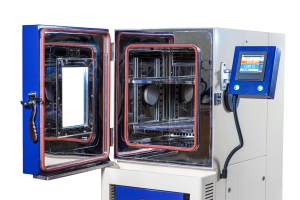
Highly Accelerated Stress Test - HAST Testing Services A highly accelerated stress test (HAST) is an essential part of environmental...
Read Article ➙
Introduction Accelerated aging in product testing is a methodology that simulates the long-term effects of environmental factors on a product...
Read Article ➙In-depth examination of genuine material testing solutions

EELS analysis of gate and channel is performed on fin field-effect transistors (finFETs). Scanning transmission electron...
Read Case Study
Introduction PVC is the polymer primarily used to make pipes for plumbing, drainage, and electrical conduits....
Read Case Study
Nano-scale surface roughness is a critical parameter in fabricated thin-films that are used in optics, solar...
Read Case StudySubmit your contact info and we’ll get back to you within 24 hours


