
Fuel contamination can cause significant damage to emergency generators, leading to costly repairs and downtime. Regular monitoring and sampling of fuel, according to the ASTM D975 standard, is necessary to avoid these issues and ensure the engine powering the generator is running smoothly. This is especially important for generators supplying emergency power to hospitals, financial institutions, and data centers.



CONTAMINATED FUEL ANALYSIS
Emergency generators are highly susceptible to damage from a plethora of contaminants, such as emulsified water, free-standing water, diesel particles, microbial growth, and diesel sludge. These gasoline impurities can be incredibly harmful to modern engines, as they are incredibly sensitive to them. If left unchecked, fuel filters can become clogged and fuel injectors damaged, leading to the complete failure of the engine. These types of issues can be especially dangerous if the engine is powering a generator supplying emergency power to a financial institution, data center, or hospital. It is paramount that a strategy is in place to monitor fuel quality over extended periods of storage, according to the ASTM D975 standard. Fuel should be sampled regularly and quality assessed.
Regular monitoring of fuel is incredibly important for a variety of reasons. Contaminated fuel can cause significant damage to the generator, leading to costly repairs and downtime. Additionally, if the generator is supplying emergency power to hospitals, financial institutions, or data centers, the effects of contaminated fuel can be highly disruptive. A system needs to be in place to ensure that fuel is kept clean and free of contaminants, and the ASTM D975 standard provides the necessary guidelines for doing so. This standard outlines the need for a regular sampling of fuel, and assessment of its quality. To avoid costly damages and disruptions, it is essential that these guidelines are followed.
Video 01: Fuel Contamination in modern diesel

Liquid Chromatography-Mass Spectroscopy Liquid Chromatography-Mass Spectroscopy (LC-MS) is an analytical technique that allows the separation, identification, and quantification of the...
Read Article ➙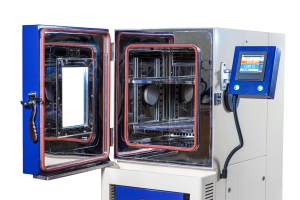
Highly Accelerated Stress Test - HAST Testing Services A highly accelerated stress test (HAST) is an essential part of environmental...
Read Article ➙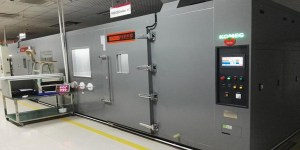
Introduction Accelerated aging in product testing is a methodology that simulates the long-term effects of environmental factors on a product...
Read Article ➙In-depth examination of genuine material testing solutions

EELS analysis of gate and channel is performed on fin field-effect transistors (finFETs). Scanning transmission electron...
Read Case Study
Introduction PVC is the polymer primarily used to make pipes for plumbing, drainage, and electrical conduits....
Read Case Study
Nano-scale surface roughness is a critical parameter in fabricated thin-films that are used in optics, solar...
Read Case StudySubmit your contact info and we’ll get back to you within 24 hours


