Acceleration testing is used to measure the effects of rising gravity loads caused by constant acceleration, primarily in the aircraft industry. The testing process involves gradually applying and maintaining long-lasting acceleration forces while taking various factors into account. Acceleration testing is necessary to avoid negative impacts such as deflections, fractures, and broken supports. It is essential to ensure the safety and reliability of materials and components.



Acceleration Testing
Acceleration testing, sometimes called centrifuge or g-force testing, measures the effects of rising gravity loads caused by constant acceleration. This type of testing is primarily used in the aircraft industry to assess the material’s tolerance for acceleration forces.
The testing process involves gradually applying and maintaining long-lasting acceleration forces. Factors such as the intensity of acceleration, the axis of acceleration, duration, testing method, and the on/off state of the test item need to be taken into account.
There are several reasons why acceleration testing is necessary. Excess acceleration can lead to various negative impacts, such as deflections in the structure, permanent deformation, structural fractures, broken supports and fasteners, damaged mounting hardware, open and shorted-out circuits on electronic circuit boards, and altered pressure and flow regulators.
In conclusion, acceleration testing is essential to ensure that materials and components can withstand the forces of acceleration and are fit for use.
Video 01: ACCELERATION TEST
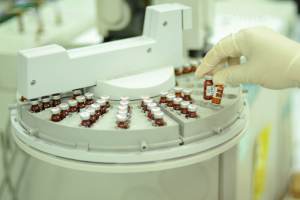
Liquid Chromatography-Mass Spectroscopy Liquid Chromatography-Mass Spectroscopy (LC-MS) is an analytical technique that allows the separation, identification, and quantification of the...
Read Article ➙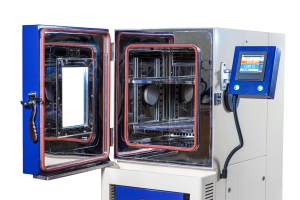
Highly Accelerated Stress Test - HAST Testing Services A highly accelerated stress test (HAST) is an essential part of environmental...
Read Article ➙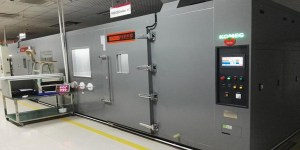
Introduction Accelerated aging in product testing is a methodology that simulates the long-term effects of environmental factors on a product...
Read Article ➙In-depth examination of genuine material testing solutions

EELS analysis of gate and channel is performed on fin field-effect transistors (finFETs). Scanning transmission electron...
Read Case Study
Introduction PVC is the polymer primarily used to make pipes for plumbing, drainage, and electrical conduits....
Read Case Study
Nano-scale surface roughness is a critical parameter in fabricated thin-films that are used in optics, solar...
Read Case StudySubmit your contact info and we’ll get back to you within 24 hours


