
Polymer material testing encompasses various chemical, mechanical and physical analysis techniques to characterize plastics, laminates, resins, composites, and other polymeric materials. Understanding a material's capabilities and limitations is a top issue for suppliers, manufacturers, and product developers on every level of the polymer industry supply chain due to the wide variety of product types and additives available. For your polymer testing needs, Infinita Lab maintains a network of testing and analysis facilities for polymers.



Polymer material testing encompasses various chemical, mechanical and physical analysis techniques to characterize plastics, laminates, resins, composites, and other polymeric materials. For instance, we can use FT-IR to confirm that the parts are the right material, DSC to check for contamination, and the melt flow indexer to assess whether the components have degraded. In order to assess the mechanical integrity of a part, mechanical tests including durometer hardness, izod impact, tensile strength, and flexural strength are also helpful. Comprehensive characterization of polymers is essential in delivering a safe product and ensuring product durability and performance over its lifecycle.
Chemical Analysis: Provides insightful information on structure, composition, molecular weight, weight distribution, etc. Furthermore, residue, additives, fillers, and VOC analysis in polymers help understand their effect on the polymers’ stability and durability. Investigative chemical studies can also be performed for deformulation/reverse engineering of competitive products, comparative product studies, failure analysis of faulty products, and regulatory testing. Quality control of polymer raw materials and finished products is another area where chemical analysis techniques are frequently employed.
Physical and Mechanical Testing: Understanding the physical properties of polymers is essential for product manufacturers to maintain industry standards. Mechanical and physical characterization of polymers is widely used in industries from aerospace, automotive, defense, and consumer products to biomaterials. Bulk and surface mechanical testing include the tensile strength of polymeric films, fibers, coatings; strength, hardness, flexural and compressive properties of polymers for durability and elasticity, etc.
Other physical characterization techniques routinely employed for polymer material testing include thermal analysis (DSC, TMA, TGA, among others), rheological testing, electrical testing, optical testing, thermal testing, weathering, and environmental testing, including but not limited to humidity, UV, sterilization testing, etc.
Video 01: ASTM D638 & ISO 527-2 The Definitive Guide to Tensile Testing of Plastic
Testing
Polymer Material Testing Common Uses
Industries
More Details
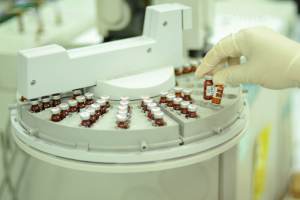
Liquid Chromatography-Mass Spectroscopy Liquid Chromatography-Mass Spectroscopy (LC-MS) is an analytical technique that allows the separation, identification, and quantification of the...
Read Article ➙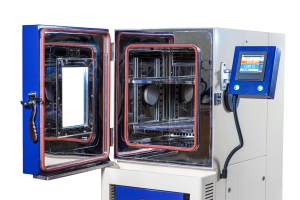
Highly Accelerated Stress Test - HAST Testing Services A highly accelerated stress test (HAST) is an essential part of environmental...
Read Article ➙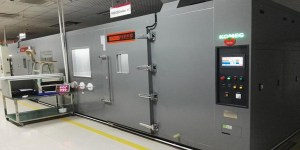
Introduction Accelerated aging in product testing is a methodology that simulates the long-term effects of environmental factors on a product...
Read Article ➙In-depth examination of genuine material testing solutions

EELS analysis of gate and channel is performed on fin field-effect transistors (finFETs). Scanning transmission electron...
Read Case Study
Introduction PVC is the polymer primarily used to make pipes for plumbing, drainage, and electrical conduits....
Read Case Study
Nano-scale surface roughness is a critical parameter in fabricated thin-films that are used in optics, solar...
Read Case StudySubmit your contact info and we’ll get back to you within 24 hours


