PET is a complex material used to make plastic bottles, containers, and other consumer items. Synthetic polyethylene is made from crude oil and natural gas leftovers. Packaging, food processing, and personal care use it.


PET stands for Polyethylene Terephthalate, a highly adaptable and high-tech material. This plastic is used to create plastic bottles, which are by far the most popular container for soft drinks due to their low cost and high safety standards on the market.
PET is the type of plastic designated by the # 1 code on or near the bottom of bottles and containers, and it has been used successfully in the packaging of carbonated soft drinks, bottled water, milk, juice, sports and energy drinks, jars, punnets, tubs, and trays for food items, bottles for household, personal care, and pharmaceutical products, and sheet and film for packaging.
PET, often known as polyester, is produced from mono-ethylene glycol (MEG) and pure terephthalic acid (PTA), both of which are byproducts of the refining of crude oil and natural gas.
Under carefully managed conditions, these two crude oil byproducts react to generate a polymer. The honey-like polymer is then cast into spaghetti-like strands, extruded through a die plate, and afterwards sliced into pellets. To further reinforce and degas these pellets, they undergo a second round of crystallization and polymerization. As a result, pellets that meet FDA regulations are packaged and delivered to plastic converters.
There is widespread agreement that PET is a secure, recyclable option for packaging both food and non-food items. Safe, sturdy, and shatterproof PET packaging is chosen for a wide range of applications since it can be chemically recycled into the same PET goods (fibre and bottles).
Because of its durability, thermostability, and transparency, PET is widely used by manufacturers for product packaging. Its small weight also helps cut down on transportation-related expenses and pollution. As a lightweight material, PET is ideal for shelf stacking, and its shatterproof quality guarantees safety, product integrity, and a decrease in breakages, all of which are important to retailers.
Customers prefer PET because it is convenient to carry around, low in weight, can be sealed for efficient on-the-go hydration, poses no health risks, and can be recycled after use.
There are two main considerations when thinking about the environment:
After questions were raised regarding the safety of another type of plastic, specifically polycarbonate items containing bisphenol A (BPA), which are commonly used to produce reusable hard containers and electronic devices, there was great confusion about the safety of PET. PET plastic and bisphenol A (BPA) have zero correlation.
The creation of PET material does not involve the use of BPA, nor is BPA a component of any of the raw materials used to create PET.
Phthalates, whose name is pronounced “Tha-lates,” are a group of compounds that can be broken down into three distinct categories. Polyethylene terephthalate (PET) is a phthalate, although it’s in a different family from the one most people think of. When people talk about phthalates, they usually mean the group that includes orthophthalates, which has received some unfavorable attention in the media. This phthalate is commonly known as a plasticizer because of its role in increasing the pliability of many different polymers. There are no plasticizers or orthophthalates in PET. When making PET, plasticizers are never combined with or used in place of terephthalates.
Recent studies have shown that PET does not contain or release any endocrine-disrupting compounds like BPA or estrogen-related substances.
Safripol produces PET resin suitable for making new bottles in South Africa. China, Southeast Asia, and the Middle East supply the rest of the market. Beverage bottle production accounted for over 68% of all produced and imported PET. Both Extrupet and Mpact Polymers produce PET resin suitable for recycling bottles.
In South Africa, PET usage is expanding at a rate of about 8% annually.
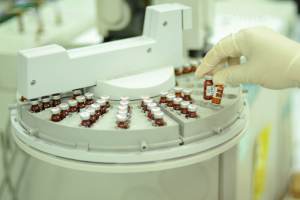
Liquid Chromatography-Mass Spectroscopy Liquid Chromatography-Mass Spectroscopy (LC-MS) is an analytical technique that allows the separation, identification, and quantification of the...
Read Article ➙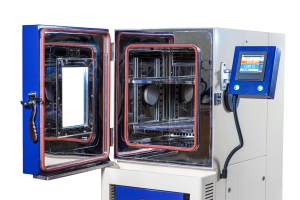
Highly Accelerated Stress Test - HAST Testing Services A highly accelerated stress test (HAST) is an essential part of environmental...
Read Article ➙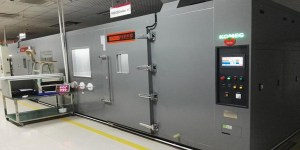
Introduction Accelerated aging in product testing is a methodology that simulates the long-term effects of environmental factors on a product...
Read Article ➙In-depth examination of genuine material testing solutions

EELS analysis of gate and channel is performed on fin field-effect transistors (finFETs). Scanning transmission electron...
Read Case Study
Introduction PVC is the polymer primarily used to make pipes for plumbing, drainage, and electrical conduits....
Read Case Study
Nano-scale surface roughness is a critical parameter in fabricated thin-films that are used in optics, solar...
Read Case StudySubmit your contact info and we’ll get back to you within 24 hours


