
Explore the health and environmental aspects of silicone vs. plastic. Learn how these materials differ and which one aligns better with your well-being and sustainability goals.



Silicones are promoted as harmless alternatives to more common plastics, and their popularity has skyrocketed in recent years. Nipples for baby bottles, cutlery, toys, mugs, food containers, cosmetics, other personal care goods, etc. all make use of this material in some way.
Silicone is widely utilized in the industrial sector for a wide variety of purposes, including but not limited to insulation, sealants, adhesives, lubricants, gaskets, filters, medical applications (such as tubing), and electrical component casings.
To some extent, silicones (or siloxanes, their other name) combine the best features of synthetic rubbers and synthetic plastic polymers. They can be shaped into rubbery objects, moulded into rigid resins, or liquefied into thick fluids for easy spreading.
Silicones are similar to plastic in many ways, including their malleability, transparency, and resistance to heat and moisture.
They have the malleability of plastic and may be moulded into almost any shape. They are widely used for both cookware and culinary utensils due to their low maintenance, nonstick, and stain-resistant properties.
Silicones are synthetic and contain a variety of chemical additives, much like any other plastic polymer. Silicones are distinguished from polymers based on carbon by their silicon backbone.
Although it’s not entirely inaccurate, comparing silicones to sand is a bit of a simplification. They are referring to silica, often known as silicon dioxide1. Silicone resins begin as a basic material derived from silica. Sand from beaches and quartz both consist almost entirely of silica.
Silica has silicon as its foundational ingredient, however, silicon is rarely encountered in its basic state in the natural world. Silica is produced by combining it with carbon in a high-temperature industrial furnace.
Silicone is combined with hydrocarbons derived from fossil fuels to produce siloxane monomers2, which are subsequently polymerized to make the final silicone resin. The degree of purification makes a significant difference in the quality of these silicones. Silicones used in the production of computer chips, for instance, are extremely refined.
Silicones are relatively stable materials, however, they do not have zero reactivity, according to the studies. That is to say, leaching is a distinct possibility. One study3 looked at the release of siloxanes from silicone nipples and bakeware into several liquids, including milk, baby formula, and an alcohol-and-water solution. While no siloxanes were found in the milk or formula after six hours, many were found in the alcohol solution after 72 hours. Some siloxanes have been related to cancer and are thought to be endocrine disruptors.
Silicones are widely regarded as being harmless and safe for use around food and drink by professionals and authorities. There are no recognized health dangers linked with using silicone cookware, according to Health Canada. Silicone rubber does not degrade in the presence of heat, and it does not off-gas harmful chemicals.
Even while there isn’t a lot of hard evidence implicating silicones, it’s still important to keep a watch on them because of growing worries about endocrine-disrupting chemicals. In addition to being present at detectable levels in land, air, and water, siloxanes tend to persist in the environment for lengthy periods due to their durability.
Read more: Is Silicone a Better Alternative to Plastic
Because silicone is so infrequently recycled, it poses a threat to the environment. Municipal curbside recycling programs rarely accept silicone products even though they can be collected by specialized recycling businesses and often down-cycled into oil used to lubricate industrial machines.
Consequently, similar to plastics, silicone can only be down-cycled, and the majority of it ultimately ends up in landfills, where it will not biodegrade for hundreds of years.
The silicone should be of excellent quality, preferably “medical grade” but not lower than “food grade.” (If the quality isn’t specified, contact the retailer to find out.) The likelihood of chemical leaching decreases as quality increases.
Pinch and twisting a flat area of the silicone product will reveal any chemical fillers if they are white. White indicates the presence of a filler, as pure silicone should not discolour. Inconsistent heat resistance and off flavours in food are both possible if the product contains fillers. More importantly, you won’t know what the filler is, therefore you won’t know if it’s safe or if it will leach toxins into the food. The filler might not even be silicone or might be of low quality.
Even while pacifiers and bottle nipples are likely safe, you should nevertheless change them when they become hazy or worn (preferably, every six to eight weeks). If your child does not have a latex allergy, you might also consider using natural rubber.
Although silicones can be a safer alternative to nonstick cookware that may contain perfluorinated chemicals, glass, ceramic, and stainless steel are also terrific possibilities for cookware.
Silicone is safe for use in short-term food contact items like oven mitts, utensils (spatulas, spoons), splatter guards, and potholders. However, they should be avoided for direct food use if at all possible.
Video 01: Silicone vs Plastic Molds with Epoxy Resin
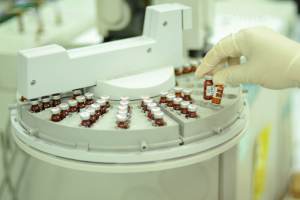
Liquid Chromatography-Mass Spectroscopy Liquid Chromatography-Mass Spectroscopy (LC-MS) is an analytical technique that allows the separation, identification, and quantification of the...
Read Article ➙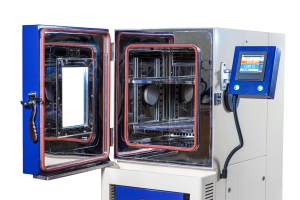
Highly Accelerated Stress Test - HAST Testing Services A highly accelerated stress test (HAST) is an essential part of environmental...
Read Article ➙
Introduction Accelerated aging in product testing is a methodology that simulates the long-term effects of environmental factors on a product...
Read Article ➙In-depth examination of genuine material testing solutions

EELS analysis of gate and channel is performed on fin field-effect transistors (finFETs). Scanning transmission electron...
Read Case Study
Introduction PVC is the polymer primarily used to make pipes for plumbing, drainage, and electrical conduits....
Read Case Study
Nano-scale surface roughness is a critical parameter in fabricated thin-films that are used in optics, solar...
Read Case StudySubmit your contact info and we’ll get back to you within 24 hours


