Polymers and plastics are often confused due to their differences. Polymers are long chains of smaller molecules called monomers, produced naturally or artificially, while plastics are a class of polymers made up of long, branched molecules called polymers. Synthetic polymers can be divided into three distinct groups: elastomers, fibers, and thermoplastics.



Polymers and plastics are frequently confused despite their differences. Polymers are long chains of smaller molecules called monomers, and they can be produced naturally or artificially. Plastics are a class of polymers made up of long, branched molecules called polymers.
One may say that all polymers are plastics, but that is not necessarily the case. Below, we compare and contrast polymers and plastics based on their chemical makeup, physical characteristics, and practical uses.
Wool, cotton, and wood are all examples of organic polymers, while man-made polymers can range from semi-organic to totally synthetic. It is possible to divide synthetic polymers into three distinct groups:
Polymers have fundamental qualities that are established by their molecular structure. The following structural characteristics of a polymer must be taken into account when attempting to place it into a specific category:
The use of monomers. To properly categorize a material, one must know its monomer composition, including the types and amounts of monomers that make up the polymer chain.
Qualities typical of a chain The degree of polymerization and the molecular shape of a polymer can be inferred from the average chain length and weight of the polymer.
Connections between individual molecules. Whether or not there are cross-branching bonds between polymer chains and how the monomers are connected define the polymer’s structure.
Polymerization is the process of joining monomers into polymers. Whether it occurs naturally or through synthetic polymerization via heat, chemicals, or condensation, the structure of the polymer is determined by the method by which the monomers are joined into polymers.
Physical qualities can further categorize polymers and exist in various shapes, sizes, and colors. The following are some distinguishing features:
Polymers’ purposes for which they are employed are yet another way to classify them. Polymers’ versatility stems from their ability to be polymerized into various materials.
Chemicals and condensation promote molecular bonding in plastics, making them synthetic or semi-organic polymers derived from oil or petroleum. Polymers can be found in nature, but plastics are wholly synthetic.
However, due to its polymer composition, plastic shares the same physical characteristics and adaptability, making it versatile. There are two types of plastic: thermosets and thermoplastics.
Heat hardens thermoset plastics, making the pattern permanent. After being molded, thermosets keep their shape even when heated again. Thermosets will burn rather than melt when exposed to high temperatures after setting. Thermoset polymers are ideal when precision components withstand extreme temperatures without distorting or creeping. They also have excellent resistance to corrosion and high temperatures.
Thermoset plastics are highly versatile and include:
The molecular structure of thermoplastics is not altered by heating and cooling, unlike that of thermosets. Due to their malleability and ability to melt at high temperatures, thermoplastics are widely used in the fabrication industry. Plastic toys, toothbrushes, bins, and bottles are typical examples of consumer goods that fall under this category because they are not subjected to high temperatures.
Thermoplastics can be either amorphous or semi-crystalline, depending on their molecular structure.
Many different substances can be classified as thermoplastics.
Thermoplastics are beneficial in various fields and contexts due to their adaptability.
Blow molding fabrication is ideally suited to thermoplastics because of their malleability. Blow molding uses compressed air to drive molten plastic resin into a pre-fabricated mold to make bottles, containers, cases, and other hollow parts and components.
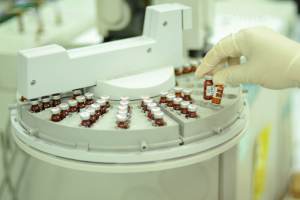
Liquid Chromatography-Mass Spectroscopy Liquid Chromatography-Mass Spectroscopy (LC-MS) is an analytical technique that allows the separation, identification, and quantification of the...
Read Article ➙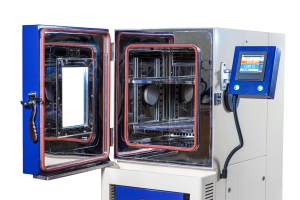
Highly Accelerated Stress Test - HAST Testing Services A highly accelerated stress test (HAST) is an essential part of environmental...
Read Article ➙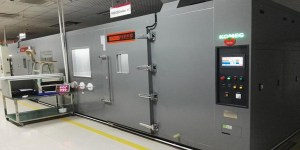
Introduction Accelerated aging in product testing is a methodology that simulates the long-term effects of environmental factors on a product...
Read Article ➙In-depth examination of genuine material testing solutions

EELS analysis of gate and channel is performed on fin field-effect transistors (finFETs). Scanning transmission electron...
Read Case Study
Introduction PVC is the polymer primarily used to make pipes for plumbing, drainage, and electrical conduits....
Read Case Study
Nano-scale surface roughness is a critical parameter in fabricated thin-films that are used in optics, solar...
Read Case StudySubmit your contact info and we’ll get back to you within 24 hours


