The packaging and bottling industries employ PET, also known as polyethylene terephthalate, which is a semi-crystalline plastic with a high melting point. It is a cost-effective and recyclable solution because of its water resistance, strength-to-weight ratio, and shatterproof features. PET has a global market of over 56 million metric tons and is extremely sustainable.


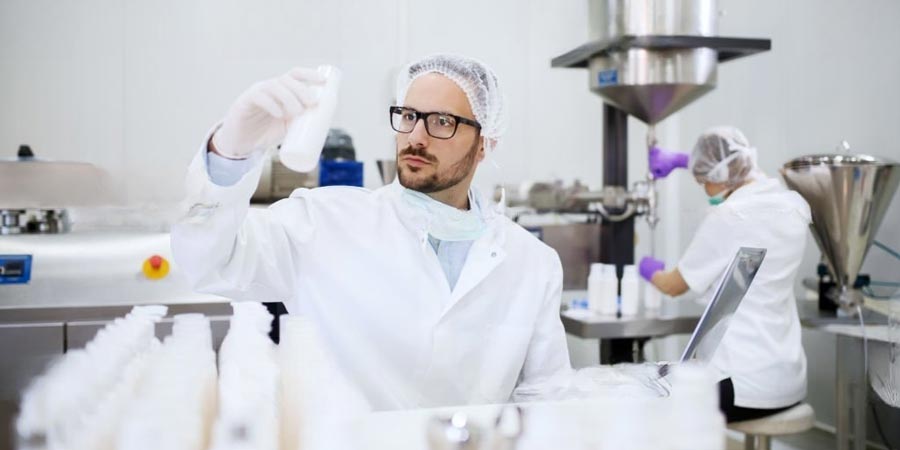
In the textile business, polyethylene terephthalate (PETE or PET) is more widely known by the brand name “polyester.” A semi-crystalline plastic with a high melting point, PET has many applications in the packaging and bottling industries (where it is referred to as PET or “PET resin”) and can be used as an engineering plastic when blended with other materials to increase its strength. It is a semi-crystalline substance that is naturally colorless. Water resistance, great strength-to-weight ratio, almost shatterproof (won’t break like glass packaging), and widespread availability as an affordable and recyclable plastic (resin identification code “1”) are just a few of its impressive features.
In the 1940s, chemists at DuPont began polymerizing PET with the intention of creating a polymer material that could be used to make textile fibers. It is created when ethylene glycol and terephthalic acid are chemically combined. PET is already incredibly robust for its small weight, so there’s no need to add anything to it to make it stronger. As a result, applications like plastic film for packaging can make do with less of the raw material. PET packing reduces the amount of energy needed to transport goods. Although it is made from petroleum, about 40% of the material’s energy is retained and can be used again after recycling. Life cycle studies of PET have consistently demonstrated it to be a highly sustainable material with a favorable impact on the environment, as stated on PETresin.org.
Some estimates put the yearly market for the material at around 56 million metric tons, based on current global demand. The textile sector is one of the largest consumers of polypropylene (about 60% of the total), according to Wikipedia. The bottling and packing industry also makes significant use (30%).
Polyethylene terephthalate (PETE or PET) has a number of useful characteristics, including:
Polyethylene terephthalate is categorized as “thermoplastic” (as opposed to “thermoset”) due to its thermal behavior. However, there are thermoset varieties (like some types of polyester) of the material. When heated over their melting point (about 260 degrees Celsius for PET), thermoplastics take on a liquid state. Thermoplastics’ most appealing feature is their durability in the face of repeated melting, cooling, and reheating. Thermoplastics like polypropylene melt rather than burn, making them suitable for injection molding and subsequent recycling. Thermoset plastics, on the other hand, can only be heated once (during the injection molding process, normally). Thermoset materials undergo irreversible chemical changes at the first heating, causing them to set (much like a 2-part epoxy). A thermoset material would melt if you tried to reheat it to a high temperature. Because of this quality, thermosets aren’t great candidates for reuse or recycling.
PET is one-of-a-kind because it is impervious to most impacts, has a high strength-to-weight ratio, and does not react to common household substances like food and water. These qualities, along with the material’s widespread availability and inexpensive cost, make it an almost invincible option for packaging consumable products. Polyester is a great fabric choice since it is durable and versatile, and it works well in combination with other fibers to prevent wrinkles, shrinkage, and tearing.
Polyethylene terephthalate can be purchased as a homopolymer or as a copolymer-modified product. When used in textiles, the material is known as “polyester.” Food and drink packaging made of PET is commonly referred to as “PET” or “PET resin.” The “PET-P” brand was the name of a discontinued product line. The most popular kind of application, however, is as a fabric, the most well-known of which is simply termed “polyester.”
The process of making plastics, such as polyethylene terephthalate, typically involves combining hydrocarbon fuel “fractions” with additional catalysts (via polymerization or polycondensation) to produce lighter groups. PET is created when ethylene glycol and terephthalic acid are mixed together. Ethylene glycol is a hydrocarbon.
Polyethylene terephthalate (PET) is an excellent material for 3D printing. It has a high success rate for 3D-printed prototypes and is both sturdy and flexible. Mechanical components or electrical device housings, both of which require a high degree of flexibility and durability, are ideal candidates. Although many businesses use ABS or PLA for 3D printing, PET has gained a reputation for having a lower odor emission rate. Here at C.M., we use ABS quite frequently. Read this to learn about the differences between commonly used resins for 3D printing, such as ABS and PLA.
Sheets of polyethylene terephthalate, used in CNC machining, are readily accessible. If your 3D printer is set up to work with ABS plastic, prototyping with PET on a CNC machine is a viable alternative.
Polyethylene terephthalate (PET) is commonly available for injection molding as pellets, and the material lends itself well to this process. To prepare PET for use in a molding machine, it must first be dried because of its hygroscopic nature. Even though PET shrinkage is minimal (less than 1 percent), it can nevertheless differ depending on factors such as holding pressure, holding time, melt temperature, mold wall thickness, mold temperature, and the amount and kind of additives used.
In addition to the more common plastic uses, fiber uses are a natural fit for polyethylene terephthalate. Its most common industrial application is in textiles, where it goes by the term “polyester.” In addition to being widely utilized as a film (especially for packing), it is also put to use in the production of ropes, carpets, and upholstery.
No. PET is an inert material generally recognized as a safe plastic by health authorities, which contributes to its widespread use in food and beverage packaging. It has the same sanitary qualities as glass and is resistant to microbial contamination. Even when in contact with food and drink, it will not deteriorate physiologically. PET plastic is also used to make single-use and reusable takeout containers, which are popular with those who want to enjoy microwaveable meals at home.
For this reason, polyethylene terephthalate is not commonly used to store beer or wine, whose shelf lives are believed to be long enough that some taste degradation might occur before the item is eaten due to its susceptibility to oxidation.
The fact that polyethylene terephthalate doesn’t break down in the environment is either a benefit or a drawback, depending on the context.
In general, polyethylene terephthalate is an excellent material. The special combination of its characteristics makes it ideal for use in textiles and other consumer goods.
Video 01: What is PET Plastic? | Polyethylene Terephthalate Overview
Liquid Chromatography-Mass Spectroscopy Liquid Chromatography-Mass Spectroscopy (LC-MS) is an analytical technique that allows the separation, identification, and quantification of the...
Read Article ➙
Highly Accelerated Stress Test - HAST Testing Services A highly accelerated stress test (HAST) is an essential part of environmental...
Read Article ➙
Introduction Accelerated aging in product testing is a methodology that simulates the long-term effects of environmental factors on a product...
Read Article ➙In-depth examination of genuine material testing solutions

EELS analysis of gate and channel is performed on fin field-effect transistors (finFETs). Scanning transmission electron...
Read Case Study
Introduction PVC is the polymer primarily used to make pipes for plumbing, drainage, and electrical conduits....
Read Case Study
Nano-scale surface roughness is a critical parameter in fabricated thin-films that are used in optics, solar...
Read Case StudySubmit your contact info and we’ll get back to you within 24 hours


