
Delrin, also known as POM-H, is a versatile material used in manufacturing due to its low friction, high rigidity, and dimensional stability, making it suitable for CNC machining, injection molding, and 3D printing.


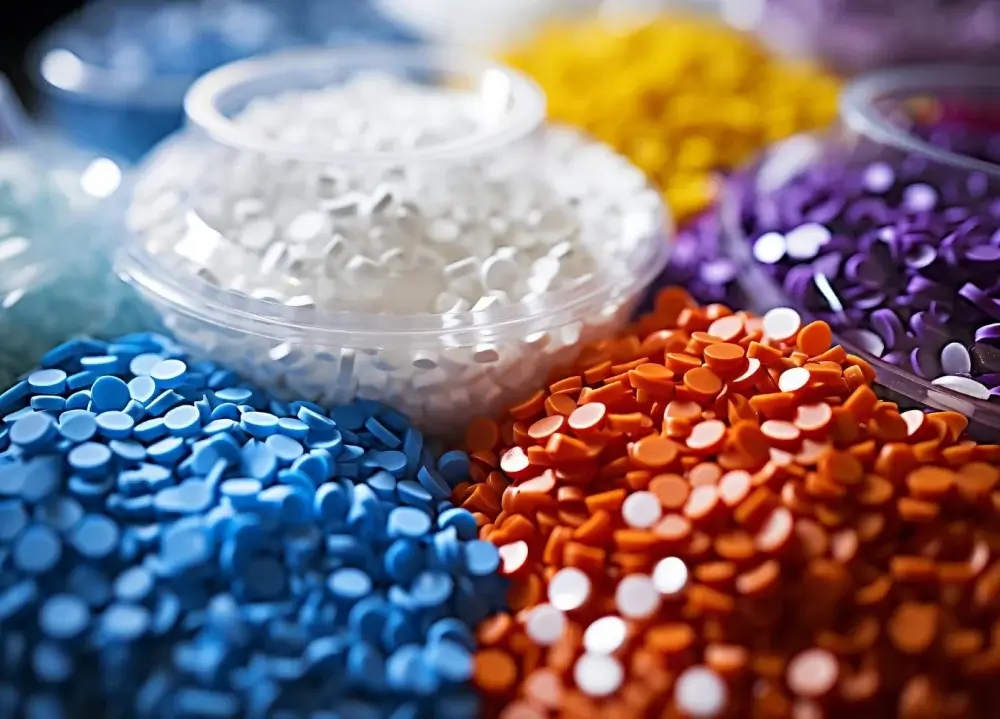
What is Delrin and how does it differ from other materials used in production? Delrin, also known as POM-H (homopolymer acetal), is a versatile material that may be machined, printed, or molded to produce high-quality, long-lasting parts. The benefits and limitations of Delrin are discussed in this article.
Because of its low friction, high rigidity, and outstanding dimensional stability, Delrin is a popular engineering thermoplastic. Due to its strong strength and broad operating temperature range (-40 to 120 ℃), it can be utilized to make highly precise pieces. In addition to being harder than ABS, Delrin also offers great mechanical qualities.
Delrin’s material qualities are investigated, and suggestions for working with this adaptable and sturdy material are offered. This guide will explain the properties of Delrin and whether it is appropriate for use in CNC machining, injection molding, or 3D printing.
Delrin, also known as POM-H (homopolymer acetal), is a type of POM material; the other type of POM is POM-C (copolymer acetal). In 1920, German chemist Hermann Staudinger discovered it, and by 1956, it had been produced commercially at DuPont.
Delrin is made by separating hydrocarbons in a distillation process. Through polymerization, they can be joined with other catalysts to create usable plastic. Delrin, in reality, is the original acetyl resin made by DuPont.
Many machinists like Delrin because it is malleable and can be machined on 3- and 5-axis machines, just like metal. Its versatility and viability as a plastic for a wide variety of uses make it suitable for 3D printing and injection molding.
Delrin is used in a wide variety of high-performance engineering applications, including the automobile and consumer electronics sectors. Delrin is commonly used for high-performance applications such as gear wheels, housings, screws, nuts, pump components, and many more.
Delrin can also be used to make electrical engineering components like connectors, electronic parts, coverings, and insulators. Delrin can be used to manufacture a variety of automotive components, such as door locks and movable shells. Delrin is also used in a wide variety of medical devices and equipment, including insulin pens and metered-dose inhalers. Delrin is frequently used as a substitute for metal.
Delrin stands out from the crowd of plastics and metals because of its amazing set of features. Delrin’s exceptional strength and stiffness make it a good choice for parts that must withstand heavy loads and remain the same size and shape despite exposure to moisture and temperature fluctuations.
Delrin is resistant to gasoline and solvents and has high impact and creep strength. Delrin is a good option if your components will be exposed to harsh chemicals in the petrochemical industry, for example.
Delrin’s wide range of desirable characteristics makes it a promising candidate for use in a wide variety of commercial, military, aerospace, energy, healthcare, and consumer settings. It’s great for sports equipment, food storage containers, and glasses, and it’s ideal for anything that will be exposed to high levels of moisture, such as kitchen appliances, pump and valve components, and water management controls.
Machinists that work with Delrin have praised the material for its ease of cutting and shaping. It’s great for injection molding and extrusion because of how easily it can be cut into different shapes with different tools.
Component assembly should be taken into account while deciding on a manufacturing material. Several different methods exist for putting together Delrin components. Delrin components can be easily assembled and disassembled using self-tapping screws, snap-fits, and press-fits, whereas welding, adhesives, and riveting are permanent assembly techniques.
Adhesives can be used for prototyping and low-volume production of a huge, complex assembly, but they won’t hold up in actual use. If performance is paramount, we advise using glued joints.
If you want better assembly results, clean and degrease surfaces with sandpaper or chemicals.
In addition to POM-C (copolymers), another major form of POM is POM-H (homopolymer). The commercial name for POM-H is Delrin, while the commercial name for POM-C is acetal. The melting points of the two substances are different, and this is a significant distinction. At temperatures between 160 and 175 °C, POM-C begins to melt. The melting point of POM-H, which is slightly stronger, is between 171 and 184 °C.
Overall, POM-H’s mechanical and physical qualities are superior to those of POM-C, making it a preferable choice for uses that necessitate high abrasion resistance and a low friction coefficient. Although POM-C lacks Delrin’s strength and stiffness, it outperforms Delrin in low-friction applications and is simpler to produce.
Delrin is an engineering thermoplastic with exceptional performance characteristics. Among these are:
Delrin is a popular 3D printing material that can stand in for many metals. Delrin’s high degree of crystallinity and unique chemical makeup are responsible for its impressive set of characteristics. Delrin’s chemical advantages include, among others:
However, Delrin is vulnerable to strong acids, strong bases, hot water, and steam, despite being more resistant to fast failure from exposure to organic compounds than other polymers.
Delrin components can be finished in one of two ways, depending on the desired aesthetic and the intended use. Delrin components that have been machined are usually usable despite their rough surface and machine markings. One alternative technique is bead blasting. This provides the part with a consistent appearance and increases its longevity.
Delrin components can be finished off with a variety of surface modifications, including hot stamping, silk screen printing, painting, laser marking, metalizing, and pad printing.
Delrin components that have been painted can withstand oven temperatures of up to 160 °C. Copper, chromium, and aluminum platings can be applied to surfaces to enhance their aesthetics and longevity. Mildly acidic solutions can be used for pretreatment and laser marking of Delrin components.
Delrin’s high stability and ease of machining make it a good choice for applications requiring precision. However, large components often experience problems with shrinkage. There may be a +/- 0.05 mm shrinkage in large Delrin components.
Delrin is one of the most machineable plastics, which justifies the higher price compared to other plastics. Because of its great rigidity, machining Delrin does not cause it to bend or lose its shape, and it is less prone to shatter.
Although Delrin is a strong material option for a wide range of uses, it is not without drawbacks of its own. Delrin’s surface doesn’t dissolve completely when using solvent-based glues, and it doesn’t respond well to many adhesives, so the material can be difficult to attach. Overheating during machining could cause it to distort since it is combustible above a certain temperature.
Liquid Chromatography-Mass Spectroscopy Liquid Chromatography-Mass Spectroscopy (LC-MS) is an analytical technique that allows the separation, identification, and quantification of the...
Read Article ➙
Highly Accelerated Stress Test - HAST Testing Services A highly accelerated stress test (HAST) is an essential part of environmental...
Read Article ➙
Introduction Accelerated aging in product testing is a methodology that simulates the long-term effects of environmental factors on a product...
Read Article ➙In-depth examination of genuine material testing solutions

EELS analysis of gate and channel is performed on fin field-effect transistors (finFETs). Scanning transmission electron...
Read Case Study
Introduction PVC is the polymer primarily used to make pipes for plumbing, drainage, and electrical conduits....
Read Case Study
Nano-scale surface roughness is a critical parameter in fabricated thin-films that are used in optics, solar...
Read Case StudySubmit your contact info and we’ll get back to you within 24 hours


