Transmission electron microscope (TEM) data analysis is the process of knowing information from their TEM diffraction patterns. It involves image processing to improve image quality, particle size analysis to measure particle size distribution.


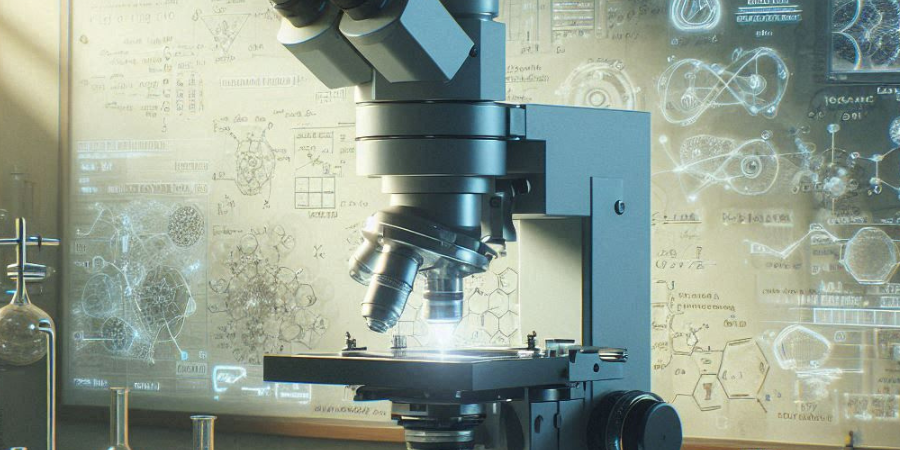
Transmission electron microscope (TEM) yields information from TEM diffraction patterns. This involves image processing to improve the reality of the image and particle size analysis, which calculates the size distribution of particles.
Transmission Electron Microscopes (TEM) are essential in many scientific domains. TEM provides a microscopic resolution for high magnification that presents the nanoscale material structure. However, TEM data is complicated. Therefore, it must be interpreted carefully and combined with focused analytical methods. This article aims to guide you through the process of TEM data analysis. We will cover sample preparation, the role of software tools, and the troubles involved in data interpretation. Whether you are a seasoned researcher or a student, this guide will give you some indispensable information on electron microscopy.
TEM is a high-resolution microscopy technique using a beam of electrons to develop an image of any given sample. The nanometer-scale details in the obtained high-resolution images will undoubtedly reveal knowledge of the structure of materials, making TEM a precious tool for structural materials study. However, TEM data are about more than images. They can also show insights into a sample’s chemical and physical properties. First comes understanding its capabilities for practical data analysis.
Sample preparation is a crucial step in TEM data analysis. The quality of the sample directly impacts the accuracy of the data obtained.
Improper sample preparation can result in artifacts in the images, which can distort the data and lead to incorrect interpretations. Therefore, investing time and effort in proper sample preparation is essential for reliable TEM data analysis.
The analysis of TEM data employs several analytical techniques to yield meaningful information. Some of the most common ones include diffraction pattern analysis and electron tomography, which can even portray the structural and chemical nature of the sample.
| Analytical Technique | Description |
| Diffraction pattern analysis | It provides information on the crystal structure of the sample, and the diffraction patterns help us understand the atomic arrangement. |
| High-resolution imaging | It allows detailed visualization at the nanometer scale, which may provide information on sample features, such as particle size and shape. |
| Electron tomography | 3D structural analysis of samples enables a deeper understanding of the spatial characteristics. |
| Energy-dispersive X-ray spectroscopy (EDX) | Determines the sample’s elemental composition and can provide chemical analysis and structural data. |
The power usage in TEM data analysis lies in studying the diffraction pattern. This provides information regarding the crystal structure of the sample. Such patterns are critical for deducing insight into atomic arrangement material and understanding its properties.
High-resolution imaging allows the sample details to be visualized in detail. It can even see features down to the nanometer scale. Features can then be quantitatively analyzed through particle size, shape, and distribution measurements.
Software tools are of immense importance in analyzing TEM data. They can help extract useful information from the data and automate many study aspects, such as image processing, measurement, etc. The choice of software determines the accuracy and efficiency of data interpretation.
TEM data analysis itself poses some specific problems. The most critical one is the sizeable dataset with which it is generally accompanied. The second is related to accuracy in the used dataset. The electron beam parameters and detector sensitivity will influence these. All these issues require technical expertise, advanced software tools, and rigid data management practices to be correctly addressed.
TEM is and remains a dynamic field. New technological opportunities allow for greater possibilities in data analysis. Promising development trends are the application of artificial intelligence and machine learning in the field. These technologies will improve TEM data interpretation. These advancements are expected to revolutionize and change how we understand and analyze materials at the nanoscale.
Transmission Electron Microscopy (TEM) plays a pivotal role in advancing science. It provides insights into materials’ structural, chemical, and physical properties. The accurate analysis of TEM data is crucial for scientific research and publications. It contributes to developing semiconductors, nanomaterials, and other technological advancements. As we look to the future, the importance of TEM data analysis will only continue to grow. It will remain a vital tool for researchers, scientists, and professionals across various fields.
Vast amounts of data require handling and maintenance, ensuring accuracy, and factors like electron beam parameters and detector sensitivity. All this requires technical knowledge and sophisticated equipment to interpret the data that would be obtained meaningfully.
TEM is particularly useful in developing advanced materials, like semiconductors and nanomaterials, as it gives insights into their nanoscale properties. This, therefore, promotes research and development and quality control in diverse scientific disciplines.
Emerging trends in research today are artificial intelligence and machine learning, which can be applied to automate data interpretation and provide deeper insight into material properties.
TEM is a high-resolution microscopy technique that uses a focused beam of electrons to produce information about the sample's nanoscale. Its main application is determining materials' structural, chemical, and physical properties.

Liquid Chromatography-Mass Spectroscopy Liquid Chromatography-Mass Spectroscopy (LC-MS) is an analytical technique that allows the separation, identification, and quantification of the...
Read Article ➙
Highly Accelerated Stress Test - HAST Testing Services A highly accelerated stress test (HAST) is an essential part of environmental...
Read Article ➙
Introduction Accelerated aging in product testing is a methodology that simulates the long-term effects of environmental factors on a product...
Read Article ➙In-depth examination of genuine material testing solutions

EELS analysis of gate and channel is performed on fin field-effect transistors (finFETs). Scanning transmission electron...
Read Case Study
Introduction PVC is the polymer primarily used to make pipes for plumbing, drainage, and electrical conduits....
Read Case Study
Nano-scale surface roughness is a critical parameter in fabricated thin-films that are used in optics, solar...
Read Case StudySubmit your contact info and we’ll get back to you within 24 hours


