Strength Tester To ensure that the accuracy of the instrument is within the manufacturer's stated tolerances for the grade or model, calibration should be done periodically. A hardness tester can fall out of alignment when it continuously assesses the relative resistance of materials to denting, bending, or scratching. It will need to be calibrated and adjusted to regain its dependability.



Micro-hardness, Vickers, Knoop, and Rockwell hardness tester models are just a few of the hardness tester models that Infinita Laboratory is qualified and prepared to calibrate. Our professionals are capable of calibrating Rockwell hardness testers to C, B, A, and E scales. With the 15, 30, and 45 N&T Scales, a superficial Rockwell hardness tester calibration is available.
The accuracy of the tester will be assessed during calibration, and Infinita lab skilled specialists will make the required modifications to put the tester within the manufacturer’s tolerances. During the time of calibration, maintenance and repair services may be offered. Infinita lab can have our vendors buy new indenters, blocks, and hardness tests for you.
Before calibrating the hardness tester, the device is balanced and checked for chips, breaks, or fractures. The anvil and indenter’s condition is checked, and after that, three certified hardness test blocks that represent the high, middle, and low ranges on all scales being verified are subjected to five hardness tests.
The device is regarded as certifiable if the instrument reads within the test blocks’ tolerances. If not, modifications will be made to fix the device. Similar to how actual testing would be conducted, this form of verification accounts for and combines all of the factors that result in the actual hardness value.
The Leeb Rebound Testing technique, introduced in 1957, offers a portable solution for metal testing with its Non-Destructive Testing (NDT) advantage. It calculates the hardness value based on the energy lost when an impact body strikes a metal sample, providing a rapid and affordable hardness assessment within seconds. The Leeb Gen 3000, a handheld hardness tester, is widely used for testing various materials, including steel, cast iron, stainless steel, and more. It offers versatility, ease of use, and compact size, making it an ideal alternative to stationary hardness testers. With advanced technological features like an impact direction sensor, LCD screen, and compatibility with multiple hardness scales, the Leeb Gen 3000 ensures precise and convenient testing. It also includes a USB port for data transfer, wireless printer support, and a rechargeable battery. The device complies with industry standards for hardness conversion and prioritizes operator-friendly features such as easy calibration and an intelligent sleep mode.
A portable system called Telebrineller is primarily made for determining Brinell’s hardness in anyplace in a plant, laboratory, or field. It is necessary to choose a Telebrineller test bar with a hardness value that is plus or minus 15% of the specimen’s hardness value.
Standard Telebrineller Test Bars are warranted to have uniform hardness that is within plus or minus 2% of the BHN engraved on the end of the bar. They are made of various carbon steel alloys and are finished with a 9/16″ square grinding. Low-cost Telebrineller test bars are also available for aluminum.
The relative hardness of the test bar and the test piece determines how accurate any test performed with the Telebrineller will be. When the Telebrineller is used appropriately, an accuracy of +/- 5% is consistently achievable, provided that the difference between the test pieces and the test bar’s BHN is not greater than 15%.
For materials with a structure or surface that cannot be tested with other hardness scales, such as castings and forgings, Brinell hardness testers are the best option. Due to the size of the indenter and the greater use, which enables the indentation to cover a larger area, these testers are more forgiving of surface imperfections.
While the tougher steels and cast irons are tested with higher weights, some metals, like aluminum and copper, are frequently tested with lower Brinell loads.
The operation is greatly eased by the BrinGen 3000 Series’ user-friendly interface, which converts your indentation diameter reading into a Brinell hardness value right from the instrument display. Also, it may conduct tests using 2.5 mm, 5 mm, or 10 mm carbide or steel balls. For the highest level of load control precision, the BrinGen Brinell Hardness Tester is outfitted with precision load cell technology. 10 loads, ranging in weight from 62.5kgf to 3000kgf, are available for the operator to choose from.
To eliminate the operator needing to manually measure the indentation with a 20x scope, the BrinGen 3000 instrument can be linked with our BrinGen Scope. Instead, the BrinGen Scope uses CCD optics to take a picture and then uses our user-friendly Computer software to analyze the indentation.
Our BrinGen instrument is a cost-effective, digital laboratory and production solution for Brinell hardness testing, and it complies with ASTM E10 and IEN ISO 6506 for Brinell Testing.
The GenVick NG10 and NG30 – Micro and Macro Automated Vickers Hardness Testing Systems – are presented by Infinita lab Material Testing. In Vickers hardness testing, these cutting-edge devices provide unrivalled precision and repeatability. The GenVick series beats rivals with optical zoom capabilities and a variety of features like automatic part recognition and customised reporting. As a result of the systems’ versatility, testing can continue without interruption from operators. Because they use closed-loop load cell technology, they provide accurate load control and adherence to regulations. The GenVick testers have established themselves as a reliable option in quality control labs all around the world by offering precise and effective hardness testing solutions.
Video – Calibration of Hardness Testers
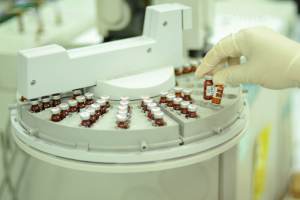
Liquid Chromatography-Mass Spectroscopy Liquid Chromatography-Mass Spectroscopy (LC-MS) is an analytical technique that allows the separation, identification, and quantification of the...
Read Article ➙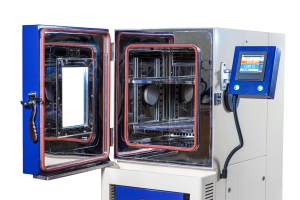
Highly Accelerated Stress Test - HAST Testing Services A highly accelerated stress test (HAST) is an essential part of environmental...
Read Article ➙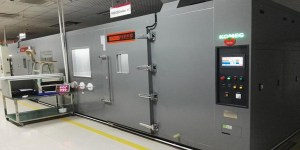
Introduction Accelerated aging in product testing is a methodology that simulates the long-term effects of environmental factors on a product...
Read Article ➙In-depth examination of genuine material testing solutions

EELS analysis of gate and channel is performed on fin field-effect transistors (finFETs). Scanning transmission electron...
Read Case Study
Introduction PVC is the polymer primarily used to make pipes for plumbing, drainage, and electrical conduits....
Read Case Study
Nano-scale surface roughness is a critical parameter in fabricated thin-films that are used in optics, solar...
Read Case StudySubmit your contact info and we’ll get back to you within 24 hours


