
Testing for ferrite content in austenitic and duplex stainless steels is a reliable, fast, and low-cost option. Testing is done to ensure its strength and corrosion resistance.


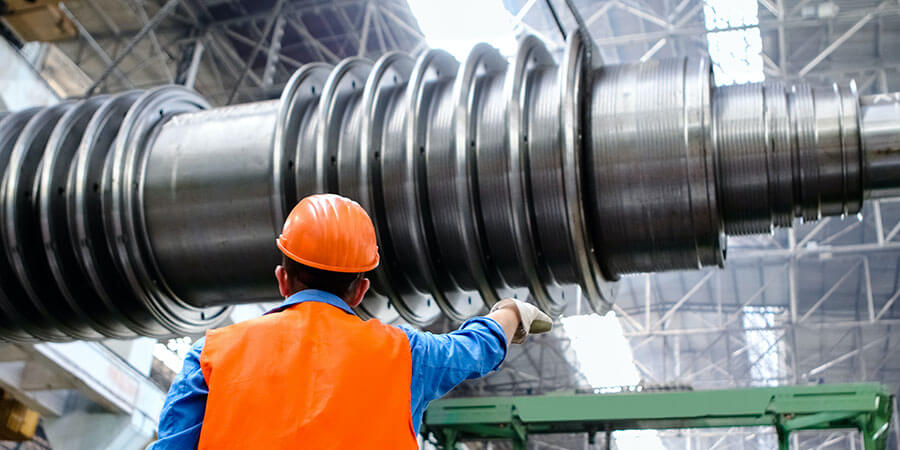
Tolerance tests on materials Technicians will perform such a test on stainless steel to ensure its strength, corrosion resistance, and crack resistance in a variety of applications. According to their intended use, various grades of stainless steel call for varying amounts of ferrite. Numerous sectors make use of ferrite testing. The chemical, mining, manufacturing, oil and gas, paper, and power generation industries are all examples. Ferrite testing ensures that the material’s performance balance has been achieved after heat treatment. The presence of harmful third phases in materials, which could later hinder the performance of stainless steels, is also revealed. Any weaknesses in the weld’s strength will also be exposed.
There are two types of stainless steel: austenitic and duplex. These two variants of the same metal both have intricate microstructures. One of these is ferrite. Different elements are used to create austenitic and duplex stainless steels. For instance, the ferrite content in austenitic stainless steel influences:
On the other hand, ferrite content in duplex stainless steel only
The ideal equilibrium between these factors is achieved when the ferrite content of the stainless steel being dealt with is just right.
When should you conduct a ferrite test?
Testing for ferrite is performed on stainless steels in the field or laboratory to determine how much ferrite is present in various machine parts, including welds or overlays. Ferrite content percentages in duplex stainless steel pipelines, pressure vessels, tanks, castings, and mechanical components can also be determined with this method.
Format NDT, a non-destructive testing service, offers ferrite testing to reduce the likelihood of mechanical failures like corrosion or cracking of parts and the associated maintenance expenses.
The amount of ferrite required varies with the type of stainless steel being processed.
The austenitic microstructure is characteristic of 300-class stainless steels like 304/L and 316/L. They don’t attract magnetism either. This means that they do not contain any magnetic ferrite in their natural, unheated form. When these alloys are treated, ferrite is also produced. Corrosion can be a side effect of having ferrites present. In some instances, the magnetic properties of ferrite may also affect the functionality of the final product.
The amount of ferrite in a cast alloy is determined by the alloy’s composition. In order to create austenite, carbon, nitrogen, nickel, and manganese are all required. By increasing their proportion, ferrite formation capability is drastically diminished. Most of the remaining ferrite can be dissolved by heating. Cast items, on the other hand, are designed to have more ferrite in them, and even heating them does not convert all of the ferrite to austenite.
Between 4 and 8 percent seems like a good range to aim for. This proportion is helpful in managing and halting issues like the micro-cracking of weld metal during cooling.
The range of 35% to 65% is thought to be optimal for duplex stainless steel. The ideal range is between 50% and 100%. This will ensure durability and the necessary resistance to corrosion. Between 35% and 65% ferrite is ideal, and 50% is best.
If you hire a reputable service, ferrite testing will be fast, accurate, and produce results right away.
We’ll drop a probe into the sample of interest. This will result in a magnetic circuit that is completely closed. With this, we can determine the magnetic permeability of any material. The results are compared to the typical percentages of materials known to contain ferrite. How well it lets the analyzed substance pass through it. The percentage of ferrite in the material can be determined by measuring its permeability.
Non-destructive testing is the method we employ. The testing area must be spotless and completely flat.
If you need assistance with ferrite testing, choosing Infinita Lab is a good decision because they are knowledgeable and experienced in non-destructive testing and can provide you with high-quality service. The steel’s performance can be optimized by checking its ferrite content to ensure an appropriate balance between corrosion resistance, crack prevention, and overall strength.
Our rigorous analysis guarantees that the ferrite readings you receive are consistent with the samples you provide. We’re fast and reliable, so you can count on us to deliver the data and answers you need just when you need them.
Liquid Chromatography-Mass Spectroscopy Liquid Chromatography-Mass Spectroscopy (LC-MS) is an analytical technique that allows the separation, identification, and quantification of the...
Read Article ➙
Highly Accelerated Stress Test - HAST Testing Services A highly accelerated stress test (HAST) is an essential part of environmental...
Read Article ➙
Introduction Accelerated aging in product testing is a methodology that simulates the long-term effects of environmental factors on a product...
Read Article ➙In-depth examination of genuine material testing solutions

EELS analysis of gate and channel is performed on fin field-effect transistors (finFETs). Scanning transmission electron...
Read Case Study
Introduction PVC is the polymer primarily used to make pipes for plumbing, drainage, and electrical conduits....
Read Case Study
Nano-scale surface roughness is a critical parameter in fabricated thin-films that are used in optics, solar...
Read Case StudySubmit your contact info and we’ll get back to you within 24 hours


