Read about “Dynamic Light Scattering” a frequently used method that estimates the distribution of submicron particulate systems.



The term “dynamic light scattering” (DLS) is frequently used to refer to a method that estimates the distribution of submicron particulate systems and assesses their particle size. In addition, the same analytical concept has also traditionally been referred to by the titles Photon Correlation Spectroscopy (PCS) and Quasi-Elastic Light Scattering (QELS). Many standards exist that describe the approach, demonstrating that it is generally accepted in the pharmaceutical and industrial sectors (i.e. ISO 22412 and ASTM E2490-09).
For dynamic light scattering to occur, a fluid must include particles that are uniformly suspended and smaller than a micron in size (aqueous or organic). Aggregated proteins, pigment components, micelles, or droplets of an emulsion suspended in a continuous phase are a few examples of suitable systems. A LASER’s optical path receives the nano-dispersed system. When the LASER comes into contact with particles in the suspension that are moving according to Brownian Motion, it scatters. To calculate the rate of diffusion—or how quickly particles move within a system due to Brownian motion—scattered light is collected by a detector throughout the analysis. The Stokes-Einstein equation is then used to calculate the average hydrodynamic particle size, or Z-Average, on an intensity-weighted basis. Simply put, smaller particles diffuse/move more quickly than larger ones. Despite the availability of other reporting formats, the most widely accepted and advised method for reporting DLS results is on an intensity basis using the Z-average and the Polydispersity Index (PDI). The “broadness” of the particle size distribution is indicated by the PDI.
Although the technique is simple in theory, getting accurate results requires understanding the dispersed system (such as the optical parameters of the particle/liquid and the dispersed system’s viscosity). Additionally, knowledge of the advantages and disadvantages of the employed DLS instrument is necessary for achieving the best results. Some elements of the data-gathering process, including the angle of detectors or the data processing algorithms, can vary between instrument manufacturers. These variances may cause readings from different devices to differ or necessitate adjusting sample concentration and preparation.
As the analytical principle assumes an “infinite dilution” to reduce the impact of particle/particle interactions, sample preparation is crucial in DLS analyses. As a result, dilution of the sample may be required for analysis depending on the instrument and sample properties. To prevent the distributed system from becoming unstable, proper technique development must be given careful concern. Infinita Lab’s years of expertise in sample preparation and wide range of internal DLS equipment enable us to support and offer solutions for all facets of our client’s projects. For your submicron-sized samples, we know to create and validate an accurate, precise, and reliable procedure.
The DLS instruments that are accessible at Infinita Lab are listed below. To find out if your sample and project are suitable for Dynamic Light Scattering analysis and how this analytical method can add to your project’s solutions, interested clients should get in touch with us.
Video 01: Dynamic Light Scattering
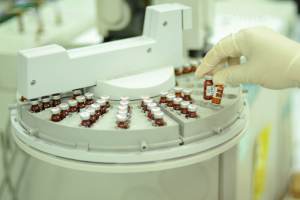
Liquid Chromatography-Mass Spectroscopy Liquid Chromatography-Mass Spectroscopy (LC-MS) is an analytical technique that allows the separation, identification, and quantification of the...
Read Article ➙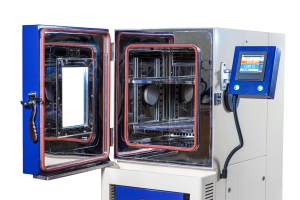
Highly Accelerated Stress Test - HAST Testing Services A highly accelerated stress test (HAST) is an essential part of environmental...
Read Article ➙
Introduction Accelerated aging in product testing is a methodology that simulates the long-term effects of environmental factors on a product...
Read Article ➙In-depth examination of genuine material testing solutions

EELS analysis of gate and channel is performed on fin field-effect transistors (finFETs). Scanning transmission electron...
Read Case Study
Introduction PVC is the polymer primarily used to make pipes for plumbing, drainage, and electrical conduits....
Read Case Study
Nano-scale surface roughness is a critical parameter in fabricated thin-films that are used in optics, solar...
Read Case StudySubmit your contact info and we’ll get back to you within 24 hours


