
VOC content analysis-EPA Method 24 is the primary technique currently authorized by the environmental protection agency (EPA) and local governing agencies in the United States for measuring volatile organic compound (VOC) concentrations in inks, paints, and similar coating materials.



VOC Content Analysis – EPA Method 24
VOC content analysis-EPA Method 24 is performed in two stages. In the first stage, the total amount of VOCs is analyzed in the composition of the test material. This result yields the VOC content value, water content, density, and total solids value percentage. While in the second stage, the method identifies specific VOC content and their relevant chemical percentages in the test material.
VOC content analysis-EPA Method 24 determines the volatile contents of products and materials used in coatings, elastomers, and inks. These volatile contents pose potential safety risks to the environment and health. Manufacturing industries must test and determine the VOC levels of products and raw materials. Numerous industries follow EPA standards and regulations to ensure their products are safe for the environment and customers.
Video 01: Calculating VOC Emissions
Common Uses of VOC Content Analysis – EPA Method 24
Advantages of VOC Content Analysis – EPA Method 24
Limitations of VOC Content Analysis – EPA Method 24
Industrial applications of VOC Content Analysis – EPA Method 24
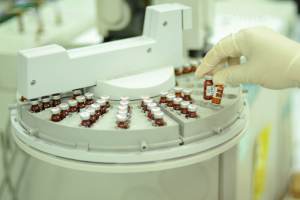
Liquid Chromatography-Mass Spectroscopy Liquid Chromatography-Mass Spectroscopy (LC-MS) is an analytical technique that allows the separation, identification, and quantification of the...
Read Article ➙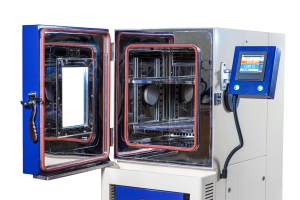
Highly Accelerated Stress Test - HAST Testing Services A highly accelerated stress test (HAST) is an essential part of environmental...
Read Article ➙
Introduction Accelerated aging in product testing is a methodology that simulates the long-term effects of environmental factors on a product...
Read Article ➙In-depth examination of genuine material testing solutions

EELS analysis of gate and channel is performed on fin field-effect transistors (finFETs). Scanning transmission electron...
Read Case Study
Introduction PVC is the polymer primarily used to make pipes for plumbing, drainage, and electrical conduits....
Read Case Study
Nano-scale surface roughness is a critical parameter in fabricated thin-films that are used in optics, solar...
Read Case StudySubmit your contact info and we’ll get back to you within 24 hours


