Thermal Testing of Materials

Written by Sachin Kulshreshtha | Updated: August 28, 2025

Thermal Analysis and Testing Services

Thermal testing evaluates the physical, mechanical, and chemical properties of materials or products at their operating to extreme temperatures. Testing conditions range from cryogenic to more than 3000C. Understanding temperature sensitivity is critical for virtually any material, device, or product. Standard thermal analysis methods are available for all samples to evaluate performance under specific service conditions and product safety.

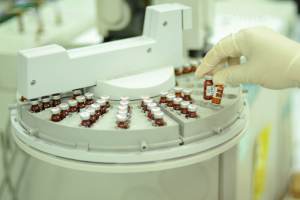
  • Thermal Analysis Techniques: Thermal analysis methods are primarily focused on evaluating the physical, mechanical, chemical, and thermodynamic properties of samples. Of interest are phase transitions, weight change with temperature, dimension changes, thermal conductivity, etc. A wide range of thermal analysis techniques is available, including thermogravimetric analysis (TGA), thermomechanical analysis (TMA), dilatometry, dynamic mechanical analysis (DMA), and differential scanning calorimetry (DSC). These techniques are primarily used for characterizing new polymers, epoxy matrix materials, composites, biological samples, pharmaceuticals, coatings, adhesives, etc.
  • Mechanical Testing: Elevated-temperature mechanical analysis is often used to gain insights into performance, strength characterization, structural failure issues, and other physical properties of materials when subjected to extreme temperatures. Testing methods include impact, tensile strength, fatigue, bend, shear, and flexural strength testing. The testing temperatures depend on the particular test, sample requirements, and capabilities available for the specific sample.
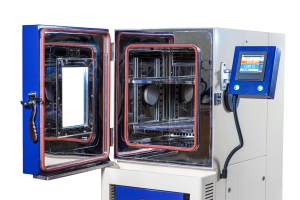
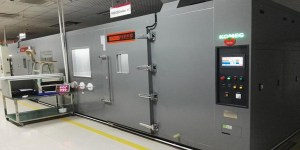
  • Environmental testing: Simulated environmental studies combine temperature and humidity, vibration, altitude, etc., for a comprehensive solution to climatic testing of raw materials and finished products. Accelerated aging and thermal shock tests are other environmental tests performed in specialized temperature-controlled chambers.

Other thermal testing methodologies include thermal imaging, electrical testing of materials under varying temperatures, finite element analysis (FEA), etc., to evaluate products and materials at the extremes of their intended use.

Industries
  • Aerospace
  • Manufacturing
  • Automotive
  • Plastics
  • Polymers
  • Chemicals
  • Electronics
  • Composite Materials
  • Nano Materials
  • Ceramics
  • Adhesives
  • Coatings
  • Thin Films


Case Studies

In-depth examination of genuine material testing solutions

Dopant and ultra-low concentration elemental analysis using Scanning…

banner

Dopant and ultra-low concentration elemental analysis using Scanning…

EELS analysis of gate and channel is performed on fin field-effect transistors (finFETs). Scanning transmission electron...

Read Case Study

Analysis of degradation of PVC pipe using Fourier…

Fourier Transform Infrared Spectroscopy (FTIR)

Analysis of degradation of PVC pipe using Fourier…

Introduction PVC is the polymer primarily used to make pipes for plumbing, drainage, and electrical conduits....

Read Case Study

Nano-scale roughness measurement of Si-wafers by Atomic Force…

banner

Nano-scale roughness measurement of Si-wafers by Atomic Force…

Nano-scale surface roughness is a critical parameter in fabricated thin-films that are used in optics, solar...

Read Case Study

Talk to Our Experts Today!

Submit your contact info and we’ll get back to you within 24 hours

    Discover more from Infinita Lab

    Subscribe now to keep reading and get access to the full archive.

    Continue reading

    ×

    Talk to an Expert

      Connect Instantly

      (888) 878-3090
      Ensure Quality with the Widest Network of Accredited Labs
      • ddd
        Quick Turnaround and Hasslefree process
      • ddd
        Confidentiality Guarantee
      • ddd
        Free, No-obligation Consultation
      • ddd
        100% Customer Satisfaction

        ddd

        Start Material Testing