
Optical testing is the measurement of the optical properties of materials that include angle, refractive index, interference, and wavefront characteristics. Evaluation of optical properties of materials in testing labs is critical in evaluating performance in lasers, lenses, and other photonic systems. Optical Testing is done in manufacturing, production, and quality control of lenses, optical systems, and UV and IR-based analytical equipment. The testing labs network of Infinita Labs is well equipped in optical testing techniques and capable of catering to all the routine and specific test requirements of our clients based in the USA.



Optical testing is the measurement of the optical properties of materials. Measurement of optical properties like angle, refractive index, interference, and wavefront in testing labs is critical in evaluating performance in lasers, lenses, and other photonic systems.
Measurement of parameters like centration, alignment, center thickness, air gap, focal length, etc., done in a laboratory has a significant bearing in the manufacturing, production, and quality control of lenses and optical systems. Optical testing of camera modules is essential in various industries and ranges from small cell phone cameras to high-speed video cameras. Analytical equipment manufacturers frequently utilize UV, IR, and other light components and rely on lens alignment and additional lens component testing.
Optical analytical techniques measure the optical properties of materials for characterization and testing in a laboratory. Some examples include Fourier Transform Infrared Spectroscopy (FTIR), UV-Visible Spectroscopy (UV-Vis), Raman analysis (spectroscopy, microscopy, etc.), These techniques employ light at various wavelengths (UV, visible, IR radiation) to measure optical properties like diffraction, transmittance, absorbance, refraction, etc. to identify and characterize materials.
Optical Testing Parameters
Products Tested using Optical Testing Technique
Industries Benefitted by Optical Testing Technique
More Details
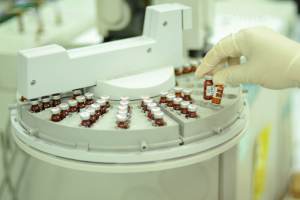
Liquid Chromatography-Mass Spectroscopy Liquid Chromatography-Mass Spectroscopy (LC-MS) is an analytical technique that allows the separation, identification, and quantification of the...
Read Article ➙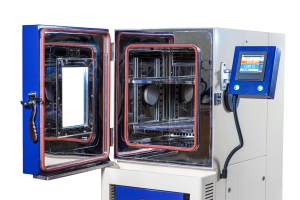
Highly Accelerated Stress Test - HAST Testing Services A highly accelerated stress test (HAST) is an essential part of environmental...
Read Article ➙
Introduction Accelerated aging in product testing is a methodology that simulates the long-term effects of environmental factors on a product...
Read Article ➙In-depth examination of genuine material testing solutions

EELS analysis of gate and channel is performed on fin field-effect transistors (finFETs). Scanning transmission electron...
Read Case Study
Introduction PVC is the polymer primarily used to make pipes for plumbing, drainage, and electrical conduits....
Read Case Study
Nano-scale surface roughness is a critical parameter in fabricated thin-films that are used in optics, solar...
Read Case StudySubmit your contact info and we’ll get back to you within 24 hours


