Look around you for indications of wind and rain, such as swaying trees or dripping drips. For real-time information, consider weather websites or apps as an alternative. Rain gauges, anemometers, and weather stations all measure different aspects of the weather. Advanced meteorological data can be gathered using weather balloons.



The wind and rain generators used by Infinita Lab can generate winds of up to 150 mph and rainfall rates of 0 to 8 inches per hour. To make testing of huge products easier, automated turntables are frequently used. A vast coverage area can be provided by setting up many generators. Infinita Lab staff members specialize in custom setups when setting up a wind-driven rain test.
To provide an accurate test with repeatable results, wind, and rain test devices are calibrated and adjusted before use.
According to MIL-STD 810 Method 506, wind and rain testing, blowing rain testing, and wind-driven rain testing, help determine the following:
Effectiveness of water-resistant container covers, and seals: These tests measure how well the substance can keep out water when subjected to windy and rainy conditions. They assess the sealing systems’ performance in keeping a waterproof barrier in place.
Performance requirements of the material before and after exposure to water: The testing assesses the material’s capacity to meet performance requirements both before and after exposure to water. This influences how long it will last and how well it will work in damp situations.
Rain-induced physical deterioration is measured by studies that look at how rain affects the material’s physical characteristics. This involves assessing any potential deterioration, corrosion, or other types of harm that might happen as a result of continued exposure to rain.
The efficiency of water removal systems: These tests evaluate the effectiveness of the material’s drainage or water removal system in eliminating water and preventing buildup. As a result, any negative effects on the material’s performance are avoided and the system successfully handles water infiltration.
Effectiveness of the protection offered: Testing reveals how well the fabric shields against wind and rain. It determines whether the material satisfies requirements for preventing water infiltration and upholding the required level of protection.
There are many distinct ways that wind and rain can affect equipment. Summaries of some examples are provided below:
One of the climatic testing services we provide is wind and rain testing, and our lab is fully stocked with the appropriate tools. Wind and rain tests are conducted at Infinita Lab. Please get in touch with us to discuss how we can support your wind-driven rain testing needs.
With this method, you may assess how well equipment can withstand the effects of rain and calculate how well it can withstand water infiltration.
Test Conditions: Based on the intended usage of the equipment and the surrounding environment, the standard specifies requirements for rain intensity, duration, and other characteristics.
Test Setup: To imitate genuine rain exposure, the equipment is subjected to regulated rain conditions in an open space or a test chamber.
Performance Criteria: The standard outlines parameters for water infiltration and could also contain functional performance specifications before, during, and after exposure to precipitation.
Reporting: A test report contains all of the test results, including observations, measurements, and any failures.
Specifically for avionics and aerospace applications, this component of the standard focuses on assessing the waterproofness of equipment.
The standard specifies the criteria for water exposure, including the amount, duration, pattern, and other elements that are unique to the equipment’s operating environment.
Test Setup: Depending on the required test circumstances, the equipment is exposed to controlled amounts of water utilizing drip, spray, or jetting techniques.
Performance Criteria: Based on the degree of protection needed for the equipment, the standard specifies pass/fail criteria for water infiltration. Functional performance standards for both before and after exposure to water may be included.
Reporting: A test report details the test findings, including as measurements of water ingress, equipment behavior, and any failures.
Video 1: Military Standard MIL-STD-810H Part 4 Rain Testing

Liquid Chromatography-Mass Spectroscopy Liquid Chromatography-Mass Spectroscopy (LC-MS) is an analytical technique that allows the separation, identification, and quantification of the...
Read Article ➙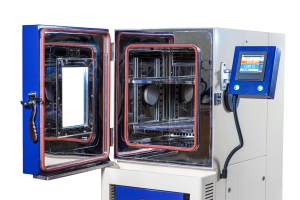
Highly Accelerated Stress Test - HAST Testing Services A highly accelerated stress test (HAST) is an essential part of environmental...
Read Article ➙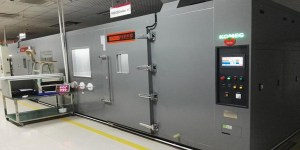
Introduction Accelerated aging in product testing is a methodology that simulates the long-term effects of environmental factors on a product...
Read Article ➙In-depth examination of genuine material testing solutions

EELS analysis of gate and channel is performed on fin field-effect transistors (finFETs). Scanning transmission electron...
Read Case Study
Introduction PVC is the polymer primarily used to make pipes for plumbing, drainage, and electrical conduits....
Read Case Study
Nano-scale surface roughness is a critical parameter in fabricated thin-films that are used in optics, solar...
Read Case StudySubmit your contact info and we’ll get back to you within 24 hours


