Failure analysis may run into problems, producing a "No Defect Found" result. Services for external failure analysis give access to specialised tools and a new perspective. An unbiased analysis is made possible by a lack of past knowledge. Obstacles like electrical isolation or reprocessing challenges can be overcome by cutting-edge technology and skilled analysts in other labs. They avoid inconclusive findings by identifying the root reason for failure with their knowledge and creative techniques.


Failure analysis, like any effort to solve a problem, can occasionally come to a halt due to a seemingly insurmountable challenge. For example, electrical isolation techniques may not work, deprocessing may be too difficult, or, worst of all, the failure mode itself may simply vanish, dissipating into thin air like a cheap magic trick. Any of these circumstances will produce the dreaded “No Defect Found” result, which effectively indicates that no important information was discovered throughout the examination. Even the most tenacious engineers might become frustrated when they run into a stumbling block like one of these during analysis. In these situations, it is frequently necessary to solicit the assistance of outside failure analysis services to offer a new perspective on the issue.
As an external contractor, failure analysis labs are in the unusual position of having little to no knowledge about the specific background, development, or use of a certain item. This can often work against you because it makes analysis go much faster if you know what kinds of stresses a gadget has endured. (For instance, it might be important to let your analyst know that your gadget was unintentionally microwaved for two minutes.) In other instances, however, having no prior knowledge of the technology enables an analyst to approach an issue naively, without making any assumptions that would steer them in the same direction as earlier (failed) attempts. This may lead to a fresh approach to the issue and, ultimately, the effective discovery of the primary reason for failure.
In other instances, a third-party lab offering failure analysis services might have access to specialist tools that might not otherwise be accessible. A failure analysis lab must continually invest in the best equipment and personnel to remain competitive. This investment can lead to successful electrical isolation in situations where more conventional techniques may have failed, or successful reprocessing because of the increased precision attained by the most advanced technology in combination with the most experienced analyst. The mainstay of a lab specializing in failure analysis services is tools and methods that some businesses would not even be aware of, such as magnetic imaging devices that can map out current flow on a device or scanning laser microscopes that produce voltage changes on an IC. The difference between identifying the flaw and fruitlessly grasping at straws can be made by these additional capabilities.
In the end, even when a captive lab is available, the assistance of outside failure analysis services can be useful. At most external labs, the wealth of experience, state-of-the-art technology, and—most importantly—a novel approach to a problem all help identify the primary reason for failure and avert the dreaded No Fault Found.
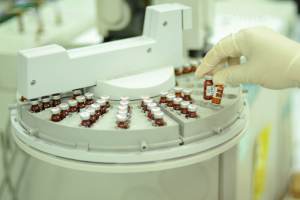
Liquid Chromatography-Mass Spectroscopy Liquid Chromatography-Mass Spectroscopy (LC-MS) is an analytical technique that allows the separation, identification, and quantification of the...
Read Article ➙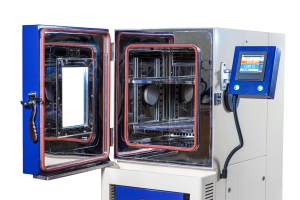
Highly Accelerated Stress Test - HAST Testing Services A highly accelerated stress test (HAST) is an essential part of environmental...
Read Article ➙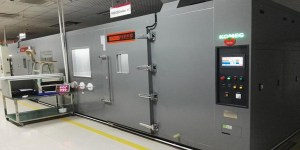
Introduction Accelerated aging in product testing is a methodology that simulates the long-term effects of environmental factors on a product...
Read Article ➙In-depth examination of genuine material testing solutions

EELS analysis of gate and channel is performed on fin field-effect transistors (finFETs). Scanning transmission electron...
Read Case Study
Introduction PVC is the polymer primarily used to make pipes for plumbing, drainage, and electrical conduits....
Read Case Study
Nano-scale surface roughness is a critical parameter in fabricated thin-films that are used in optics, solar...
Read Case StudySubmit your contact info and we’ll get back to you within 24 hours


