Thermal analysis employs a technique called thermomechanical analysis (TMA). It gauges a material's dimensional changes in relation to temperature, time, and applied force, including expansion, contraction, deformation, penetration, etc. TMA offers information about a material's thermal characteristics, such as its coefficient of thermal expansion (CTE), softening points, glass transition temperatures, and other relevant characteristics.



Thermomechanical analysis (TMA) is a technique used to study the physical properties of materials under specific conditions. It is particularly useful for studying organic polymers and viscoelastic materials, which react to mechanical stresses influenced by their viscous and elastic characteristics. TMA involves using a force-applying probe to measure the sample’s length, which can be used to monitor changes in characteristics like shrinkage, expansion, swelling, and softening under ramping temperature conditions. Thermomechanical analysis probes can measure parameters such as melting point, softening point, glass transition, contraction (shrinkage), and expansion coefficient (CTE). The method is suitable for various loading categories, such as pressure or compression, sample size adjustments, stress or tension, and tensile or compressive stress. TMA’s strengths include a small data set, a low force range, linear and stair-step changes, and the ability to set temperature through heating and cooling cycles. Technical requirements include a temperature range of -150 to 1,000 degrees Celsius, a ramp rate of 1 minute, and a force scale of 0.001 N to 2 N.
TMA instruments are used for precise heating or cooling of samples, measuring changes in dimensions like length, thickness, or volume as temperature is varied. They also measure force or stress control, allowing for the study of mechanical properties like stiffness or modulus. TMA is used in various applications, including studying polymer behavior, ceramic sintering, composite stability, and material behavior under different thermal conditions. It is often used in conjunction with other analytical techniques for a comprehensive understanding of a material’s thermal and mechanical properties.
TMA is a method where a sample is subjected to a controlled temperature program under constant force with a probe used to monitor dimensional changes. Key features include temperature control, load/force, and probe movement. Applications include measuring the coefficient of thermal expansion, glass transition temperature, softening point, curing behavior, swelling behavior, and melting behavior. TMA offers sensitivity, versatility, and accuracy in measuring properties. However, limitations include limited sample size, force limitations, and potential interference from external vibrations or temperature fluctuations.

Liquid Chromatography-Mass Spectroscopy Liquid Chromatography-Mass Spectroscopy (LC-MS) is an analytical technique that allows the separation, identification, and quantification of the...
Read Article ➙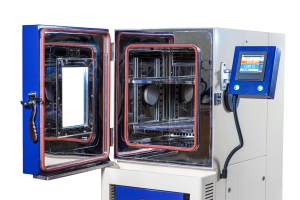
Highly Accelerated Stress Test - HAST Testing Services A highly accelerated stress test (HAST) is an essential part of environmental...
Read Article ➙
Introduction Accelerated aging in product testing is a methodology that simulates the long-term effects of environmental factors on a product...
Read Article ➙In-depth examination of genuine material testing solutions

EELS analysis of gate and channel is performed on fin field-effect transistors (finFETs). Scanning transmission electron...
Read Case Study
Introduction PVC is the polymer primarily used to make pipes for plumbing, drainage, and electrical conduits....
Read Case Study
Nano-scale surface roughness is a critical parameter in fabricated thin-films that are used in optics, solar...
Read Case StudySubmit your contact info and we’ll get back to you within 24 hours


