
Fabricated thin films require smooth nano-scale surfaces for effective usage. Infinitalab offers different types of high precision surface measurements using AFM and other cutting-edge techniques to monitor surface roughness on fabricated thin film substrates.
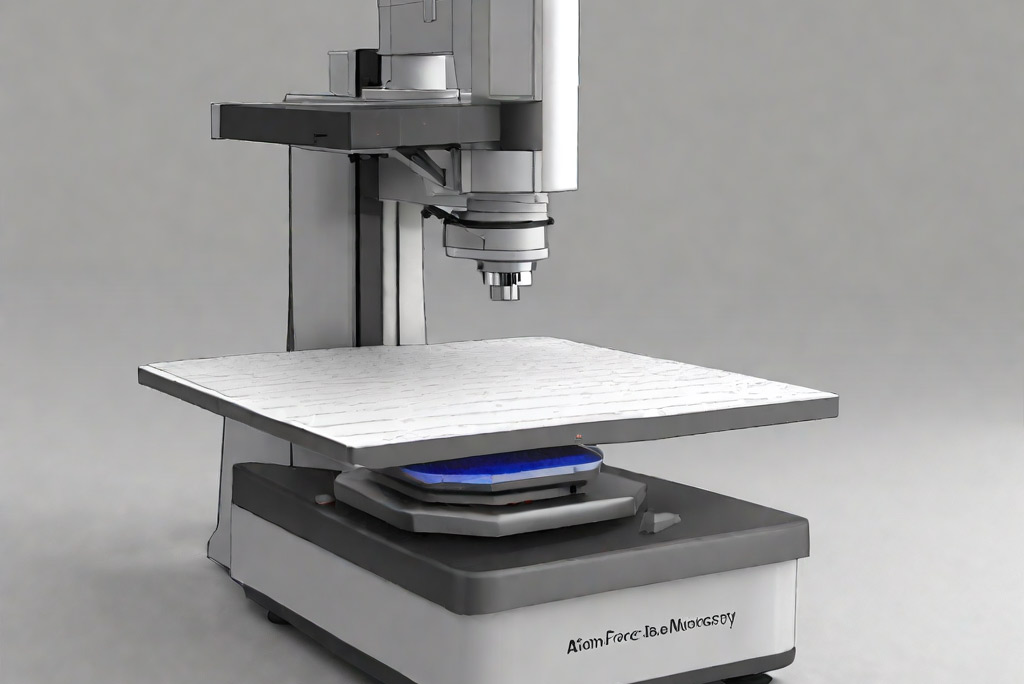
Nano-scale surface roughness is a critical parameter in fabricated thin-films that are used in optics, solar cells, data storage, and semiconductor electronics. One such example is for optimizing growth conditions to achieve atomically smooth films on Si-wafers. AFM is used for high-precision surface measurements to monitor surface roughness on substrates. The thicknesses of these layers are in the range of a few to 50 nm. Minute variations in growth conditions can influence the uniformity of these layers compromising the component’s performance.
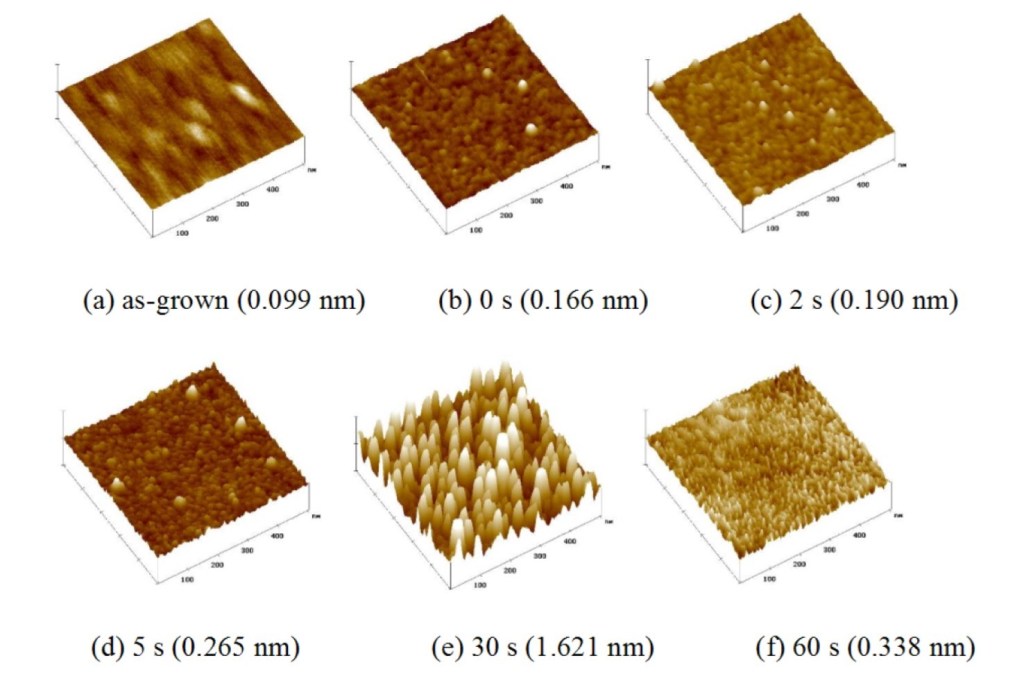
In the below example, AFM imaging is used to assess pre-treatment times and their effect on surface roughness. Figure 1 shows the root mean square (RMS) surface roughness of Si-wafers with varying pre-treatment durations. As seen here, AFM can show topographical variations in the range of 10-1 nm with three-dimensional spatial resolution.
Reference:
[1] Kim, C., Kim, Y., Ryu, H., Kang, J., Kim, S., Min, B., & Lee, H. (2007). Wall-Controlled Growth of CNTs for X-ray Electron Sources. Journal of the Korean Physical Society, 51, 193-197.





