All other accelerated weathering standards that replicate exposure to natural sunshine with fluorescent UV light sources are based on ASTM G154. Several standards require this action.



Understanding the effects of UV exposure on nonmetallic materials is crucial in many industries. G154 is one of the common ASTM standards that help simulate these effects using artificial UV light. This standard is a vital tool for manufacturers, quality assurance professionals, and research teams.
In this article, we delve into the specifics of ASTM G154. We’ll explore its importance, how it compares to other standards like ISO 4892, and its practical applications.
ASTM G154 is a practice for operating fluorescent UV lamp apparatus. It exposes nonmetallic materials. The standard simulates the effects of sunlight on these materials, helping assess their durability under UV light exposure. Nonmetallic materials, such as plastics and coatings, can degrade when exposed to UV light. It helps predict to this degradation process.
By understanding how products will age under sunlight, manufacturers can enhance the longevity of their products.
UV exposure testing is crucial for industries where materials are expected to have a long service life outdoors. These industries include automotive, construction, and outdoor furniture.
G154 testing allows for the comparison of different materials under identical conditions. This comparison provides a controlled method for UV exposure.
The results of these tests can inform product development, material selection, and quality control processes. Understanding the degradation process helps in improving the formulations of nonmetallic materials. UV exposure testing is a forward-thinking strategy to guarantee product durability and quality in response to UV exposure difficulties.
ASTM G154 outlines specific conditions for UV exposure. These conditions include light intensity, temperature, and humidity.
The standard also guides sample preparation, test duration, and results evaluation, ensuring consistency and reliability in the testing process.
Critical parameters of ASTM G154 testing include:
These settings mimic sunlight with UV light to test how well materials hold up over time.
ASTM G154 and ISO 4892 are both standards for UV exposure testing. They are used internationally to assess the durability of nonmetallic materials.
While they serve a similar purpose, the specific test conditions and requirements may differ, meaning that the results from these tests may not be directly comparable.
Companies may need to conduct both tests. This ensures compliance with different market regulations and standards.
The testing is widely used in industries where materials are exposed to sunlight, including the automotive, construction, and outdoor furniture sectors.
The test results inform product development, material selection, and quality control processes. They help manufacturers predict how products will age and last when exposed to sunlight.
Moreover, the testing is often a prerequisite for product warranties and certifications. It ensures that products meet regulatory requirements and consumer expectations for durability.
Interpreting test results requires understanding their limitations. The standard does not directly correlate to years of service life but gives a comparative performance measure.
The results from the exposure tests can be used in marketing materials. They demonstrate product durability and longevity under UV exposure.
However, it’s crucial to interpret these results accurately. Misinterpretation can lead to incorrect conclusions about a material’s resistance to UV light.
ASTM G154 plays a vital role in ensuring product quality and longevity. It’s a proactive approach to understanding how nonmetallic materials will fare under UV exposure.
By simulating the effects of sunlight, it helps industries maintain aesthetic and functional properties over time. It’s an essential tool for industries and research alike.
Video 01: ASTM G154: UV Resistance Test
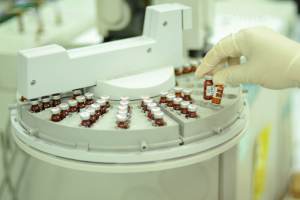
Liquid Chromatography-Mass Spectroscopy Liquid Chromatography-Mass Spectroscopy (LC-MS) is an analytical technique that allows the separation, identification, and quantification of the...
Read Article ➙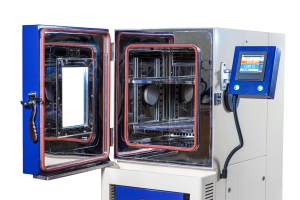
Highly Accelerated Stress Test - HAST Testing Services A highly accelerated stress test (HAST) is an essential part of environmental...
Read Article ➙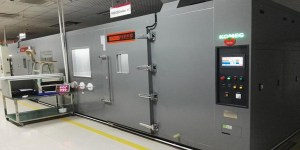
Introduction Accelerated aging in product testing is a methodology that simulates the long-term effects of environmental factors on a product...
Read Article ➙In-depth examination of genuine material testing solutions

EELS analysis of gate and channel is performed on fin field-effect transistors (finFETs). Scanning transmission electron...
Read Case Study
Introduction PVC is the polymer primarily used to make pipes for plumbing, drainage, and electrical conduits....
Read Case Study
Nano-scale surface roughness is a critical parameter in fabricated thin-films that are used in optics, solar...
Read Case StudySubmit your contact info and we’ll get back to you within 24 hours


