Haze and transmittance tests measure the optical properties of transparent or semi-transparent materials. Haze testing measures light scatter caused by small particles or imperfections, which gives a hazy appearance. It is typically measured as a percentage, with lower percentages indicating clearer materials.



Haze and Transmittance
Haze is a phenomenon that occurs when light is scattered by microscopic particles in a material. These particles can come from a variety of sources such as dust, smoke, or even tiny imperfections in the material itself. The result is a cloudy or hazy appearance that can affect the clarity of the material.
Transmittance, on the other hand, refers to the amount of light that passes through a material. It is a measure of how much light is absorbed or scattered by the material and is often expressed as a percentage. For example, a material with a transmittance of 90% allows 90% of the light to pass through and absorbs or scatters 10%.
They are critical measures for ensuring the quality and performance of materials used in various applications such as eyewear, windows, and lenses.
For example, in the case of eyewear, high levels of haze can reduce visual acuity and increase glare, making it difficult to see clearly. Similarly, low transmittance can affect color perception and overall brightness, making it harder to see in low-light conditions.
To test for haze and transmittance, specialized equipment is used, such as a haze meter and a spectrophotometer. The haze meter measures the amount of light scattered by a material, while the spectrophotometer measures the amount of light absorbed and transmitted by the material. The results of these tests can be used to assess the quality and performance of the material and to ensure that it meets the required standards.
Video 01: Haze Meter and Light Transmittance
Other Useful Resources
Scanning electron microscope testing
Application of uv spectroscopy
Differential scanning calorimetry testing
High performance liquid chromatography testing
Semi conductor laboratory
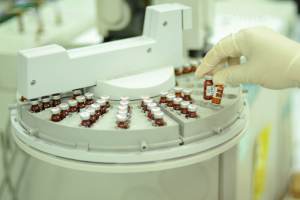
Liquid Chromatography-Mass Spectroscopy Liquid Chromatography-Mass Spectroscopy (LC-MS) is an analytical technique that allows the separation, identification, and quantification of the...
Read Article ➙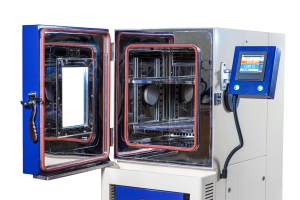
Highly Accelerated Stress Test - HAST Testing Services A highly accelerated stress test (HAST) is an essential part of environmental...
Read Article ➙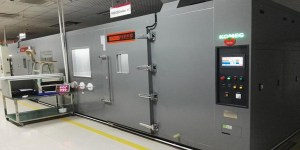
Introduction Accelerated aging in product testing is a methodology that simulates the long-term effects of environmental factors on a product...
Read Article ➙In-depth examination of genuine material testing solutions

EELS analysis of gate and channel is performed on fin field-effect transistors (finFETs). Scanning transmission electron...
Read Case Study
Introduction PVC is the polymer primarily used to make pipes for plumbing, drainage, and electrical conduits....
Read Case Study
Nano-scale surface roughness is a critical parameter in fabricated thin-films that are used in optics, solar...
Read Case StudySubmit your contact info and we’ll get back to you within 24 hours


