Thermal conductivity is a physical property of materials that describes their ability to conduct heat. It is the measure of the rate at which heat energy is transferred through a material per unit on time, per unit area, and per unit temperature difference. Materials with high thermal conductivity can efficiently conduct heat, while those with low thermal conductivity are poor heat conductors.



Several methods for measuring thermal conductivity involve applying a heat source to a sample of the material and measuring the temperature gradient across the sample. The resulting data can be used to calculate the material’s thermal conductivity.
Some of the most common methods include:
Video 01: Gasoline Quality
Thermal conductivity testing is important in many applications, such as determining the insulation properties of building materials, assessing the performance of heat exchangers, and optimizing the design of electronic devices. It is also used in materials science research to understand the properties of various materials better and to develop new materials with improved thermal conductivity.

Liquid Chromatography-Mass Spectroscopy Liquid Chromatography-Mass Spectroscopy (LC-MS) is an analytical technique that allows the separation, identification, and quantification of the...
Read Article ➙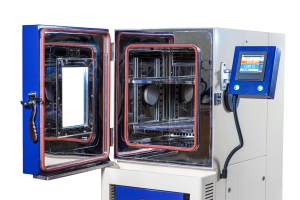
Highly Accelerated Stress Test - HAST Testing Services A highly accelerated stress test (HAST) is an essential part of environmental...
Read Article ➙
Introduction Accelerated aging in product testing is a methodology that simulates the long-term effects of environmental factors on a product...
Read Article ➙In-depth examination of genuine material testing solutions

EELS analysis of gate and channel is performed on fin field-effect transistors (finFETs). Scanning transmission electron...
Read Case Study
Introduction PVC is the polymer primarily used to make pipes for plumbing, drainage, and electrical conduits....
Read Case Study
Nano-scale surface roughness is a critical parameter in fabricated thin-films that are used in optics, solar...
Read Case StudySubmit your contact info and we’ll get back to you within 24 hours


