
Accelerated shelf life test is an accelerated aging test that helps determine the shelf life of a product. The test provides quick results by exposing the product to elevated temperature and humidity levels which accelerates its deterioration.



Accelerated Shelf Life Testing is a scientific technique that utilizes controlled stress conditions to expedite the natural degradation processes that occur during storage. By subjecting products to elevated temperatures, light intensity, humidity, or a combination thereof, ASLT condenses months or even years of degradation into a significantly shorter timeframe. This allows researchers and quality control professionals to assess product stability and predict its shelf life under normal storage conditions.
A typical Accelerated shelf-life testing procedure follows a well-defined sequence:
Product Selection and Sample Preparation: Representative samples from a homogenous batch are chosen for testing to ensure the results accurately reflect the overall product quality.
Stress Condition Selection: Based on the product’s nature and anticipated degradation pathways, appropriate stress factors (temperature, light, humidity) and their corresponding levels are chosen. For instance, testing cosmetics might involve exposure to intense light to simulate degradation under shelf lighting conditions.
Sample Storage and Monitoring: Samples are stored under the selected stress conditions and periodically evaluated for changes in critical quality attributes (CQAs). CQAs encompass physical properties (color, texture), chemical composition (potency, active ingredients), or microbiological factors (bacterial growth). Monitoring frequency depends on the chosen stress level and the anticipated rate of degradation.
Data Analysis: Degradation data is statistically analyzed to determine the reaction kinetics (rate of degradation) and estimate shelf life under normal storage conditions. Statistical models are employed to translate the accelerated data into a reliable shelf-life prediction for the product.
Accelerated Shelf Life Testing rests upon the fundamental scientific principle that reaction rates increase with temperature. The Arrhenius equation mathematically describes this relationship. Simply put, elevated temperatures during ASLT accelerate the chemical reactions responsible for product degradation. By subjecting products to controlled stress conditions like high temperatures, light intensity, or humidity, ASLT condenses months or even years of degradation into a significantly shorter timeframe. Researchers can then observe these accelerated changes and use them to predict the product’s shelf life under normal storage conditions.
Food Industry: This examination helps in determining optimal storage conditions and expiry dates for perishable goods, thereby ensuring consumer safety and minimizing waste.
Pharmaceuticals: It ensures that drugs maintain their potency and harmlessness throughout their marketed viability, a necessary factor in patients’ health.
Cosmetics: Stability evaluation under standard conditions ensures that beauty and skincare products remain hazard-free and effective until expiry.
High-temperature vetting: Requires that product samples are exposed to hot climates to accelerate chemical and physical reactions that lead to degradation.
Humidity examination: Increased liquid levels check the product’s resistance to reshaping, degradation, and other moisture-related deterioration.
Photosensitivity evaluation: This tests the impact of light exposure on products. This is crucial for items like pharmaceuticals and skincare.
Consider a company developing a new sunscreen formulation. Traditionally, determining shelf life would involve storing sunscreen samples for extended periods under ambient conditions. Accelerated Shelf Life Testing offers a faster alternative. By storing sunscreen samples under intense UV light (simulating sunlight exposure), researchers can observe changes in SPF (Sun Protection Factor) and product consistency within a shorter timeframe. This data can then be used to predict the sunscreen’s shelf life under recommended storage conditions in retail stores.
There are two primary categories of ASLT, each serving distinct purposes:
Short-Term: This method focuses on identifying critical quality attributes (CQAs) susceptible to degradation and establishes their activation energies. They encompass physical properties, chemical composition, and bacterial growth in associated products. Activation energy signifies the minimum vitality required for a specific degradation reaction to occur. This term of examination helps pinpoint the most vulnerable aspects of a product and its sensitivity to different stress factors.
Long-Term ASLT: This approach aims to predict the product’s shelf life under realistic storage conditions. Data obtained from short-term ASLT concerning activation energies and degradation rates is employed in conjunction with statistical models like the Arrhenius equation. This allows researchers to estimate the shelf life at recommended storage temperatures.
Reduced Time to Market: ASLT expedites shelf life determination compared to real-time testing, enabling faster product launches.
Cost-Effectiveness: Reduced testing time translates to lower costs compared to real-time storage.
Data-Driven Insights: ASLT provides valuable data on degradation pathways, informing product formulation and storage recommendations.
Stress Factor Selection: Choosing the most relevant stress factors that mimic real-world degradation is crucial for accurate results. Inappropriate stress factors can lead to misleading shelf-life predictions.
Product Specificity: ASLT results are highly product-specific. Data obtained from testing one formulation or packaging material may not translate universally to other variations of the same product.
While ASLT offers a powerful tool, it’s crucial to acknowledge its limitations to ensure accurate and reliable shelf-life predictions. Here are key considerations:
Accuracy Dependence: The accuracy of shelf life predictions hinges on several factors. Choosing the most relevant stress factors and employing valid statistical models for data analysis is critical.
Non-Linear Degradation: The Arrhenius equation assumes a linear relationship between temperature and reaction rates. However, degradation processes in some products may not exhibit a strictly linear response to stress factors. Complex mathematical modeling might be required for accurate predictions in such cases.
Real-Time Validation: While ASLT offers a faster alternative, complementing it with real-time shelf life studies under recommended storage conditions can enhance the accuracy of predictions.
By understanding the scientific basis, types, advantages, and limitations of ASLT, businesses can leverage this technique to optimize product development, and quality control, and ultimately, ensure consumer satisfaction with long-lasting products.
By incorporating Accelerated Shelf Life Testing into their product development and quality control processes, businesses can gain a significant advantage. ASLT offers faster shelf life prediction compared to real-time testing, reduced testing costs, and data-driven insights for product formulation and storage recommendations. However, it’s crucial to acknowledge the limitations of ASLT, such as the dependence on accurate stress factor selection and the need for product-specific data interpretation. By implementing strategies to mitigate these limitations, businesses can leverage ASLT to ensure reliable shelf life predictions, ultimately leading to the development of high-quality products with extended shelf life.
Infinita Lab is a leader in material science testing that provides comprehensive Accelerated Shelf Life Testing (ASLT) services tailored for diverse industries. Our services are designed to expedite a product’s market readiness by assessing its shelf life under accelerated conditions, which is essential for ensuring safety and compliance.
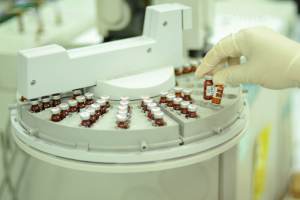
Liquid Chromatography-Mass Spectroscopy Liquid Chromatography-Mass Spectroscopy (LC-MS) is an analytical technique that allows the separation, identification, and quantification of the...
Read Article ➙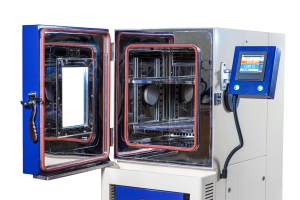
Highly Accelerated Stress Test - HAST Testing Services A highly accelerated stress test (HAST) is an essential part of environmental...
Read Article ➙
Introduction Accelerated aging in product testing is a methodology that simulates the long-term effects of environmental factors on a product...
Read Article ➙In-depth examination of genuine material testing solutions

EELS analysis of gate and channel is performed on fin field-effect transistors (finFETs). Scanning transmission electron...
Read Case Study
Introduction PVC is the polymer primarily used to make pipes for plumbing, drainage, and electrical conduits....
Read Case Study
Nano-scale surface roughness is a critical parameter in fabricated thin-films that are used in optics, solar...
Read Case StudySubmit your contact info and we’ll get back to you within 24 hours


