Learn about the many techniques used in electrochemical corrosion testing. Recognize how important a role these techniques play in protecting materials from corrosion.



Corrosion in concrete or metal can be evaluated with an electrochemical test. Electrochemical corrosion testing is used to characterize corrosion damage and, when possible, estimate corrosion rates based on electrochemical theory.
Potential and current in oxidation/reduction reactions are measured and/or regulated during electrochemical corrosion testing. Manipulating and measuring these two factors allows for a wide variety of studies to be conducted. The working electrode is usually subjected to a voltage and the resulting current is measured.
Anode and cathode regions form an electrical circuit during the corrosion of steel buried in concrete, an example of an electrochemical process. Electrochemical testing of the concrete and reinforcing steel can reveal details regarding the level of corrosion activity. Corrosion testing is routinely performed to evaluate uncoated, bonded reinforcing steel and normally involves measurements on both the reinforcing steel and the concrete.
The effects of corrosion can be dramatically magnified through electrochemical testing. For the purpose of quantifying corrosion rates, all electrochemical tests resort to some fundamental model of the electrode kinetics related to corrosion processes. These tests allow for extremely exact and sensitive measurements since the electrical impulses produced are amplified.
Electrochemical corrosion testing requires tiny, conductor-equipped, polarization-cell-friendly samples. It is possible to test components in their entirety or subsets. Some tests require metal coupons that have been carefully prepared. Also learn about power of electrochemical corrosion testing.

Liquid Chromatography-Mass Spectroscopy Liquid Chromatography-Mass Spectroscopy (LC-MS) is an analytical technique that allows the separation, identification, and quantification of the...
Read Article ➙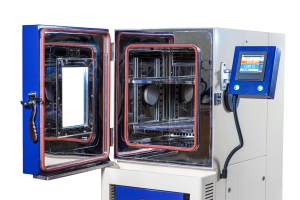
Highly Accelerated Stress Test - HAST Testing Services A highly accelerated stress test (HAST) is an essential part of environmental...
Read Article ➙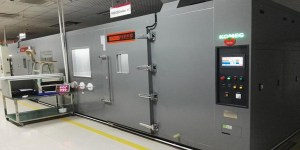
Introduction Accelerated aging in product testing is a methodology that simulates the long-term effects of environmental factors on a product...
Read Article ➙In-depth examination of genuine material testing solutions

EELS analysis of gate and channel is performed on fin field-effect transistors (finFETs). Scanning transmission electron...
Read Case Study
Introduction PVC is the polymer primarily used to make pipes for plumbing, drainage, and electrical conduits....
Read Case Study
Nano-scale surface roughness is a critical parameter in fabricated thin-films that are used in optics, solar...
Read Case StudySubmit your contact info and we’ll get back to you within 24 hours


