Discover the realm of hydrogen embrittlement (HE) testing and how important it is to assessing the performance of materials.



Hydrogen embrittlement (HE) testing by Infinita Lab examines a material’s ductility after being subjected to tensile stress due to the absorption of hydrogen and so provides insight into the material’s performance in a corrosive environment. The ASTM F519 standard allows for testing in numerous sectors, such as the energy, aerospace, and automotive industries.
When metals absorb hydrogen, as in plating or corrosion in service, the outcome is a condition known as hydrogen embrittlement. Because of this, the metal becomes brittle and unable to withstand static stresses, breaking down quickly.
Hydrogen embrittlement (HE) happens on the inside of a metal as it is being formed, coated, plated, cleaned, or finished.
Hydrogen uptake from the environment causes environmental HE.
Infinita Lab conducts ASTM F519 compliant mechanical HE testing. The potential for hydrogen embrittlement in steel can be measured by Sustained Load Testing (SLT) by subjecting the material to uniaxial tension for up to 200 hours, as outlined in the test standard.
The evaluation of surface preparation, pretreatments, and plating/coating processes for steel parts is also outlined in ASTM F519.
A metal’s ductility and resistance to cracking under tensile stress (applied and/or residual) may decrease and its susceptibility to cracking may rise if hydrogen (introduced by corrosion) is present. In order to determine how long corrosion-resistant metals and products will last when galvanically linked as the cathode to another metal (carbon steel), Ifinita lab conducts GHSC testing. The NACE MR0175/ISO 15156 standards are used for our testing procedures.
Many Corrosion Resistant Alloys (CRAs) have failed due to Hydrogen Induced Stress Cracking (HISC) in subsea oil and gas production equipment. Nickel alloys and duplex stainless steels, both of which are commonly used in subsea components, can be HISC tested in our hydrogen embrittlement testing facilities to learn more about the effects of hydrogen on materials’ responses to mechanical stress.
Read more: ASTM F326 Electronic Measurement for Hydrogen Embrittlement
Coating and plating operations can lead to HE in steels; thus, we recreate service conditions to conduct HE testing on the metals. Hydrogen-related damage assessment presents unique difficulties, but our extensive expertise in corrosion testing and years of experience have prepared us to meet those obstacles.
Video 01: Understanding Hydrogen Embrittlement:
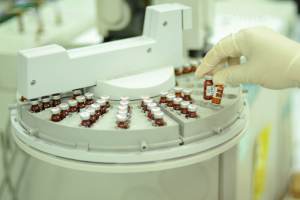
Liquid Chromatography-Mass Spectroscopy Liquid Chromatography-Mass Spectroscopy (LC-MS) is an analytical technique that allows the separation, identification, and quantification of the...
Read Article ➙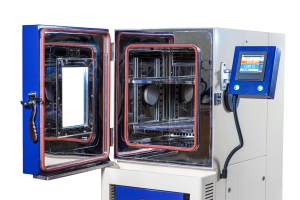
Highly Accelerated Stress Test - HAST Testing Services A highly accelerated stress test (HAST) is an essential part of environmental...
Read Article ➙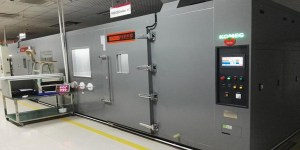
Introduction Accelerated aging in product testing is a methodology that simulates the long-term effects of environmental factors on a product...
Read Article ➙In-depth examination of genuine material testing solutions

EELS analysis of gate and channel is performed on fin field-effect transistors (finFETs). Scanning transmission electron...
Read Case Study
Introduction PVC is the polymer primarily used to make pipes for plumbing, drainage, and electrical conduits....
Read Case Study
Nano-scale surface roughness is a critical parameter in fabricated thin-films that are used in optics, solar...
Read Case StudySubmit your contact info and we’ll get back to you within 24 hours


