
Unveil the critical role of polymers in the aerospace and defense industry, as they withstand extreme conditions and constant usage, providing exceptional thermal, dielectric, moisture-resistant, insulating, and impact-resistant qualities to propel performance rockets into space.


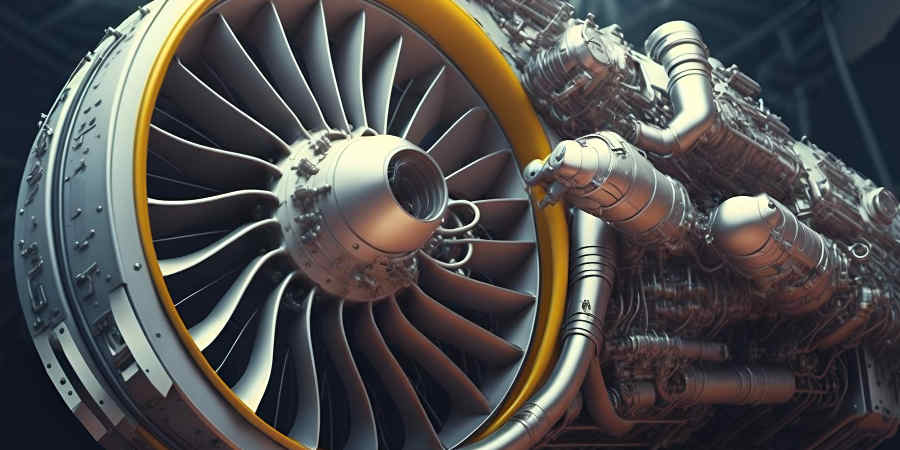
There is no non-essential component in aerospace industry. The entire rocket will not launch if even a single component malfunctions or underperforms in comparison to environmental criteria. Rocket component design and selection is a meticulous process for companies like SpaceX, Blue Origin, NASA, Boeing, and Blue Origin.
Because of their exceptional properties and capacities, polymers occupy a special place in the aerospace and defense industry, where they endure extreme conditions and constant usage. The components of a performance rocket must possess exceptional thermal, dielectric, moisture-resistant, insulating, and impact-resistant qualities to propel the rocket into space.
The VESPEL name is associated with the extreme-performance thermoplastic polyimide (PI) manufactured by DuPont Co. The primary properties of the material are its great impact strength, moderate wear at high PV, and exceptional creep resistance. Components made by VESPEL enable operating temperatures of up to 500°F (260°C) continuously, with the ability to briefly exceed 900°F (482°C). This thermoplastic is famous for its performance and is used for parts in aviation, including thrust washers, valve seats, seals, and wear components.
To cater to various design needs, VESPEL is offered in a wide range of grades. Some of the grades that are now available include SP-1 (Unfilled), SP-21 (15% Graphite), SP-22 (40% Graphite), SP-211 (15% Graphite with 10% PTFE), and SP-3 (15% Molybdenum Disulfide).
High temperatures and stress are no match for TORLON. The best-performing amorphous thermoplastic is polyamide-imide (PAI), which can be melt-processed. It is resistant to wear, keeps its shape even when heated to 500°F (260°C), and can withstand extreme heat, chemicals, and stress. Aerospace applications frequently utilize this material due to its constant use under high heat and stress: structural parts, electrical connectors, bearing cages, valve seats, seals, and wear components.
One kind of fluoropolymer with many uses in aircraft is KEL-F, or PCTFE (polychlorotrifluoroethylene). Not only is it resistant to wear, chemicals, and heat, but it is also very strong and long-lasting. The fact that KEL-F can withstand temperatures ranging from -400°F to +400°F is what sets it different. KEL-F is a popular choice for gaskets, hydraulic systems, fuel lines, and other aerospace applications. For numerous aerospace applications, KEL-F is a must-have material due to its exceptional characteristics.
Because of its non-stick qualities, high temperature and chemical tolerance, and low coefficient of friction, the synthetic fluoropolymer of tetrafluoroethylene known as PTFE finds many uses in aircraft. Since its introduction in the 1940s, PTFE has found numerous uses in the aerospace sector, including gaskets, hydraulic systems, fuel lines, and the industry’s initial usage of the material.
The selection of materials is becoming more important in aerospace rocketry and aircraft as these technologies and capacities undergo continuous evolution. A rocket’s construction and assembly are both meticulously planned to ensure peak performance. Success in mission-critical Aerospace and Defense rocketry is enabled by thermoplastics such as Torlon, Vespel, KEL-F, and PTFE. Learn about thermoplastic polymers.
Video01:What Polymers Can Do: AEROSPACE MATERIAL
Liquid Chromatography-Mass Spectroscopy Liquid Chromatography-Mass Spectroscopy (LC-MS) is an analytical technique that allows the separation, identification, and quantification of the...
Read Article ➙
Highly Accelerated Stress Test - HAST Testing Services A highly accelerated stress test (HAST) is an essential part of environmental...
Read Article ➙
Introduction Accelerated aging in product testing is a methodology that simulates the long-term effects of environmental factors on a product...
Read Article ➙In-depth examination of genuine material testing solutions

EELS analysis of gate and channel is performed on fin field-effect transistors (finFETs). Scanning transmission electron...
Read Case Study
Introduction PVC is the polymer primarily used to make pipes for plumbing, drainage, and electrical conduits....
Read Case Study
Nano-scale surface roughness is a critical parameter in fabricated thin-films that are used in optics, solar...
Read Case StudySubmit your contact info and we’ll get back to you within 24 hours


