Exploring Fatigue and Creep Testing Techniques for Ceramic Matrix Composites in Aerospace Applications. Uncover the Crucial Insights into Long-Term Durability and Performance of Advanced Materials in Aviation.


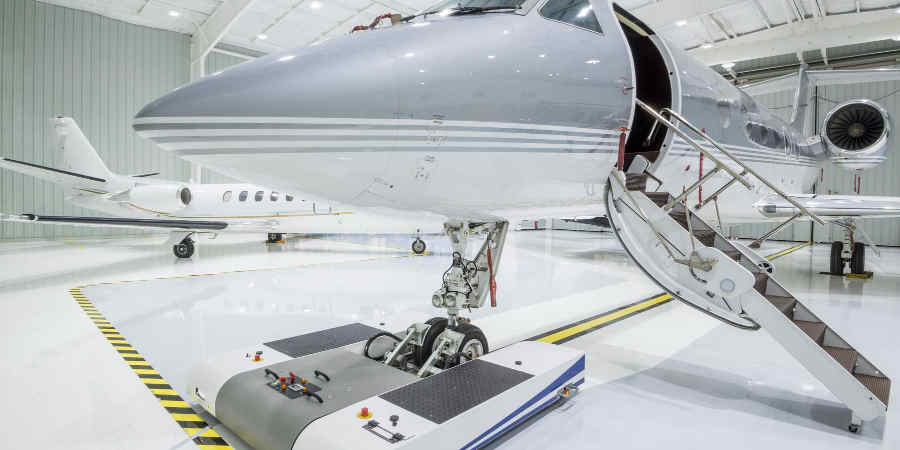
Aerospace companies are always looking for ways to make their products more appealing to consumers by lowering the total cost of ownership (TCO) of their components. To do this, new technologies can be implemented, such as the use of composites or the addition of shark fins to the ends of wings. Aerospace engines can achieve this by either decreasing their mass or increasing their operating temperature and pressure.
Recently, the use of ceramic matrix composites (CMCs) in engine components has allowed for this extension of the performance envelope. A ceramic matrix composite (CMC) is made up of ceramic fibers.
The high melting temperatures, moduli, and hardness that CMCs offer are similar to those of traditional technical ceramics. CMCs, on the other hand, have better crack resistance, higher levels of strain to failure, and improved thermal shock resistance, whereas traditional ceramics are constrained by brittle failure characteristics, low ductility, and low fracture toughness. Embedded ceramic fibers in a ceramic matrix provide a load route across the material, similar to what happens in most composites when cracks propagate through the matrix. By increasing their resistance to fracture and ductility, CMCs can be used in the high-stress, high-temperature environment of an engine. Combustion chamber liners, stators vanes, and turbine blades are all examples of engine applications.
There is a rigorous evaluation process that precedes the use of any novel material in such essential engine parts, and CMC materials provide additional difficulties in fatigue and creep testing compared to traditional metals. Both sorts of tests are utilized when determining an engine’s admissible limits and service life.
Engineering fatigue occurs when a component is subjected to stress or strain repeatedly but not at a high enough level to cause permanent deformation or failure. The load application waveform represents the periodic application and withdrawal of force. The frequency describes the rate at which a cycle is applied. Though waveforms might shift in appearance, there are only three distinct CMC tests.
Creep occurs when a static load is applied below the stress threshold at which failure would occur.
Short cracks emerge within the material during fatigue and creep testing, and finally, the remaining cross section cannot withstand the applied force, leading to fracture.
To ensure that sample surface conditions faithfully reflect those of actual components without introducing features that would unreasonably affect their mechanical properties, sample machining settings are crucial for all materials. Machining composite coupons from components or panels requires extra care to prevent delamination, which can hurt characteristics. It is common practice to perform 3-D CT scanning on CMCs to guarantee that there are no flaws present that could affect the outcome of the tests.
CMCs are often tested between 600 and 1,300 degrees Celsius due to their employment in high-temperature sections of an engine. This increases the difficulty of the testing setup because the typical materials used to make fixtures and fittings (metal) can only withstand temperatures up to about 1,000 C. The crucial test part of a CMC test specimen is now heated in its own furnace, rather than the entire specimen. Fixturing metals with a lower usage temperature can be used since the grasping can be placed outside the furnace and kept warm.
CMC testing has been restricted to coupons with relatively short gauge lengths and sub-element features because the furnace size must be lowered to accommodate the use of warm gripping solutions.
The usual method, which wraps wire in coils around a ceramic tube, is not used in the low-profile CMC furnace. The CMC uses radiant and convective heat to warm the specimen from exposed ceramic pieces. The CMC furnaces’ low thermal mass allows for much faster heating rates, reducing typical heating periods from hours to minutes. For temperatures up to 1,000 C, the maximum allowable temperature variation during a test is 3 C, and for higher temperatures, the maximum allowable temperature variation is 6 C. In addition, temperature differences along the key test section will be kept to a minimum (less than 1%) in order to ensure accurate results.
Platinum/platinum-rhodium (R-type) thermocouples, insulated by a mineral or ceramic tube, regulate the temperature of the furnace. The length of the essential test section will determine how many thermocouples to use and how far apart they should be placed. However, because platinum’s chemical reactivity with CMC can compromise test results, thermocouples are kept near the specimen surface without actually touching it. Thermocouples are used in a furnace survey, with one set attached to a representative sample and the second set placed in a position roughly equivalent to that of the specimen during testing. This enables an interpretation of the temperature readings from the test thermocouples.
Testing composite materials under strain control presents extra challenges, hence CMC testing is typically performed under load control with strain monitoring. A ceramic probe-type extensometer is used to measure strain by making contact with the object’s edge.
CMC testing subjects samples to relatively mild strains, typically on a smaller scale than that seen with metals. In contrast to the 0.4% strain that might be applied in a metallic strain-controlled test, the strains applied in a CMC will be less than 0.04%. This necessitates a very sensitive extensometer with a precise calibration set to a low value. Most extensometers’ “full scale” is defined as 1% strain. Because of the pointed edges of the extensometer and the uneven nature of CMC surfaces, care must be taken to avoid scratching the specimen surface and introducing an abrupt offset into the test results.
The delicate nature of the equipment necessitates meticulous regulation of the laboratory’s environmental conditions. Not only does this contain wind speed and direction, but also vibration. Water cooling the extensometers is necessary to reduce thermal drift, and the water flow needs to be low flow and isolated to prevent strain measurements from being impacted by strong air currents.
Testing for fatigue and creep is typically done at the stresses experienced by the component in the engine, which can range from 100 to 200 MPa (15 to 30 ksi).
Keeping bending stresses to a minimum during axial testing necessitates good load train alignment, and earlier research has shown that poor alignment hurts test outcomes. The test standard typically allows for a 5% bending percentage for fatigue and a 10% bending percentage for creep on metallic test pieces. However, the impacts of misalignment might be amplified for materials like CMCs, which have little ductility compared to metals. Therefore, it is common practice to set the percentage of allowed bending due to fatigue and creep at 3%. To do this, the loading train can make use of fixed linear bearings.
Due to the possibility of internal friction changing the temperature of the specimen and taking it outside test tolerance, frequencies for fatigue testing are typically between 0.001 and 30 Hz. Due to the instability of the extensometer on the rougher CMC surface topography, however, extensometry can only be used for testing at lower frequencies.
Depending on the needs of the client, different types of test data can be captured and provided. Data like as load, displacement, strain, and temperature can be recorded and utilized to create charts such as load versus strain/displacement loops and load vs cycle plots.
The length of a test can vary widely based on a number of material and environmental variables. Some tests may only take a few seconds, while others could go on for several days. The long-term stability of laboratory ambient environmental conditions is crucial because of these lengthy durations. For uninterrupted operation or safe shutdown of a test frame, an uninterruptible power supply (UPS) is also recommended.
In tension, the failure mechanism in most composite materials typically begins at the microscopic level in the matrix. Loss of intimate contact between the matrix and fibers can cause fiber pull-out, delamination, and net tension failure.
The capacity of Ceramic Matrix Composites to maintain strength at high temperatures has greatly improved during the past decade. A large amount of characterization is still needed, however, before these materials can be called “airworthy.” There will be ongoing demand for high-temperature tests tailored to CMCs as their applications develop. Learn about fatigue testing.
Liquid Chromatography-Mass Spectroscopy Liquid Chromatography-Mass Spectroscopy (LC-MS) is an analytical technique that allows the separation, identification, and quantification of the...
Read Article ➙
Highly Accelerated Stress Test - HAST Testing Services A highly accelerated stress test (HAST) is an essential part of environmental...
Read Article ➙
Introduction Accelerated aging in product testing is a methodology that simulates the long-term effects of environmental factors on a product...
Read Article ➙In-depth examination of genuine material testing solutions

EELS analysis of gate and channel is performed on fin field-effect transistors (finFETs). Scanning transmission electron...
Read Case Study
Introduction PVC is the polymer primarily used to make pipes for plumbing, drainage, and electrical conduits....
Read Case Study
Nano-scale surface roughness is a critical parameter in fabricated thin-films that are used in optics, solar...
Read Case StudySubmit your contact info and we’ll get back to you within 24 hours


