
ASTM E408: Total Normal Emittance Testing of Surfaces
The ASTM E408 is a standard test technique that consists of two processes for determining the total normal emittance of surfaces using portable inspection-meter devices. These tests are especially beneficial for quality control checks in the manufacturing process.
TRUSTED BY


Precision-driven testing for dimensional accuracy and compliance
- Overview
- Scope, Applications, and Benefits
- Test Process
- Specifications
- Instrumentation
- Results and Deliverables
Overview
The ASTM E408 test method provides a standard practice for measuring the total normal emittance of surfaces using an inspection meter. These test techniques include using portable inspection-meter devices to determine the total normal emittance of surfaces. This measurement can be performed with at least two different commercially available instruments.
The emittance is defined as the characteristic of a material that indicates the relative ability of a material to emit thermal radiation compared to a perfect black body at this temperature. Proper thermal management is required when measuring the property. The test procedure may only be necessary for the construction, aerospace, and manufacturing industries.

Scope, Applications, and Benefits
Scope
The ASTM E408 is a test method for determining the total normal emittance of surfaces utilizing inspection-meter procedures. Commercially available equipment for this assessment includes at least two different types. The first method (method A) measures radiant energy emitted from the specimen, while the second method (method B) measures radiant energy reflected from it. These methods are designed for quick measurements of large surfaces that require non-destructive testing.
Applications
- Thermal characterization of metals, ceramics, and coated surfaces.
- Design and analysis of high-temperature components.
- Evaluation of thermal barrier and reflective coatings.
- Use in aerospace, automotive, and power generation industries.
- Development of energy-efficient materials and systems.
- Support for heat balance and thermal modeling studies.
Benefits
- Provides a standardized method to measure total hemispherical emissivity.
- Ensures accurate thermal radiation data for materials at elevated temperatures.
- Supports reliable comparison of surface finishes and coatings.
- Helps evaluate the heat-transfer performance of materials.
- Improves design efficiency in thermal and energy systems.
- Widely accepted for research, quality control, and material qualification.
Testing Process
Specimen Preparation
Clean the surface placed against the instrument aperture as per ASTM E408.
1Test Setup
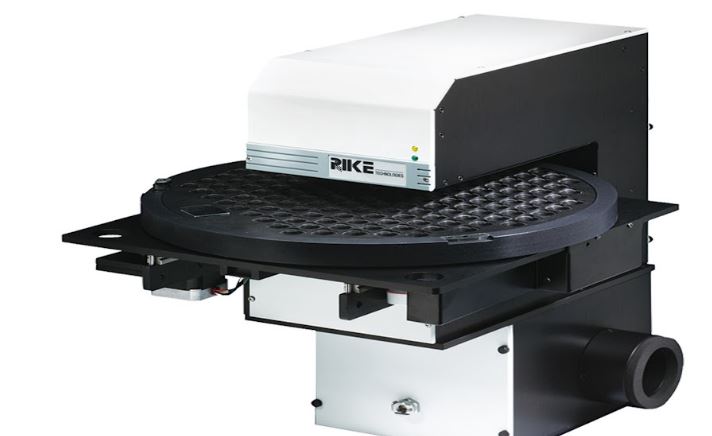
Rotating cavities pass across the aperture using a driving mechanism.
2Voltage Application
A vacuum thermocouple detects reflected radiation and converts it to a DC signal.
3Data Collection
Millivolt readings are calibrated to obtain reflectance; emittance is calculated as (1 − reflectance).
4Technical Specifications
| Parameter | Details |
|---|---|
| Test Standard | ASTM E408 |
| Measured Property | Total normal emittance |
| Measurement Principle | Radiometric reflectance method |
| Accuracy | ±0.02 |
| Emittance Range | 0.02 – 0.98 |
| Detector | Vacuum thermocouple |
Instrumentation Used
- Inspection meter / emissometer
- Calibrated reference standards
- Sample holder or stage
- Temperature control/monitoring device (if required)
- Data acquisition and analysis system
Results and Deliverables
- ASTM E408 provides a nondestructive method for measuring total normal emittance.
- Delivers high accuracy for a wide range of surface materials.
- Ensures uniform, repeatable results to support quality control.
- Widely applicable in thermal management studies.
- Requires proper calibration and control of surface conditions for reliable data.
- Essential for evaluating thermal surface properties across industries.
Frequently Asked Questions
The ASTM E408 Standard Test Method uses inspection-meter techniques to determine surfaces' total normal emittance. It assesses the surface's effectiveness in emitting thermal radiation relative to that of a perfect blackbody.
The method is used on various surfaces, metals, coatings, foils, or other materials in other thermal management and energy conservation applications.
Yes, the ASTM E408 method is non-destructive, meaning it does not damage or alter the surface being tested, making it suitable for valuable or sensitive materials.
The test must be conducted in a controlled environment with stable temperature and minimal humidity. It is typically performed indoors to avoid interference from ambient light and airflow.
The method is quick, efficient, portable, and applicable to various materials. It is also standardized, ensuring consistency in measurements across different applications.
Case Studies
In-depth examination of genuine material testing solutions
Dopant and ultra-low concentration elemental analysis using Scanning…

Dopant and ultra-low concentration elemental analysis using Scanning…
EELS analysis of gate and channel is performed on fin field-effect transistors (finFETs). Scanning transmission electron...
Read Case StudyAnalysis of degradation of PVC pipe using Fourier…

Analysis of degradation of PVC pipe using Fourier…
Introduction PVC is the polymer primarily used to make pipes for plumbing, drainage, and electrical conduits....
Read Case StudyNano-scale roughness measurement of Si-wafers by Atomic Force…

Nano-scale roughness measurement of Si-wafers by Atomic Force…
Nano-scale surface roughness is a critical parameter in fabricated thin-films that are used in optics, solar...
Read Case Study
Request a Quote
Submit your material details and receive testing procedures, pricing, and turnaround time within 24 hours.
 Quick Turnaround and Hasslefree process
 Confidentiality Guarantee
 Free, No-obligation Consultation
 100% Customer Satisfaction
