
Gas Chromatography–Tandem Mass Spectrometry (GC-MS-MS)
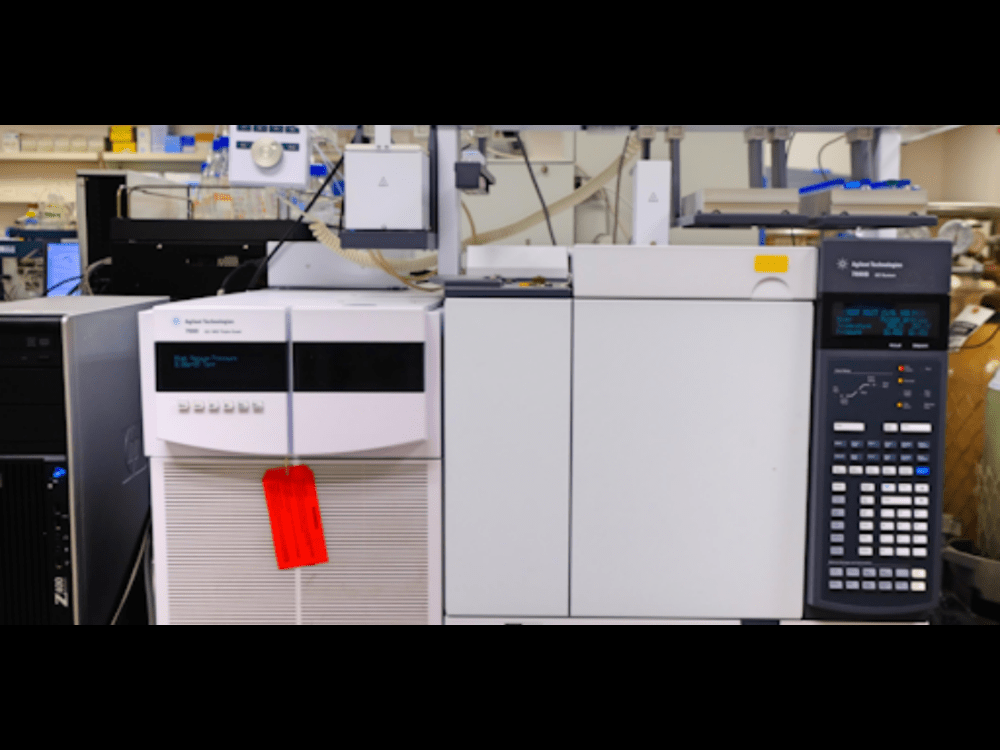
Gas Chromatography–Tandem Mass spectrometry (GC-MS-MS) couples a Gas Chromatograph (GC) with two Mass Spectrometers to provide superior selectivity sensitivity and detail in molecular structure analysis. The GC-MS-MS overcomes the limitations of GC with a single MS (GC-MS), when working with complex sample matrices, more sensitive analysis requirements, isomeric compounds not separated by GC and gives additional mass and structural information.
TRUSTED BY


Precision-driven testing for dimensional accuracy and compliance
- Overview
- Scope, Applications, and Benefits
- Test Process
- Specifications
- Instrumentation
- Results and Deliverables
Overview
The analysis of the sample using Gas Chromatography-Tandem Mass Spectrometry (GC-MS-MS), a high-sensitivity technique, offers the advantages of compound identification, selectivity, and trace-level quantification that cannot be achieved with conventional GC-MS. The GC-MS-MS analysis offers chemists, researchers, and failure analysts definitive identification and ultra-trace quantitative concentration information for compounds in complex matrices, contamination analysis, and critical material characterization programs, which cannot be achieved with conventional single-stage mass spectrometry.

Scope, Applications, and Benefits
Scope
GC-MS-MS uses its gas chromatographic column to separate complex sample mixtures, then subjects individual compounds to two steps of mass spectrometric analysis: precursor ion selection and fragmentation, followed by product ion analysis, thereby offering higher specificity and sensitivity for measuring and identifying target compounds in complex, highly interfering sample matrices.
GC-MS-MS analysis evaluates:
- Ultra-trace level detection and quantification of volatile and semi-volatile organic compounds in complex matrices
- Target compound confirmation through precursor ion selection and product ion fragmentation pattern analysis
- Residual solvent, pesticide, and contaminant analysis in polymer, food, and pharmaceutical matrices
- Unknown compound identification in high-interference sample matrices where single-stage GC-MS is insufficient
- Trace-level emissions and outgassing compound analysis of materials and assembled components
Applications
- Polymer, adhesive, and coating materials requiring ultra-trace residual solvent and outgassing analysis
- Food and beverage contaminant screening requiring high-sensitivity pesticide and adulterant detection
- Pharmaceutical and chemical formulation impurity analysis at sub-trace concentration levels
- Environmental sample analysis for ultra-trace volatile organic compound detection and quantification
- Forensic and failure analysis investigations requiring highly selective unknown compound identification
Benefits
- Delivers superior analytical sensitivity and selectivity beyond conventional single-stage GC-MS capability
- Identifies and quantifies ultra-trace compounds in complex, high-interference sample matrices
- Provides enhanced compound confirmation through dual-stage fragmentation pattern analysis
- Delivers traceable, laboratory-certified analytical data
- Reduces analytical risk by eliminating matrix interference false positives through tandem MS selectivity
Test Process
Sample Preparation
Samples extracted, diluted, or headspace-prepared for GC-MS-MS injection and analysis.
1GC Separation
Sample injected and compounds separated across capillary column under defined temperature program.
2Tandem Mass Spectrometric Detection
Compounds undergo precursor ion selection, collision fragmentation, and product ion detection.
3Data Analysis & Reporting
Tandem mass spectral data processed to generate compound identification and concentration results.
4Technical Specifications
| Parameter | Details |
|---|---|
| Applicable Samples | Polymers, adhesives, food, pharmaceuticals, environmental samples, chemical formulations |
| Analytical Technique | Gas chromatography with dual-stage tandem mass spectrometric detection |
| Detection Capability | Ultra-trace compound detection at sub-parts-per-billion concentration levels |
| Measured Parameters | Precursor ion, product ion fragmentation, retention time, concentration |
| Measured Outputs | Chromatograms, tandem mass spectra, concentration data, test compliance result |
Instrumentation Used for Testing
- Calibrated GC-MS-MS system with capillary column separation and triple quadrupole or ion trap tandem mass spectrometric detection
- Headspace, liquid injection, and solid-phase microextraction sample introduction systems
- Reference standards for compound identification and quantitative calibration
- Mass spectral library databases for unknown compound identification and matching
- Specialist chromatographic and tandem MS data acquisition and processing software
- Sample preparation equipment for extraction, dilution, and concentration procedures
Results and Deliverables
- GC-MS-MS chromatograms with compound identification and retention time data
- Precursor and product ion mass spectral data confirming compound identity
- Ultra-trace quantitative concentration results for target analytes across all analyzed samples
- Test compliance result
Partnering with Infinita Lab for Optimal Results
Infinita Lab addresses the most frustrating pain points in the Gas Chromatography–Tandem Mass Spectrometry (GC-MS-MS) testing process: complexity, coordination, and confidentiality. Our platform is built for secure, simplified support, allowing engineering and R&D teams to focus on what matters most: innovation. From kickoff to final report, we orchestrate every detail—fast, seamlessly, and behind the scenes.
Looking for a trusted partner to achieve your research goals? Schedule a meeting with us, send us a request, or call us at (888) 878-3090 to learn more about our services and how we can support you. Request a Quote
Frequently Asked Questions
GC-MS-MS offers the advantage of combining separation via gas chromatography with dual-stage tandem mass spectrometric detection, thereby providing better compound identification, selectivity, and ultra-trace quantification for complex, high-interference sample matrices beyond conventional GC-MS instrumentation.
GC-MS-MS involves two successive steps of mass spectrometric analysis: precursor ion selection and fragmentation, followed by product ion detection. This approach offers increased sensitivity, specificity, and matrix suppression compared to traditional GC-MS-based compound detection and identification techniques.
GC-MS-MS is used to analyze polymers, adhesives, food and beverage products, pharmaceuticals, environmental samples, and chemical formulations, which require ultra-trace compound identification and quantitative concentration data in complex sample matrices of solids, liquids, and gases.
GC-MS-MS is used to detect ultra-trace levels of volatile and semi-volatile organic compounds, including residual solvents, pesticides, impurities, and unknowns in high-interference matrices where conventional GC-MS sensitivity and/or specificity are inadequate.
GC-MS-MS is employed in the polymer, pharmaceutical, food and beverage, environmental, forensic, aerospace, automotive, and chemical manufacturing industries for ultra-trace material characterization, contamination investigations, and failure analysis programs that require high levels of analytical sensitivity and selectivity.
Case Studies
In-depth examination of genuine material testing solutions
Dopant and Ultra-Low Concentration Elemental Analysis Using STEM…

Dopant and Ultra-Low Concentration Elemental Analysis Using STEM…
Introduction to STEM-EELS for Elemental Analysis Scanning Transmission Electron Microscopy (STEM) combined with Electron Energy Loss...
Read Case StudyAnalysis of PVC Pipe Degradation Using FTIR Spectroscopy

Analysis of PVC Pipe Degradation Using FTIR Spectroscopy
PVC Pipe in Infrastructure — and Why Degradation Matters Polyvinyl chloride (PVC) pressure pipe is one...
Read Case StudyNano-scale roughness measurement of Si-wafers by Atomic Force…

Nano-scale roughness measurement of Si-wafers by Atomic Force…
Nano-scale surface roughness is a critical parameter in fabricated thin-films that are used in optics, solar...
Read Case Study
Request a Quote
Submit your material details and receive testing procedures, pricing, and turnaround time within 24 hours.
 Quick Turnaround and Hasslefree process
 Confidentiality Guarantee
 Free, No-obligation Consultation
 100% Customer Satisfaction
