
Specular X-ray Reflectivity (XRR)
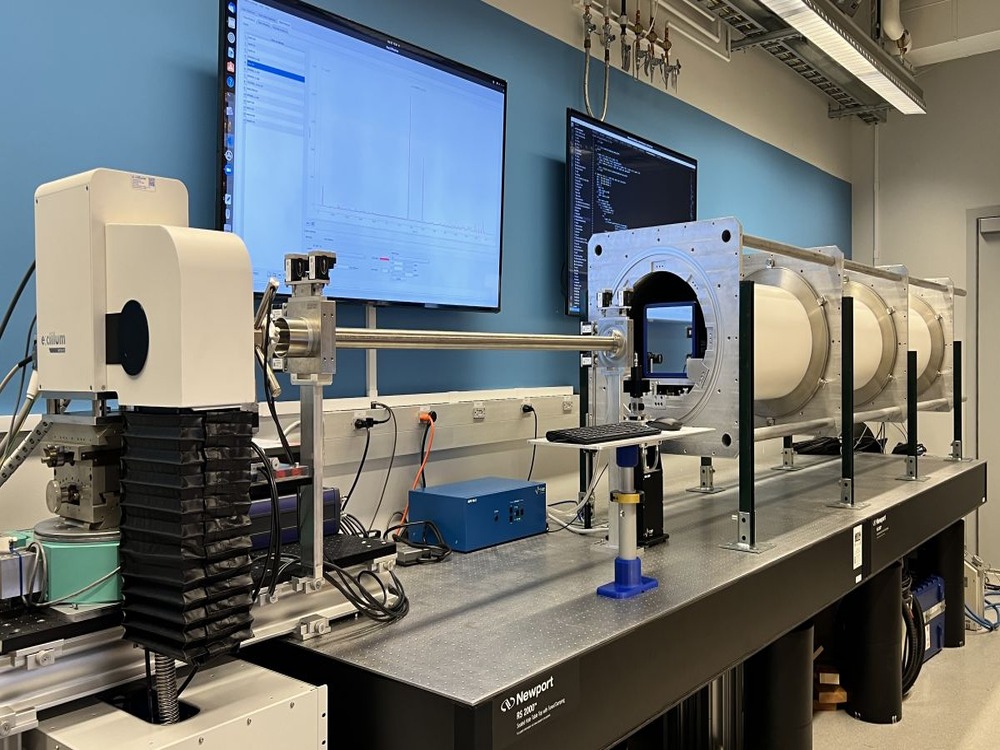
The spectacular X-ray technique is a proven technique used for measuring the density, thickness, and roughness of thin film structures (both single-layer and multi-layered) without causing damage. This technique is based on the X-rays' total external reflection off of surfaces and interfaces and it is appropriate while in use with liquid, crystalline, and amorphous materials.


Specular X-ray Reflectivity (XRR)
Specular X-Ray Reflectivity (XRR) is a surface sensitive analytical technique that utilizes monochromatic X-ray beam reflection at a specular angle, to study material surfaces, ultra-thin films and multilayered structures. The term specular reflection means that the reflected angle of the X-ray beam is equal to its incident angle. The intensity of the reflected X-ray wave is correlated with the angle of incidence of the X-ray beam, its wavelength and properties of the reflecting layer such as refractive index, roughness, thickness and density. The mathematical analysis involves matching measured X-Ray intensity data with computer simulations. The angle of incidence is maintained at grazing angle around the critical angle, to investigate thin layers. The reflecting layer may be a single thin layer at the surface or an in-depth interlayer in a multi-layer structure. XRR is used to characterize single and multi-layer structures, thin films, optical coatings and catalyst surfaces.
Common Uses of Specular X-ray Reflectivity (XRR)
- Determining thickness, density and roughness of ultra-thin films, single and multilayer stacks in semiconductors
- Quality control of reflectance and resolution of optical coatings
- Research and development of specialized coatings for optical devices
- High throughput quality control of semiconductor wafer manufacturing
Advantages of Specular X-ray Reflectivity (XRR)
- High resolution and precision covering thicknesses from Ångstroms to microns
- Crystalline or amorphous materials can be characterized
- Conductors or insulators can be analyzed
- Measurements at ambient conditions
Limitations of Specular X-ray Reflectivity (XRR)
- Interpretation is based upon mathematical analysis and simulation
- Film thickness upper limit is around 200 nm
Industrial Applications of Specular X-ray Reflectivity (XRR)
- Semiconductors
- Optical coatings
- Materials science research
 Metrology Testing Service

- High Performance Liquid Chromatography (HPLC)
- X-Ray Diffraction (XRD)
- AI Suited to Industrial Inspection
- Differential Scanning Calorimetry
- X-Ray Diffraction Analysis – XRD
- Liquid Chromatography (LC) Testing
- Liquid Chromatography with Tandem Mass Spectrometry (LC-MS/MS)
- Electrothermal Vaporization ICP Optical Emission Spectroscopy (ETV-ICP-OES)
- View All


3 Easy Steps to Start Testing


Case Studies
In-depth examination of genuine material testing solutions
Dopant and ultra-low concentration elemental analysis using Scanning…

Dopant and ultra-low concentration elemental analysis using Scanning…
EELS analysis of gate and channel is performed on fin field-effect transistors (finFETs). Scanning transmission electron...
Read Case StudyAnalysis of degradation of PVC pipe using Fourier…

Analysis of degradation of PVC pipe using Fourier…
Introduction PVC is the polymer primarily used to make pipes for plumbing, drainage, and electrical conduits....
Read Case StudyNano-scale roughness measurement of Si-wafers by Atomic Force…

Nano-scale roughness measurement of Si-wafers by Atomic Force…
Nano-scale surface roughness is a critical parameter in fabricated thin-films that are used in optics, solar...
Read Case StudyTalk to Our Experts Today!
Submit your contact info and we’ll get back to you within 24 hours


