
Material Testing
Learn about the different types of test methods that are used to enhance the standard of materials.


Introduction:
Material testing is a vital component of many industries, including manufacturing, construction, aerospace, automotive, and more. Evaluating a material’s characteristics and performance in various scenarios is the main goal of material testing. The quality, dependability, and safety of materials in a variety of applications are improved by this knowledge.
Material Testing Types:
1. Mechanical testing: Assesses a material’s toughness, elasticity, hardness, and other mechanical characteristics.
- Tensile Evaluation: Specimens are produced according to precise measurements. The load and elongation are measured after the specimen is tugged till it cracks. Properties like yield strength, ultimate tensile strength, and modulus of elasticity are determined by analyzing the stress-strain curve.
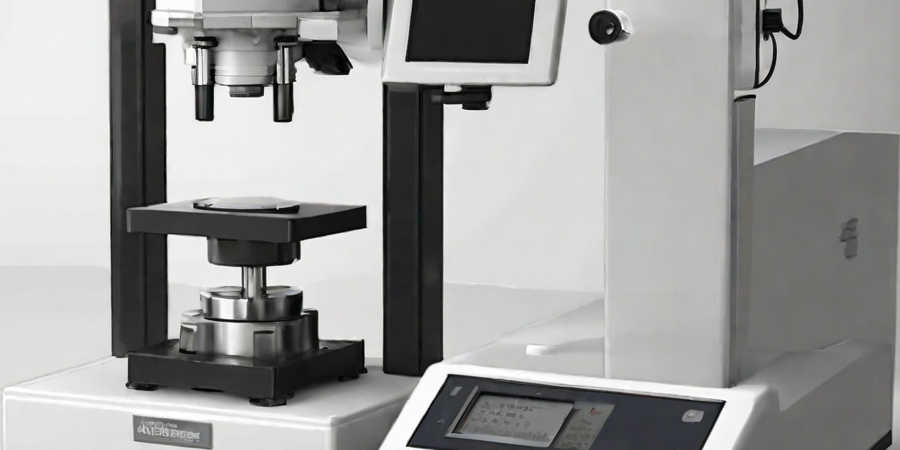
- Hardness Evaluation: Brinell, Vickers, and Rockwell hardness tests are examples of common techniques. The indentation left on the material after applying a known force is used to calculate the hardness value.
- Impact Evaluation: The specimen is struck by a striker or pendulum that is released. Measured is the energy absorbed or the deformation brought on by the collision.
- Examining Fatigue: Specimens are loaded cyclically in order to replicate actual conditions. Evaluations are done on fatigue life, stress amplitude, and other factors.
- Peep Examining: Specimens undergo prolonged periods of high temperatures and continuous stress. The creep behaviour is analyzed by recording the deformation over time.
2. Chemical analysis: ascertains the components present in a material and their concentrations, as well as its makeup.
- Wet Chemical Examination: Uses chemical reactions to determine the composition and amount of each element in a substance. It is possible to employ methods like gravimetric analysis and titration.
- Analytical Instrumentation: For accurate and quick element analysis, techniques including spectroscopy (such as X-ray fluorescence, atomic absorption, or inductively coupled plasma) are employed.
3. Non-Destructive Testing (NDT): Uses techniques like dye penetrant testing, radiography, ultrasonic testing, and magnetic particle testing to examine materials without causing harm.
- Ultrasonic Examination: Uses ultrasonic waves to gauge thickness or find internal defects.
- Radiographic Examination: Involves using gamma or X-rays to expose a material and then taking a picture to find internal flaws.
- Testing for Magnetic Particles: Use iron particles and magnetic fields to find surface and near-surface flaws.
- Tests for dye penetration: Involves dousing the surface with a liquid dye that seeps through and, when the excess is removed, reveals surface flaws.
4. Thermal analysis: Examines a material’s response to temperature variations, taking into account characteristics like expansion, heat capacity, and thermal conductivity.
- DSC stands for differential scanning calorimetry:Monitors the movement of heat into and out of a sample while it changes chemically or physically.
- TGA, or thermogravimetric analysis: Weighs variations in relation to temperature.
- The analysis of dynamic mechanics (DMA): Determines mechanical qualities in relation to time, frequency, or temperature.
5. Testing in the Environment:
- Corrosion Examination: Evaluate a material’s ability to withstand corrosion in various settings.
- Tests for weathering: Test the endurance of materials by exposing them to artificial weather conditions.
6. Testing for quality control:
- Statistical Process Control (SPC): To ensure product quality, industrial processes are tracked and managed.
7. Analysis of Failures:
- Microscopic Examination: Uses optical or electron microscopes to examine the microstructures of materials.
- Fractal imagery: Examines fracture surfaces in order to determine the reason for failure.
8. Advanced Methods of Testing:
- (XRD) X-ray diffraction: Establishes the phase composition and crystal structure.
- CT, or computed tomography: Offers thorough 3D pictures for internal examination.
- SEM, or scanning electron microscopy: Looks at surface morphology under a strong magnification.
Also learn why Materials Testing is Performed?


3 Easy Steps to Start Testing


Case Studies
In-depth examination of genuine material testing solutions
Dopant and Ultra-Low Concentration Elemental Analysis Using STEM…

Dopant and Ultra-Low Concentration Elemental Analysis Using STEM…
Introduction to STEM-EELS for Elemental Analysis Scanning Transmission Electron Microscopy (STEM) combined with Electron Energy Loss...
Read Case StudyAnalysis of PVC Pipe Degradation Using FTIR Spectroscopy

Analysis of PVC Pipe Degradation Using FTIR Spectroscopy
PVC Pipe in Infrastructure — and Why Degradation Matters Polyvinyl chloride (PVC) pressure pipe is one...
Read Case StudyNano-scale roughness measurement of Si-wafers by Atomic Force…

Nano-scale roughness measurement of Si-wafers by Atomic Force…
Nano-scale surface roughness is a critical parameter in fabricated thin-films that are used in optics, solar...
Read Case StudyTalk to Our Experts Today!
Submit your contact info and we’ll get back to you within 24 hours


