
Ceramic Materials Testing Services
Infinita Lab’s Ceramics Material Testing offers unmatched precision and quality. Our U.S. labs provide over 2000 specialized tests, ensuring comprehensive analysis for all ceramic materials. Ceramic materials exhibit a distinctive combination of qualities that render them ideal for high-performance applications. Ceramic materials testing services provide an assessment of the thermal, chemical, and mechanical properties used in advanced industrial applications.


Complete Ceramic Testing Solutions
Introduction to Ceramic Materials Testing Services
Ceramic Materials Testing Services provide a systematic way to assess the characteristics and functionality of ceramic materials through standardized methodologies and technological advancements. In today’s high-technology industrial landscape, ceramics have developed well beyond their conventional uses in today’s high-tech industrial they are now essential parts of industries where failure is not an option. In order to preserve structural integrity and functionality, these cutting-edge materials must endure tremendous mechanical stress, corrosive environments, extreme temperatures, and demanding electrical conditions.
The comprehensive testing spans across the entire product lifecycle, from quality control and failure analysis to assessment of raw material and product creation and manufacturing. Retailers, manufacturers, and importers depend on these services to validate that ceramic components meet the required international standards and provide the basic requirements for their necessary purpose.
Importance of Ceramic Testing Services
Ceramic testing plays an essential role in evaluating the quality, safety, and reliability of the materials before putting them in a real environment. These services involve mechanical strength, thermal stability, microstructure, and chemical composition analysis, and they extend from raw material characterization to final component quality control. An important feature of ceramic testing is that it lowers product failure rates and aids in risk avoidance by spotting possible flaws, guaranteeing homogeneity, and confirming adherence to industry standards. To ensure safety, promote product innovation, and preserve confidence with end users and regulatory agencies, industries rely on these services.
Applications and Advantages of Ceramic Testing Services
Industries Benefited from Ceramic Testing:
Aerospace and Aviation: Ceramic components are subjected to severe temperature swings and mechanical strains in rocket nozzles, aviation engines, and thermal protection systems. Testing plays a critical role in understanding the quality of these products.
Semiconductor and Electronics: Ceramics are used as insulators and capacitors in electrical and electronic systems where precise characteristics are important. To guarantee signal integrity, efficient heat dissipation, and dependable operation in ever-tinier components.
Automotive: Modern automobiles incorporate ceramics in catalytic converters, sensors, and modern braking systems. Testing assesses wear resistance for braking applications, chemical stability when exposed to fuels and exhaust gases, and thermal shock resistance for components subjected to abrupt temperature fluctuations.
Strategic Advantages of Ceramic Testing:
- Early fault identification to avoid expensive failures.
- R&D decisions, engineering, and quality control based on data.
- Product quality, reliability, and adherence to many standards, including ISO and ASTM.
- Increase in trust by delivering a good quality product, adhering to international standards.
Key Tests for Ceramic Testing
Thermal Mechanical Analysis (TMA): TMA helps to validate the changes in dimension of a ceramic material under controlled temperature and load. It is essential to determine properties like the coefficient of thermal expansion and glass transitions, which are important for ceramics exposed to temperature fluctuations.
Thermogravimetric Analysis (TGA): This test helps to evaluate weight changes, binder loss up to 1000 degree celsius. It provides information about the material’s composition and thermal durability by identifying thermal stability, breakdown temperatures, and residual content.
SEM: It helps to determine particle size and binder residues, and also helps to evaluate cracks and voids. Detect defects and measure roughness.
X-ray Fluorescence (XRF) Spectrometry: It measures the elemental composition of ceramics with the help of X-rays released from the material when activated by a main X-ray source. This method works well for detecting impurities and confirming chemical purity because it is quick and non-destructive.
Laser-Induced Breakdown Spectroscopy (LIBS): This method helps to identify compositional analysis of ceramic materials. Also, suitable for small area analysis.
X-ray Photoelectron Spectroscopy (XPS) Analysis: It is a test that is predominantly used for surface analysis, deeper analysis, and contamination analysis.
Conclusion
It is impossible to overestimate the importance of ceramic material testing services in a technology-driven world. These thorough analyses offer the fundamental information required to convert cutting-edge ceramics from intriguing lab experiments into dependable, high-performing parts. Selecting trustworthy ceramic materials testing services guarantees that components fulfill strict safety and technical specifications, which are essential for high-stakes applications in the automotive, electronics, aerospace, and energy industries.
Why Choose Infinita Lab?
Infinita Lab is a leading provider of ceramic material testing services, addressing the critical challenges faced by emerging businesses and established enterprises. With access to a vast network of over 2,000+ accredited partner labs across the United States, Infinita Lab ensures rapid, accurate, and cost-effective testing solutions.
The company’s unique value proposition includes comprehensive project management, confidentiality assurance, and seamless communication through a Single Point of Contact (SPOC) model. By eliminating inefficiencies in traditional material testing workflows, Infinita Lab accelerates research and development (R&D) processes.
Essential FAQs on Ceramic Materials Testing Services
Our lab specializes in a comprehensive range of ceramic material testing services, covering mechanical strength, thermal conductivity, chemical resistance, and more. Our testing ensures that your ceramics meet industry standards, providing valuable insights into their performance and durability.
With the capacity to provide a wide range of specialized ceramic material testing services, our laboratory guarantees a thorough assessment of distinctive qualities and traits. We offer specialized services such as thermal shock testing, which evaluates the resistance of a ceramic material to abrupt temperature fluctuations. This is especially important for situations where there is a lot of heat cycling. Wear resistance testing is another specialist service that assesses a ceramic’s resistance to wear, friction, and abrasion over time. In industries where ceramics are exposed to harsh wear conditions, including cutting tools or mechanical components, this service is crucial.
Infinita Lab uses a methodical and exacting technique to guarantee the precision and dependability of ceramic test findings. Our specialized labs use cutting-edge testing apparatus that complies with industry-leading standards. This comprises sophisticated equipment for assessing mechanical strength, analyzing thermal conductivity, evaluating chemical resistance, and other tasks. Our lab’s certification further demonstrates our dedication to upholding the highest standards of quality. Our staff of highly qualified experts receives ongoing training to ensure they are up-to-date on the most recent developments in ceramic testing techniques. We adhere to standard testing standards. This guarantees that tests are carried out consistently and precisely, producing results that can be relied upon.
Throughout the testing process, we apply strict quality control methods to further improve accuracy. The procedures we follow for quality assurance include sample preparation, testing, and result interpretation. Since businesses rely on our test results for their decision-making, we understand how important accuracy is, which is why we go above and beyond to maintain the integrity of our findings.
Choosing Infinita Lab for ceramic material testing guarantees an unmatched, comprehensive approach to quality control. Certification attests to our dedication to quality and verifies that our testing procedures follow the strictest industry guidelines. This compliance ensures that your ceramic materials are put through strict testing procedures and that the results you receive meet or exceed legal criteria. We put cost-effectiveness first without sacrificing the precision of our findings. We maximize resource usage by utilizing streamlined testing processes and effective workflows, which translate into affordable prices for our clients. Our dedication to cost effectiveness goes beyond just lowering the possibility of pricey recalls or warranty claims by preventing flaws and failures through thorough testing.
At the center of our testing services is accuracy. Throughout the testing process, we use state-of-the-art technology, adhere to established testing procedures, and keep a strong quality control system in place. Our dedication to accuracy guarantees that the outcomes we produce are dependable, providing your company with solid information to support well-informed decision-making.
3 Easy Steps to Start Testing
Read Our Blogs and Research Papers
Top 20 Dental Ceramics Testing Methods
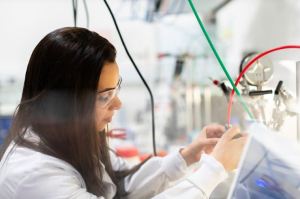
Top 20 Dental Ceramics Testing Methods
Top 20 Dental Ceramics Testing Methods Dental ceramics testing methods are commonly used in the testing and analysis of dental...
Read ArticleAmerican Association for Laboratory Accreditation
American Association for Laboratory Accreditation
The American Association for Laboratory Accreditation (A2LA) is a non-profit, non-governmental, public service organization that covers the formal recognition of...
Read ArticleMIL-STD-202 Electronic Component Testing Guide
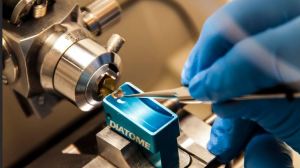
MIL-STD-202 Electronic Component Testing Guide
MIL-STD-202 A legal requirement that regulates the testing procedure for all system parts and products with printed circuit boards is...
Read Article
New Benchmarks in Quality Standards
Empowering you to recognize and address inherent risks within your operations, supply chains, and quality management systems

Advanced Testing Services
Assessing the alignment of your products and services with, and their surpassing of, quality, safety, sustainability, and performance benchmarks.

100% Inspection Guarantee
Confirming the specifications, worth, and safety of your raw materials, products, and assets.

Certification
Officially verifying that your products and services adhere to both established external and internal standards.
Meet our Team
Best Industry Experts to Help You
Pradyumna Gupta PhD, MBA

Vinay Vidyarthi PhD

Dhairya Srivastava MBA

Rana Pratap PhD

Gautam Kumar PhD

Keisha Antoine PhD

Animangsu Ghatak PhD

Sabyasachi Roy

Srinivas Mettu PhD

Shantanu Behera PhD
Talk to Our Experts Today!
Submit your contact info and we’ll get back to you within 24 hours


