
ASTM E10 Brinell Hardness Test on Metallic Materials
ASTM E10 is used to determine the Brinell hardness of metals by the Brinell indentation hardness principle. In this test, an indenter forces a load on the specimen for a specified time. The load is removed, and the resulting indentation's diameter is measured to calculate the Brinell hardness number. Read more about ASTM E10 Test for Brinell Hardness of Metallic Materials below.
TRUSTED BY


Precision-driven testing for dimensional accuracy and compliance
- Overview
- Scope, Applications, and Benefits
- Test Process
- Specifications
- Instrumentation
- Results and Deliverables
Overview
The ASTM E10 describes a standardized method for determining the relative hardness of metals, using Brinell hardness as the measure. The hardness of a material can predict its performance and durability.
The procedure involves pressing a hardened steel ball or a carbide tip into the material’s surface under a specified load. Once the impact is completed, the diameter of the created indentation is measured, and this value is used to calculate the Brinell Hardness Number, or BHN. The BHN is a crucial ‘snapshot’ of the material’s hardness.
To ensure consistent, repeatable results, ASTM E10 specifies the indenter size, test load, load duration, and calibration procedure. Because of its accuracy and consistency, this procedure is widely accepted.

Scope, Applications, and Benefits
Scope
ASTM E10 evaluates:
- Surface hardness of metallic materials
- Wear resistance characteristics
- Effects of heat treatment
- Material durability
- Grain structure influence on hardness
- Comparative hardness between materials
The test is especially suitable for materials with coarse or rough grain structures.
Applications
- Metallurgical quality control
- Heat treatment verification
- Automotive components
- Aerospace materials
- Structural steel evaluation
- Heavy machinery parts
- Manufacturing process control
- Research and development
Benefits
- Provides standardized hardness values
- Predicts wear resistance and durability
- Assists in material selection
- Confirms heat treatment effectiveness
- Enables cross-laboratory comparison
- Improves product reliability
- Supports failure analysis
Test Process
Specimen Preparation & Setup
A clean, flat specimen is prepared, and an appropriate indenter is selected.
1Load Application & Indentation
Specified load is applied for a set dwell time to form an indentation.
2Indentation Measurement
Indentation diameter is measured optically.
3Calculation & Verification
BHN is calculated, and equipment calibration is verified in accordance with ASTM guidelines.
4Technical Specifications
| Parameter | Details |
|---|---|
| Indenter Size | 10 mm diameter ball |
| Indenter Tolerance | ±0.005 mm |
| Applicable Materials | Metallic materials |
| Output Units | Brinell Hardness Number (BHN) |
| Measured Outputs | Indentation diameter, BHN |
Instrumentation Used for Testing
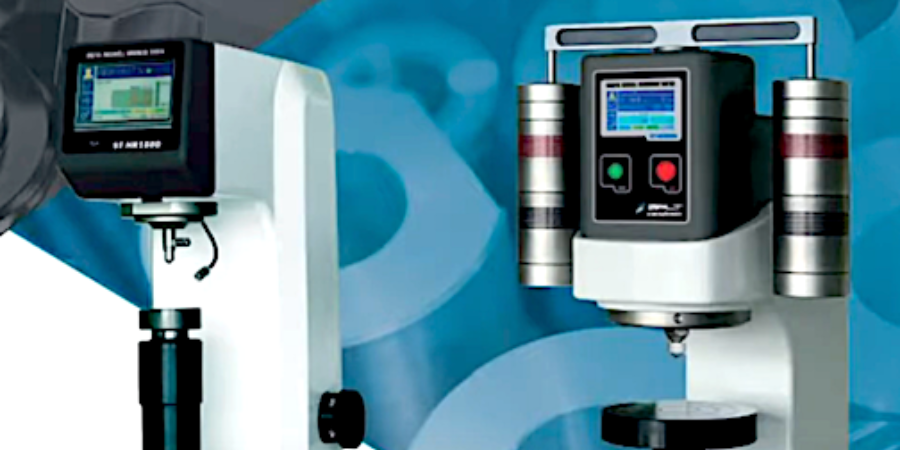
- Brinell hardness testing machine
- Hardened steel or carbide ball indenter
- Optical measuring device
- Load the application system
- Calibration reference blocks
- Data recording software
Results and Deliverables
- Brinell Hardness Number (BHN)
- Indentation measurement data
- Comparative hardness reports
- Heat treatment verification records
- Compliance documentation
Frequently Asked Questions
The ASTM E10 Brinell test is a simple yet effective method. It involves indenting the material with a hardened steel or carbide ball under a specified load. ASTM E10 guides the size of the indenter and the test load, ensuring consistency and accuracy in hardness testing across laboratories and industries.
Brinell hardness testing is typically used to test aluminum and copper alloys (at lower forces) and steels and cast irons at higher force ranges.
The Brinell Hardness Test method evaluates an object's hardness, especially for non-ferrous metals, cast irons, and steel products at the higher strength ranges and aluminum and copper alloys at the lower strength ranges. However, it cannot measure extremely hardened materials like steel.
Its spherical indenter makes the Brinell test more accurate than the Rockwell testing method, as it evenly distributes the load on the material surface.
Case Studies
In-depth examination of genuine material testing solutions
Dopant and Ultra-Low Concentration Elemental Analysis Using STEM…

Dopant and Ultra-Low Concentration Elemental Analysis Using STEM…
Introduction to STEM-EELS for Elemental Analysis Scanning Transmission Electron Microscopy (STEM) combined with Electron Energy Loss...
Read Case StudyAnalysis of PVC Pipe Degradation Using FTIR Spectroscopy

Analysis of PVC Pipe Degradation Using FTIR Spectroscopy
PVC Pipe in Infrastructure — and Why Degradation Matters Polyvinyl chloride (PVC) pressure pipe is one...
Read Case StudyNano-scale roughness measurement of Si-wafers by Atomic Force…

Nano-scale roughness measurement of Si-wafers by Atomic Force…
Nano-scale surface roughness is a critical parameter in fabricated thin-films that are used in optics, solar...
Read Case Study
Request a Quote
Submit your material details and receive testing procedures, pricing, and turnaround time within 24 hours.
 Quick Turnaround and Hasslefree process
 Confidentiality Guarantee
 Free, No-obligation Consultation
 100% Customer Satisfaction
